


Asbestos Extraction in Accordance with TRGS 519 for Remediation and Demolition
Home page » Asbestos dust
Appropriate asbestos vacuums are part of a comprehensive safety plan
During demolition, renovation, and maintenance work on materials containing asbestos, respirable fibers may be released. An effective asbestos extraction system captures fibers as close as possible to the source and facilitates low-dust cleaning. EVOTEC provides mobile units for this purpose, which must be specifically suitable for the process outlined in TRGS 519 and comply with its labeling and operating requirements.
What Matters Most in Asbestos Extraction:
Appropriate equipment configuration
Dust Class H alone is not sufficient: For work involving asbestos, proven suitability in accordance with TRGS 519 is also required.
Close-up shot
Fibers and dust are captured directly at the tool, component, or work area before they can spread further.
Controlled Handling
Filters, collection containers, exhaust air, and cleaning procedures are designed to prevent the uncontrolled release of contaminated material.
Which types of asbestos work, equipment configurations, and exhaust systems are compatible?
Tell us about the materials, processes, work area, and planned operating time—we’ll work with you to review the technical equipment selection.
Why Asbestos Dust Must Be So Strictly Controlled
Asbestos fibers cannot be reliably identified with the naked eye. When building materials containing asbestos are cut, damaged, or removed, fibers can become airborne. That is why a safe procedure does not begin with the vacuum cleaner, but with an initial assessment, a risk assessment, and an approved work procedure.
Where Asbestos May Be Found
In older buildings, asbestos may be present in materials such as fiber-cement, flooring, adhesives, joint compounds, plaster, fire-retardant products, and lightweight construction materials. Whether and where asbestos is present must be determined before any work begins. The BAuA Asbestos Information Platform provides guidance on planning.
When Fibers Are Released
Mechanical processes such as drilling, grinding, milling, breaking, or improper removal are particularly critical. Exposure spikes can also occur during cleaning and when handling contaminated equipment or filters. The process used must prevent or minimize fiber release as much as possible.
Important: An extraction system does not make an improper procedure acceptable. It is a technical protective measure within an overall concept that includes work procedures, containment, airflow management, personal protective equipment, cleaning, and waste disposal.
How can asbestos fibers be effectively detected?
Sampling must be conducted as close as possible to the release site. Tool extraction, appropriate suction nozzles, and controlled airflow must be arranged so that fibers do not first enter the breathing zone or adjacent areas. Hose length, cross-sectional area, and filter loading affect the actual available airflow.
Directly on the tool or component
For approved low-emission processes, the extraction system is tailored to the tool, material, and work step. The intake opening is positioned as close as practically possible to the machining site. Wet or low-dust processes and extraction can complement each other; the specific procedure depends on the selected process.
Work Area and Post-Cleaning
Tools, pipes, and surfaces must be thoroughly cleaned in accordance with the procedure. Where wet cleaning is not possible, an industrial vacuum cleaner suitable for use in areas with asbestos must be used. Dry sweeping or blowing would redistribute the fibers and is not an appropriate cleaning method.
What type of extraction technology is suitable for asbestos?
“Dust Class H” and “suitable for asbestos” are not the same thing. According to Appendix 7.1 of TRGS 519, industrial vacuum cleaners and portable dust collectors must, in addition to type testing in accordance with dust class H, demonstrate suitability for use in asbestos work, and this suitability must be indicated on the unit.
Type Testing and Marking
Before use, check the nameplate, markings, test certificate, and manufacturer’s specifications. The intended operating mode—industrial vacuum cleaner or dust collector—as well as the minimum airflow and electrical protection class must be appropriate for the task and the location of use.
Dust-Tight Collection and Disposal
Collected material must be stored and transported in a dust-tight manner; uncontrolled transfer must be avoided. The choice of containers and filter systems, the replacement schedule, and the disposal process must therefore be taken into account when selecting the equipment. The operating instructions for the specific model are binding.
Exhaust Air and Air Recirculation
As a general rule, purified exhaust air from activities involving materials containing asbestos must not be recirculated into work areas. TRGS 519 specifies a very limited number of exceptions, including for low-exposure activities, small-scale work, and cleaning tasks—in each case using equipment in accordance with Appendix 7.1. The exhaust air management plan must therefore be defined on a procedure-by-procedure basis.
Maintenance and Contaminated Equipment
Filter condition, minimum airflow, and airtightness must be controlled during operation. Cleaning, filter replacement, transport, and maintenance of contaminated equipment must not result in the release of new fibers and must be performed only in accordance with the specified protective measures.
Technical Classification: TRGS 519 (current version) and IFA overview of dust classes and asbestos suitability.
Typical Applications for Asbestos Extraction Systems
Demolition and Dismantling
When removing components containing asbestos, the extraction system supports a defined work procedure. The type of material, form of bonding, risk level, containment measures, and disposal method determine the technical design.
Renovation and Maintenance
Repairs, maintenance, and on-site work can release fibers. For many activities, recognized low-emission procedures are mandatory; the extraction system must be precisely tailored to those specifications.
Plaster, joint compound, and tile adhesive
Construction chemicals may also contain asbestos. An assessment is required before drilling, grinding, milling, or removing these materials. The current GefStoffV and TRGS 519 specify risk-based protective measures.
Fine Cleaning and Decontamination
After the actual dismantling, tools, airlocks, and work areas are cleaned in a controlled manner. Suitable equipment, dust-tight collection, and a documented procedure are essential for this.
Larger renovation areas: Additional requirements apply to containment, negative pressure maintenance, and controlled exhaust ventilation. You can find the existing practical guide on modular solutions below, under “Asbestos Container Exhaust.”
What information do we need to select the right equipment?
The appropriate configuration is determined by the permitted process and the actual operating point. A high maximum flow rate alone does not prove either effective capture or suitability for use with asbestos.
Occupation and Asbestos Product
- Component, Material, and Results of the Investigation
- Planned demolition, renovation, or maintenance work
- Approved procedure, risk area, and expected amount of dust
- Data Collection Point, Tool, and Required Accessories
Field Operations and Equipment Operation
- Indoor or outdoor use, construction site conditions, and power supply
- Hose length, cross-sectional area, and required operating point
- Exhaust Air Ducting, Containment, and Potential Negative Pressure Maintenance
- Container replacement, filter handling, transport, and disposal
Avoiding Common Mistakes: Selecting a device based solely on its filter class, failing to account for additional hose lengths, or leaving the return air issue unresolved can render the protection plan ineffective. Changes to the procedure require a new assessment.
Which model of asbestos vacuum cleaner is right for your application?
By providing information on the material, application, work area, hose run, and operating time, the technical preselection can be narrowed down in a targeted manner.
Safety and Regulations: TRGS 519 Defines the Overall Framework
Asbestos work involves handling hazardous materials and has specific requirements. The current Hazardous Substances Ordinance specifies protective measures, reporting requirements, and, where applicable, the authorization of a specialized contractor based on the risk category. For commercial activities, TRGS 519 also describes preparation, qualification, supervision, work procedures, and cleanup. Specific planning is part of the hazard assessment and must be carried out by knowledgeable personnel. This page does not replace a procedure approval.
Basics: BAuA: What is TRGS 519? · TRGS 519 – Current Version and Forms
Mobile Equipment for Asbestos Work – Check the Specific Design
Existing product links will remain in place. The specific model of the device being offered is the determining factor: In addition to dust class H, it must also be certified as suitable for use with asbestos in accordance with TRGS 519. Accessories, the exhaust air connection, the collection system, and the operating mode are tailored to the specific process.
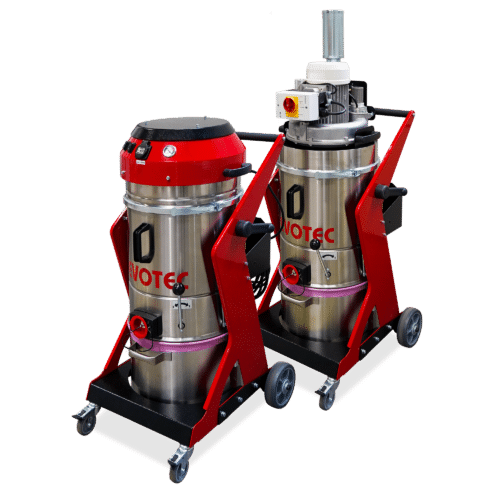
ECODustPro
High-performance industrial vacuum cleaner with a combination filter system ("M" + "H") for all types of dry dust, also available in explosion-proof or asbestos-safe models.
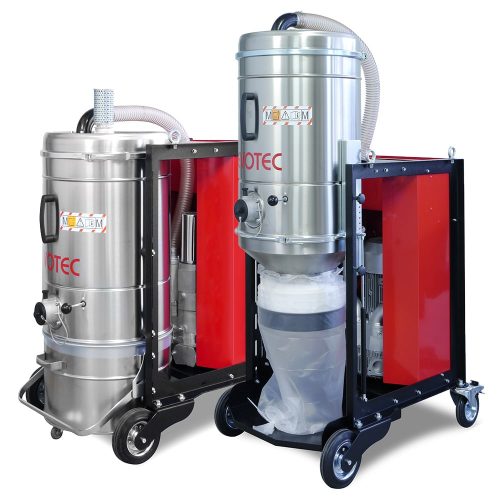
Robusto
Rugged, high-performance industrial vacuum cleaners with a modular design for flexible filter, waste disposal, and control options, also available in TRGS 519-certified asbestos or EX versions.
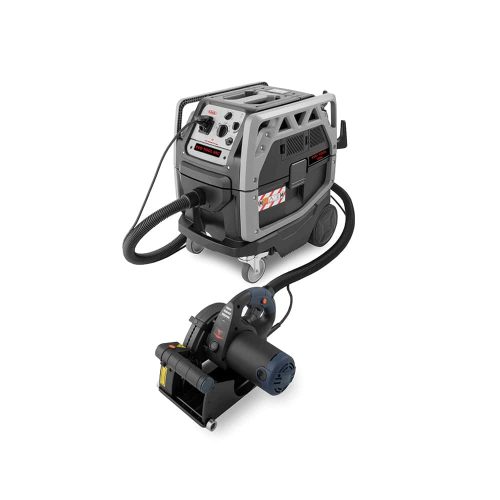
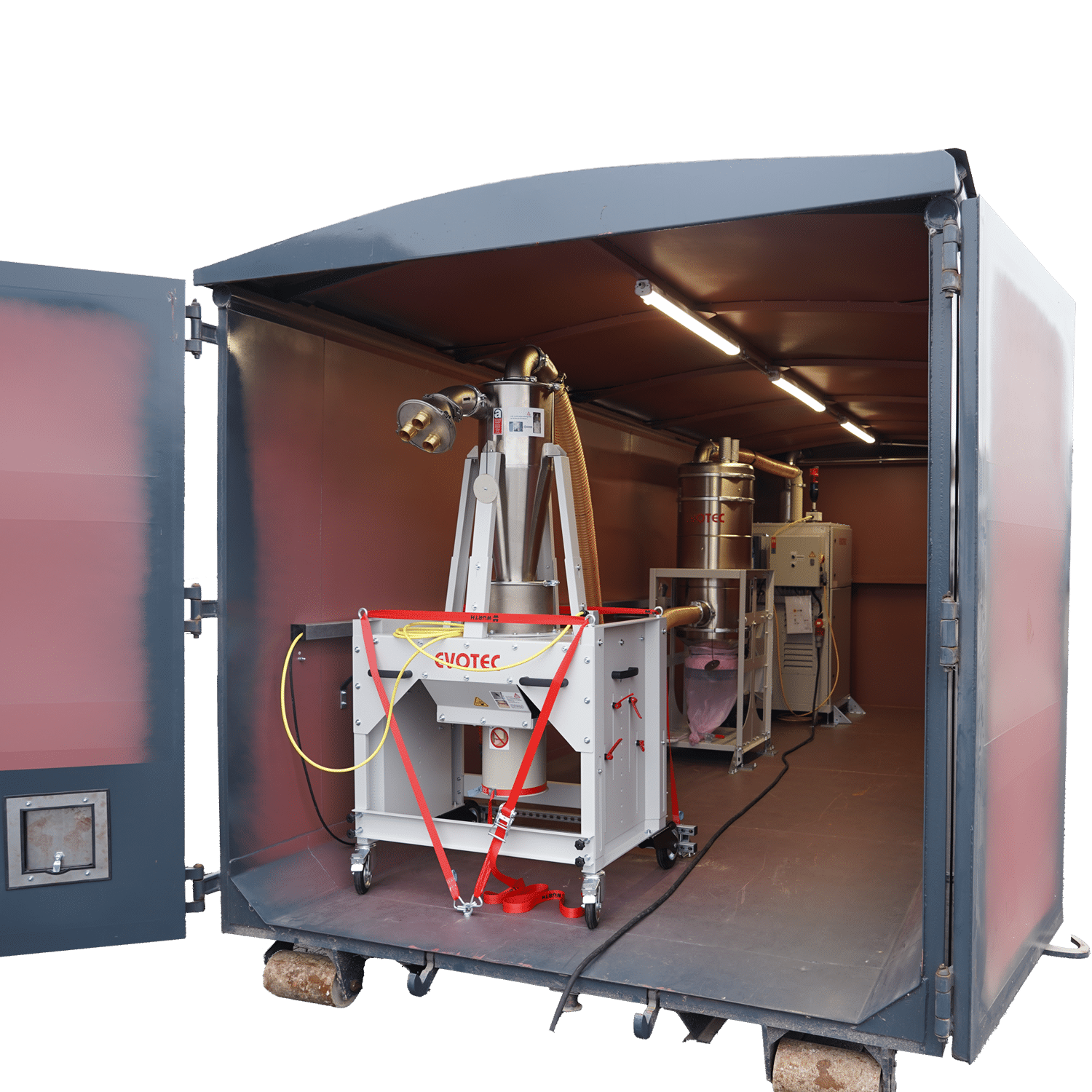
EVO TOOL VAC
Container-based extraction unit for large-scale asbestos removal projects
Frequently Asked Questions About Asbestos Extraction (FAQ)
Is a vacuum cleaner rated for dust class H sufficient for asbestos?
No. In addition to dust class H, TRGS 519 requires that the equipment be certified as suitable for use with asbestos in accordance with Annex 7.1. The decisive factors are type testing, labeling, manufacturer specifications, and the appropriate design.
Can a standard construction or industrial vacuum cleaner be used?
No. Standard workshop, construction, or household equipment is not suitable for asbestos work. It can release fibers again through exhaust air, leaks, filter changes, or emptying.
When may purified exhaust air be recirculated into the workspace?
In general, recirculation is not permitted. TRGS 519 lists limited exceptions, such as for activities involving low exposure, small-scale work, and cleaning tasks performed with suitable equipment as specified in Appendix 7.1. This decision is part of the process-specific protection concept.
What factors are important to consider when choosing an asbestos vacuum cleaner?
Information is required regarding materials and activities, approved procedures, risk zones, collection points, hose routing, exhaust air routing, operating duration, and filter and container handling.
Does a suitable asbestos vacuum cleaner replace the other protective measures?
No. Site assessment, risk assessment, qualifications, work procedures, containment, personal protective equipment, cleaning, and disposal remain separate components of the safety plan.
Your partner for industrial extraction solutions
EVOTEC develops industrial vacuum cleaners and extraction solutions for demanding industrial applications. For asbestos removal work, the focus is not on a general filter specification, but rather on the proven suitability of the specific equipment model and its integration into the approved procedure.
Commissioning
Maintenance
Which asbestos extraction system is right for your work process?
Please provide us with information on the material, planned activity, sampling point, work area, and operating duration. EVOTEC will assist you in selecting the appropriate equipment model, accessories, and exhaust air connection—based on the specified procedure.

Robin Buschbaum
Sales D/A/CH
Specialist for extraction technology
vertrieb@evo-products.de
02642 9373-53

Lars Blankenburg
Sales
lars.blankenburg@evo-products.de
02642 9373-10

Asim Zaman-Pahlke
Export Sales
export@evo-products.de
02642/9373-15