


Extraction for construction sites and renovations
Home page » Construction sites and Renovations
Extraction technology for low-dust construction, demolition, and renovation work
Drilling, cutting, grinding, milling, chiseling, and demolition generate coarse particles, respirable dust, and Fine Dust small enough to penetrate the alveoli, depending on the building material. Quartz-containing components can occur particularly in concrete, mortar, natural stone, and other mineral building materials. A suitable extraction system captures emissions as directly as possible at the tool or machine and limits their spread throughout the work area.
EVOTEC tailors mobile construction and industrial vacuum cleaners, as well as stationary solutions, to the specific building materials, work processes, amount of dust or debris, wet or dry applications, and operating duration. The specific equipment and dust class are determined based on a risk assessment, manufacturer approval, and operating conditions.
Your benefits on construction sites and during renovations:
Dust Monitoring at the Source
Dust is captured at the tool or machine whenever possible—before it spreads throughout the room and is carried into adjacent areas.
Appropriate dust and equipment class
Building materials, hazardous substances, work procedures, and waste disposal determine whether, for example, dust class M or a special H version is required.
Mobile, Rugged Construction Site Solutions
Mobile devices are used in various locations; stationary equipment supports fixed work areas, processing stations, or permanently connected processes.
What building materials, processes, and cleaning tasks are involved at your construction site? Tell us about the application site, the material to be extracted, and the operating conditions—we’ll work with you to evaluate the collection system, filtration technology, and equipment design.
What types of dust are generated during construction and renovation work?
Construction dust is not a homogeneous material to be vacuumed up. Composition and hazards depend on the age of the building, the building materials, the coatings, and the work procedures. Material analysis, safety data, and hazard assessment should therefore be the first steps in the selection process.
Mineral and quartz-containing dusts
When working with concrete, screed, mortar, brick, ceramic, or natural stone, fine mineral dust containing quartz may be generated. Quartz-A dust can penetrate deep into the lungs. TRGS 559 requires that exposure be minimized; effective measures include low-dust processes, wet processing, and a tailored extraction system directly at the source.
Wood, plaster, fiber, and mixed dusts
Renovation projects often involve a variety of materials, including wood, plaster, insulation, old coatings, adhesives, and accumulated dirt. Individual components may require special protective measures. Visible coarse particles alone are not an indicator of fine dust exposure; suspicious materials from older buildings must be assessed before work begins.
BG BAU notes that, based on experience, mixed construction site dust also contains fine quartz dust. Dust should therefore not be swept up while dry or blown away with compressed air, but rather captured and collected using appropriate equipment. For more information, see BG BAU – Less Dust on Construction Sites.
Where does dust need to be collected?
The most effective monitoring begins at the source. The tool connection, collection hood, hose, and dust collector must function as a single system. A high-performance filter can only capture the dust that actually enters the unit.
BG BAU recommends dust collectors suitable for construction sites that meet at least dust class M for mineral dust and provide direct extraction from hand-held power tools. Details: BG BAU – Construction Dust Collectors.
Directly on the machine and tool
For drilling, cutting, grinding, milling, and chiseling tools, the extraction point should be as close as possible to the source of the fumes. The hood, connection diameter, hose length, and required airflow must all be compatible. Leaky connections, unsuitable adapters, or clogged filters reduce the effectiveness of the system.
Work Area, Residual Dust, and Post-Construction Cleaning
Dust that has settled on floors, scaffolding, machinery, and components is removed using appropriate vacuum cleaners or dust-binding methods. Cleaning equipment is not a substitute for direct extraction during the machining process. For larger areas, coarse dirt, water, or mud, other equipment and accessory configurations may be required.
Which filter and equipment technology is right for you?
The equipment class, filtration technology, and disposal method must be appropriate for the material being extracted. The key factors are the hazardous substance, particle size, dust volume, humidity, operating time, and whether the device is used with the tool as a dust extractor or solely for cleaning. A high filter rating alone does not replace a suitability test.
Dust class M or H
For mineral-based construction dust—typically containing quartz—the BG BAU specifies construction dust collectors of at least dust class M. For certain carcinogenic, biological, or particularly hazardous substances, a suitable model of dust class H or an additional application-specific approval may be required. The risk assessment, applicable regulations, and manufacturer approval are decisive.
Cleanable Filters and Performance Monitoring
Fine construction dust can quickly clog filters. Automatic or appropriate filter cleaning, sufficient filter area, and a warning system that activates when the airflow is too low all help ensure stable operation. Filters must not be tapped dry or replaced in a way that causes dust to be released uncontrollably.
Classification: DGUV Information 209-084.
Low-Dust Collection and Disposal
Non-woven bags, waste disposal bags, Longopac, or other discharge systems are selected based on the material being extracted and the associated hazards. Container changes, transport, and disposal must be organized in such a way as to minimize the impact on employees and the surrounding area. Hazardous materials must not be mixed with ordinary construction debris.
Plan wet, heavy-duty, and pumping tasks separately
Water, drilling mud, coarse debris, and dry hazardous dust each present different challenges. A wet/dry vacuum cleaner designed for liquids is not automatically suitable for hazardous Fine Dust; conversely, a dry vacuum cleaner may only be used in wet mode if expressly approved for that purpose. The material being vacuumed, the container, the filter, and the discharge system must all be compatible.
Important: The specifications listed on the unit and the operating instructions apply to the specific application. Accessories, hose routing, and filter condition are part of the system.
Exhaust Systems by Construction Project
Drilling, Cutting, Grinding, and Milling
For hand-held tools, a tailored direct extraction system is particularly effective. A portable construction dust collector must provide the required airflow at the tool connection point even when the filter is full. Wet methods can further reduce dust emissions if the building material and the work being done allow for it.
Demolition, Chiseling, and Material Removal
High levels of coarse and fine dust require robust hoses, sufficient cross-sectional area, appropriately sized containers, and effective filter cleaning. For larger emission sources, additional capture, enclosure, or air purification may be necessary; direct process extraction remains the primary measure.
Renovation of Existing Buildings
Before beginning work in older buildings, it is necessary to investigate potential hazardous substances in plaster, joint compound, adhesives, coatings, insulation, or flooring systems. Containment, negative pressure, air flow management, and decontamination may be part of the safety plan. A standard construction site vacuum cleaner is not a substitute for this planning.
Water, Mud, and Post-Construction Cleaning
Wet vacuums or pump vacuums with appropriate pumping and discharge technology are suitable for water, sludge, and large volumes of liquid. For dry residual dust and post-construction cleanup, suitable dust collectors or industrial vacuum cleaners are provided. Between applications, filters, containers, and accessories must be adjusted according to the manufacturer’s instructions.
Related Applications: Additional requirements apply to specific hazardous substances and processes. Learn more about the extraction of grinding dust and the safe extraction of asbestos dust.
What does the interpretation depend on?
Motor power or maximum outdoor airflow alone are not sufficient for making a selection. A suitable operating point is required at the tool or suction point—including the hood, adapter, hose length, elbows, filter configuration, and simultaneously used connections.
Building Materials, Hazardous Substances, and Dust Levels
- Building materials, age of the building, coatings, and known or suspected hazardous substances
- inhalable or alveolar fractions, quartz content, and dust concentration
- dry or wet materials, coarse debris, fibers, sludge, or water
- Required dust class, as well as low-dust collection, maintenance, and disposal
Tools, Hose Routes, and Operating Time
- Tool connection, collection hood, cleaning kit, or fixed suction point
- Hose diameter, length, elevation differences, and desired flexibility
- Short, one-time operations, shift work, or permanent process integration
- Power supply, durability on construction sites, transport, and emptying at the job site
Avoid common mistakes: Using the wrong equipment class, hoses with insufficient cross-sectional area, leaky adapters, clogged filters, or mixing dry hazardous dust with liquids can significantly reduce protective effectiveness and compromise operational safety. Changes to materials or processes require re-testing.
Which extraction system is right for your construction project?
Information on building materials, work methods, tool attachments, dust or debris levels, wet or dry applications, and daily operating time enables a reliable preliminary selection.
Assess asbestos and other hazardous substances separately
If asbestos is suspected, work must not begin using a standard construction or industrial vacuum cleaner. Before any work is performed on suspicious building materials in older structures, an investigation, sampling, and an expert assessment are required. Work involving materials containing asbestos is subject to the Hazardous Substances Ordinance and TRGS 519; qualifications, notification requirements, work procedures, containment measures, and clearance depend on the specific project and risk category.
Only equipment that is suitable for asbestos work and used in accordance with regulations may be used. A Dust Class H designation alone does not replace either the additional asbestos qualification or the prescribed work procedure. Learn more about the safe extraction of asbestos dust.
Legal basis: TRGS 519 “Asbestos: Demolition, Renovation, or Maintenance Work.”
Construction and Industrial Vacuum Cleaners for Dust, Coarse Debris, and Water
Mobile units are suitable for use in various locations, for direct extraction from compatible tools, and for cleaning. The products shown here, which are categorized by application, represent a preliminary selection: dry, hazardous dusts, wet cleaning, sludge, and pumping tasks require different unit designs. Dust class, filters, accessories, and discharge methods must be suited to the specific application.
Stationary built-in vacuum cleaners and extraction solutions are suitable when fixed work, processing, or cleaning areas need to be permanently serviced. The series shown here is a preliminary selection. The operating point, piping network, filter configuration, and safety features are determined based on the actual process.
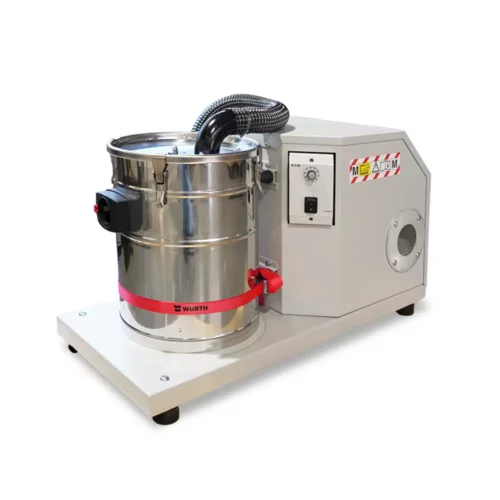
EBG built-in vacuum cleaner
- EC motor for continuous operation (24/7) and EX protection
- Process-adaptable extraction unit with high negative pressure for the extraction of all dry dusts
- Simple under-sink appliance with intelligent features
- Stainless steel version on request
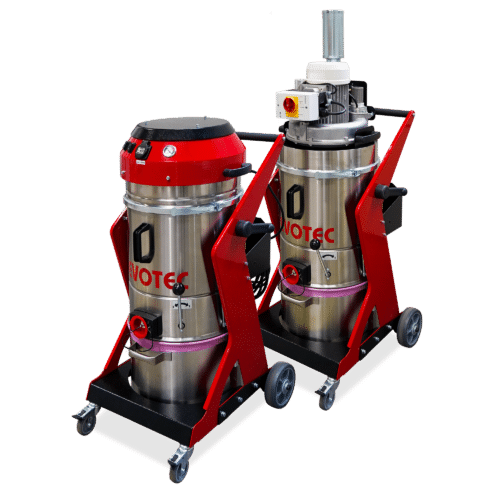
ECODustPro
High-performance industrial vacuum cleaner with a combination filter system ("M" + "H") for all types of dry dust, also available in explosion-proof or asbestos-safe models.
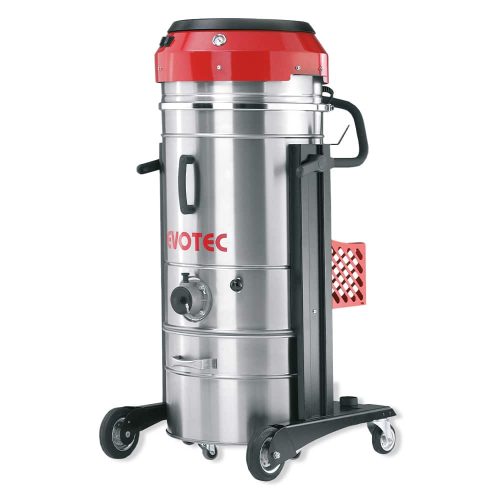
EP 1136
Powerful dry vacuum cleaner for industrial applications with modular design for different filter and disposal solutions.
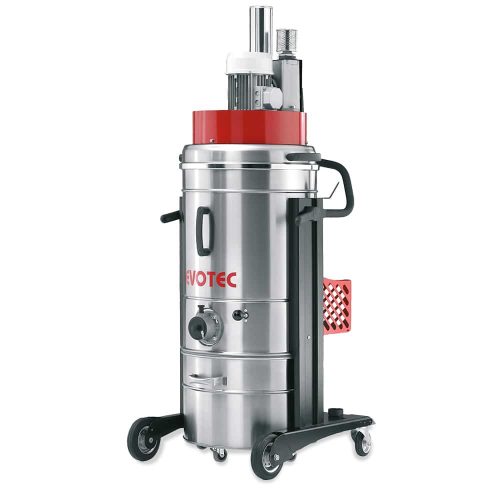
EP 2130 ECO
High-performance industrial vacuum cleaner with a modular design for flexible filter configurations, optionally available with explosion-proof protection for use in ATEX Zone 22.
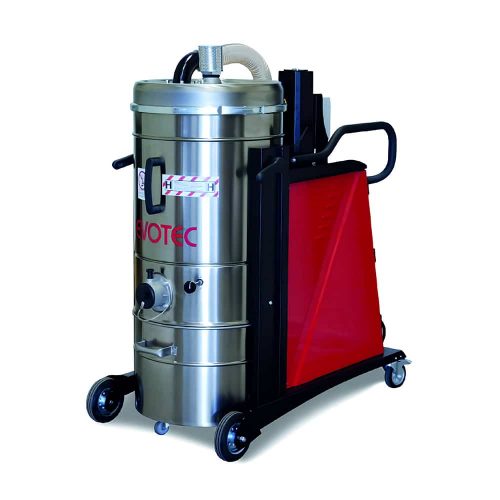
EP 2130/ EP 2140 ECO / EP 2155 ECO
Robust high-performance industrial vacuum cleaners with modular device configuration for variable filter, disposal and control options, also as EX version.
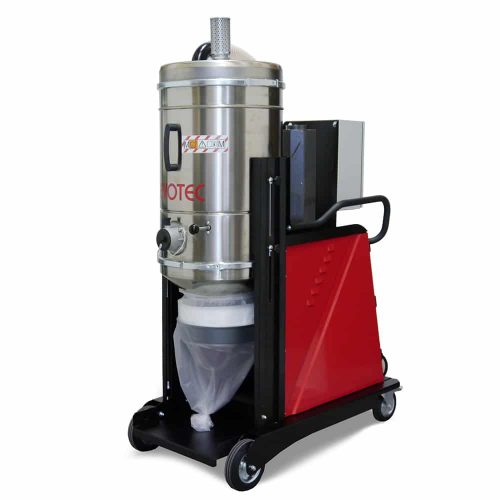
EP 2155/ EP 2175 ECO
Robust high-performance industrial vacuum cleaners with modular device configuration for variable filter, disposal and control options, also as EX version.
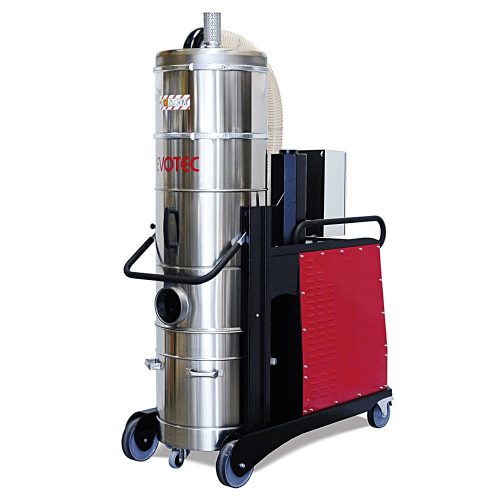
EP 2175 / EP 21130
Robust high-performance industrial vacuum cleaners with modular device configuration for variable filter, disposal and control options, also as EX version.
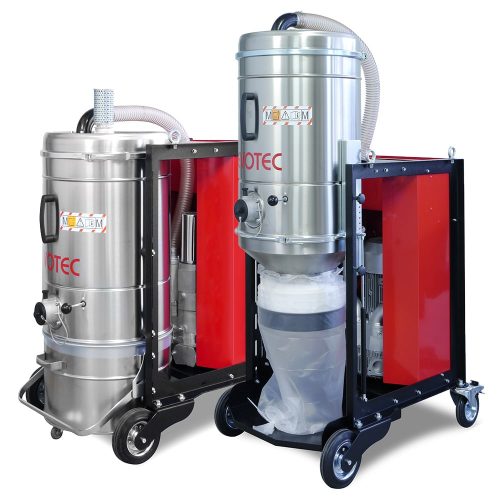
Robusto
Rugged, high-performance industrial vacuum cleaners with a modular design for flexible filter, waste disposal, and control options, also available in TRGS 519-certified asbestos or EX versions.
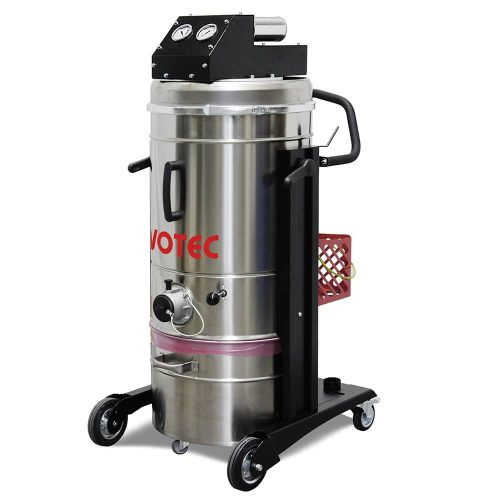
EP 312-60 Compressed air vacuum cleaner
High-performance industrial vacuum cleaner powered by compressed air for collecting all types of dry dust.
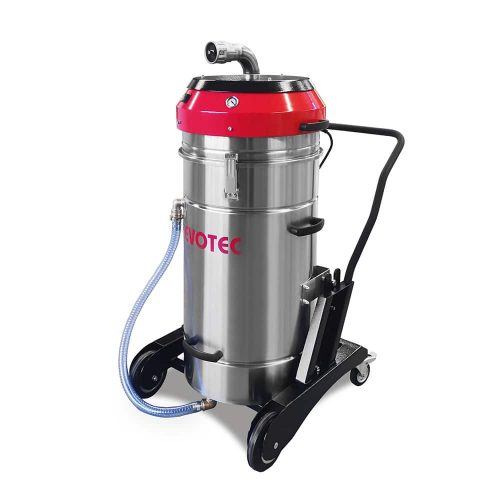
EP 1024 Pump vacuum cleaner
Pump vacuum cleaner with stainless steel submersible pump (900 W) for continuous suction of liquids and simultaneous pumping in one operation.
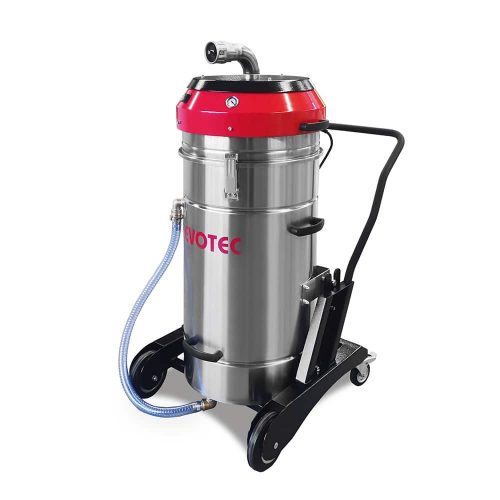
EP 1036 Wet/dry vacuum cleaner
Powerful wet/dry vacuum cleaner with tilting chassis and electronic fill level control for automatic motor switch-off.
Frequently Asked Questions About Ventilation on Construction Sites and During Renovations (FAQ)
What dust class is required for a construction site dust collector?
That depends on the building material, hazardous substance, and risk assessment. For mineral-based construction dust—which typically contains quartz—BG BAU specifies that construction dust collectors must meet at least dust class M. For certain hazardous substances, a suitable H-model or additional certification may be required.
Can a standard wet/dry vacuum cleaner pick up quartz dust?
Not across the board. A device must be specifically designed for dust that poses a health hazard, the intended dust class, and use with the tool. A wet-dry function alone does not indicate such suitability. For quartz dust, at least M-class dust collectors are used on construction sites.
Which vacuum cleaner is suitable for asbestos removal?
Only a vacuum cleaner suitable for asbestos and the specific procedure, as part of a TRGS 519-compliant safety plan. A general “H” label alone is not sufficient. Work on materials containing asbestos requires expert planning, the prescribed qualifications, and, if necessary, notification or authorization.
When is direct extraction at the tool required?
During dust-generating operations, dust should be captured as close as possible to where it is generated. This is especially true for drilling, cutting, grinding, milling, and chiseling. Cleaning the area afterward cannot undo prior exposure or the spread of dust.
Which device is best suited for water, mud, and heavy-duty dirt?
For water and sludge, wet vacuums or pump vacuums with appropriate pumping and drainage systems are suitable; for dry, coarse debris, robust industrial or construction site vacuums are recommended. If the debris contains Fine Dust that poses a health hazard, the dust class, filter, and disposal method must also be appropriate.
Your partner for industrial extraction solutions
EVOTEC develops extraction systems and industrial vacuum cleaners for industrial applications and realizes application-specific special solutions in addition to near-series devices. Our systems are designed for process reliability, durability and individual requirements.
Commissioning
Maintenance
Which dust extraction solution is right for your construction site or renovation project?
Please provide us with information on the building material or suspected hazardous substance, work procedures, tool connections, the amount of dust or dirt, whether the application is wet or dry, and the operating duration. EVOTEC will assist you in selecting a suitable mobile or stationary solution.

Robin Buschbaum
Sales D/A/CH
Specialist for extraction technology
vertrieb@evo-products.de
02642 9373-53

Lars Blankenburg
Sales
lars.blankenburg@evo-products.de
02642 9373-10

Asim Zaman-Pahlke
Export Sales
export@evo-products.de
02642/9373-15