Grinding Dust Extraction for Industrial Grinding Processes

Capture dust at the source. Keep work areas clean. Design processes to ensure safety.

Capture grinding dust directly at the tool, workstation, or machine

Depending on the material, dry and manual grinding can generate respirable and alveolar dust, coarse abrasion particles, and, in some cases, sparks. A suitable grinding dust extraction system captures the emissions as close as possible to the point of contact between the tool and the workpiece and reduces their spread throughout the work area.

EVOTEC tailors its mobile industrial vacuum cleaners and stationary extraction systems to the specific material, dust volume, collection method, and operating time—including appropriate filter, disposal, and safety features.

The benefits of grinding dust extraction:

Dust Monitoring at the Source

Dust is collected as close as possible to the tool, via a collection hood, or at the grinding workstation—before it settles in the room.

Filter Technology Tailored to the Material

The dust class, filter area, cleaning method, and disposal are selected based on the material and the actual dust load.

Mobile and stationary concepts

Mobile devices support flexible workstations and cleaning; stationary systems supply machines and data collection points that are permanently connected.

Which extraction system is right for your material, grinding process, and workspace? Tell us about your process—we’ll work with you to review the collection, filtration technology, and safety design.

What kinds of dust are produced during sanding?

Sanding dust is not a homogeneous substance. Composition and behavior depend on the workpiece, coating, abrasive, material removal rate, and process parameters. Material and safety data should therefore be considered at the outset of the design process.

Metals, Alloys, and Coatings

Grinding steel, stainless steel, aluminum, or other metals produces particles of varying fineness. Alloying elements, paints, coatings, oils, and adhering process residues can alter the hazard level. For high-alloy chromium-nickel steels, a material-specific assessment is particularly important.

Practical Basis: DGUV Information 209-002 “Grinding.”

Plastics, Composites, and Mineral-Based Materials

When grinding non-metallic materials, fine dust can be generated from the base material, fillers, fibers, coatings, or adhesive residues. The specific constituents and particle sizes are critical; a visible cloud of dust alone does not provide a reliable indication of the level of exposure.

Grinding dust can irritate the respiratory tract, settle on machinery and surfaces, and compromise product quality. In addition to the general dust exposure limit, any applicable substance-specific assessment criteria must be observed. Fire or explosion hazards must be assessed separately depending on the material.

How can grinding dust be effectively collected?

The most effective monitoring begins at the source. The tool hood, extraction table, back wall, or machine connection must capture airborne particles without unnecessarily hindering the machining process. A high-performance filter can only capture dust that has already entered the extraction system.

DGUV Information 209-002 recommends coordinated systems consisting of a grinder, a collection hood, and a suitable dust collector.

Direct Exhaust at the Tool and Machine

For hand-held machines, the extraction point should be as close as possible to the contact point between the tool and the workpiece. The hood geometry, hose diameter, and range of motion must be properly matched. For stationary machines, the machine connection, enclosure, and air supply are designed together.

Extraction table, back panel, and extraction hood

When workpiece positions vary, tables, back walls, or side capture elements equipped with extraction systems can be useful. The extraction opening should face the direction of particle and spark flow. Cross-flows, large distances, and obscured machining areas reduce the capture efficiency.

What type of filtration technology is suitable for grinding dust?

Filtration technology and waste disposal must be appropriate for the type of dust. Key factors include material properties, particle size, dust volume, operating time, and whether flammable or reactive dusts are present. Even the highest possible filter class alone does not replace this assessment.

Pre-separation and Spark Management

Coarse particulates and sparks can place a heavy load on downstream filters. Depending on the process, suitable pre-separators, spark arrestors, or other protective measures may be considered. Whether such components are sufficient must be evaluated based on the material, spark energy, and operating conditions.

Dust class M or H

For many grinding operations, dust collectors or industrial vacuum cleaners with a dust class of at least M are used; for certain hazardous substances, a model with dust class H may be required. The risk assessment, substance-specific requirements, and the specified equipment model are the determining factors—not just the name of a filter element.

Classification: DGUV Information 209-084.

Cleanable Filters for Continuous Processes

In cases of high or continuous dust accumulation, cleanable cartridge filters can help extend service life. The filter area, cleaning method, required compressed air, and discharge must be appropriate for the dust load. Adhesive or fibrous dusts may require a different filter design than dry, free-flowing particles.

Low-Dust Waste Disposal and Cleaning

Collection containers, Longopac systems, or other discharge systems are selected based on the amount of dust and the level of hazard. Deposits should be removed using suitable industrial vacuum cleaners or dust-binding methods. Dry sweeping and blowing with compressed air stir up Fine Dust again and are unsuitable for hazardous dusts.

Additional information on data collection: DGUV Dust Info – Extraction at the source.

Exhaust system suitable for the grinding process

Hand-Guided Grinding

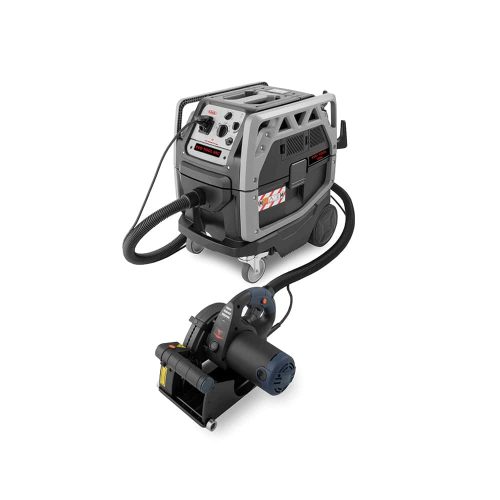
For angle grinders, eccentric sanders, or straight grinders, a hood mounted close to the tool, equipped with a suitable hose and dust collector, is particularly effective. Portable units are suitable for changing workstations, provided that the airflow, dust class, and duty cycle are appropriate for the task.

Stationary Grinding on Machines

Belt sanders, automatic sanding machines, and interlinked systems require permanent machine connections and a defined operating point. For multiple extraction points operating simultaneously, the ductwork, airflow distribution, filter load, and system control are designed as an integrated system.

Grinding and Polishing Workstations

Extraction tables or rear-wall extraction systems capture dust and airborne particles across a larger work surface. The size of the workpiece, the direction of operation, and the amount of sparks determine which capture configuration is appropriate. For heavy components, accessibility and a robust design must also be taken into account.

Cleaning and Accumulated Grinding Dust

Mobile industrial vacuum cleaners are intended for cleaning machines, floors, and work areas. They do not automatically replace continuous process extraction. When dealing with flammable or reactive metal dusts, the unit must be specifically designed for the material being vacuumed and the intended application.

Related Processes: Similar collection principles may apply to polishing and abrasive dusts; however, the filter and safety design remain application-specific. Learn more about polishing dust extraction and abrasive dust extraction.

What factors determine the design of the grinding dust extraction system?

Motor power or maximum outdoor airflow alone are not sufficient criteria for selection. The appropriate operating point must be determined based on the airflow rate and negative pressure at the actual sampling point—including the hose, piping, elbows, filters, and connections in use at the same time.

Material and Dust

  • Materials, alloys, coatings, and known hazardous substances
  • Particle size, dust concentration, flammability, and potential reactivity
  • dry or damp dust, fibrous or sticky particles
  • Required dust class, as well as a disposal and maintenance plan

Data Collection and Operations

  • Tool hood, extraction table, machine connection, or cleaning task
  • Hose and pipe routes, as well as extraction points that are active at the same time
  • intermittent use or continuous shift operation
  • Mobile use or stationary process integration with control and monitoring

Avoid common mistakes: A detection point that is too far away, unplanned hose extensions, clogged filters, or a change in material can significantly reduce effectiveness. Changes to the material, workstation, or process therefore warrant a re-evaluation.

Which data collection solution is right for your grinding workstation?

A sketch of the workstation, details about the material and abrasive, and the planned operating time will be helpful during the initial consultation.

Assess fire and explosion hazards associated with grinding dust separately

Fine metal dusts may be flammable or explosive. For aluminum, magnesium, and other reactive metal dusts, the material, dust volume, ignition sources, machining processes, and the entire exhaust system must be evaluated. The DGUV specifies special requirements for dry and wet processes in this regard.

Different types of metal dust should not be collected in the same system without prior testing. ESD equipment does not replace certified explosion-proof design; an ATEX option offered is only permitted within the intended scope of application. For reactive dusts, wet separation or inert safety vacuum cleaners may be required. Learn more about the extraction of potentially explosive dusts.

Basis: DGUV Rule 109-001 – Grinding, Brushing, and Polishing of Aluminum. The specific selection is made based on the workplace risk assessment and the manufacturer’s specifications.

Application Example:
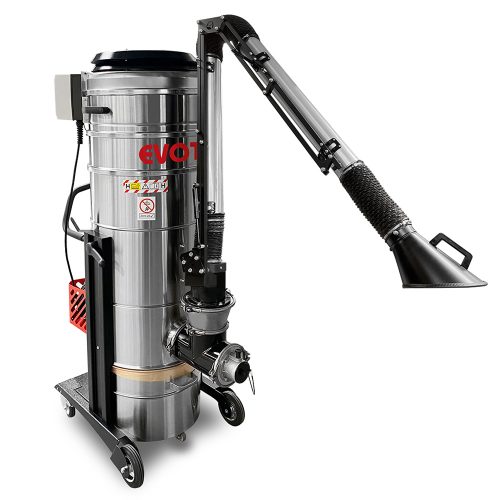
EVOTEC FEX 5000 PRO for source-based collection of grinding dust at a hand-held grinding workstation

A properly positioned extraction arm or a system that captures dust and airborne particles close to the tool collects them as directly as possible at the machining area.

Application Visualization – Partially AI-Generated

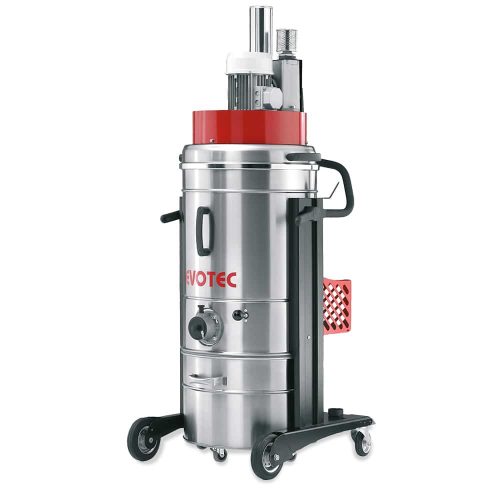
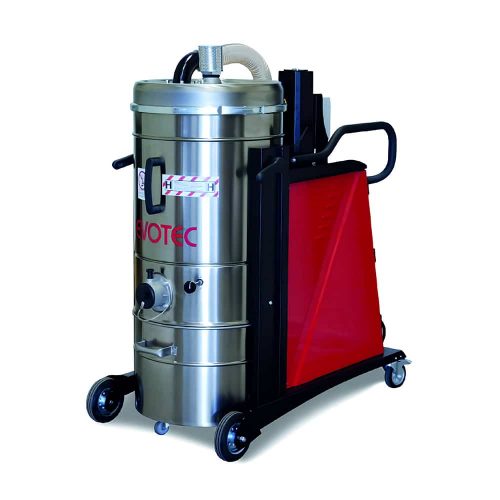
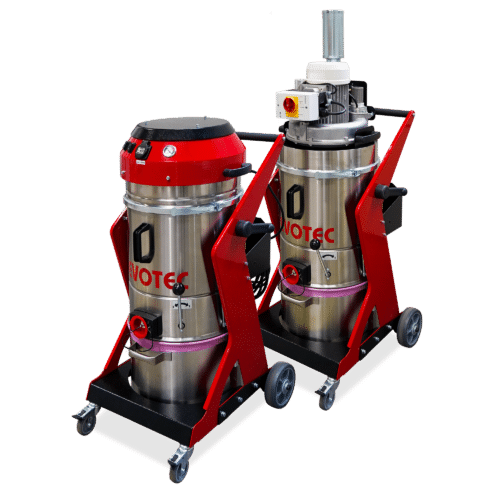
Mobile Industrial Vacuum Cleaners for Grinding Dust and Workplace Cleaning

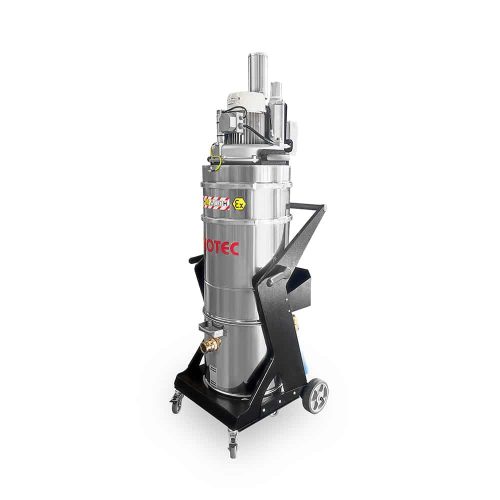
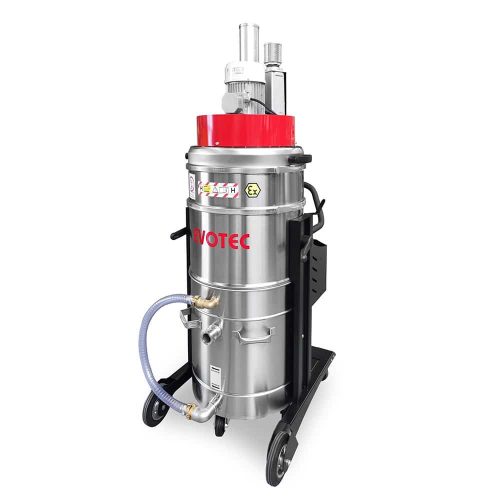
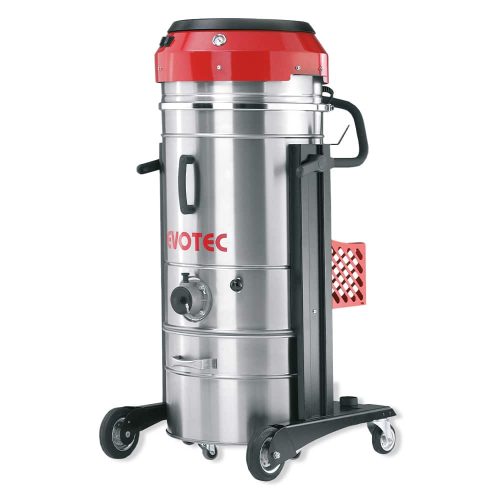
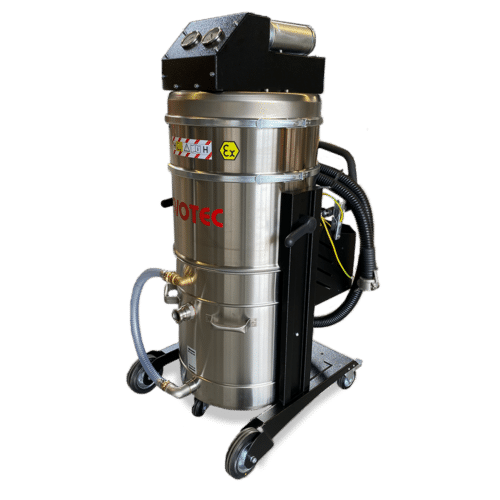
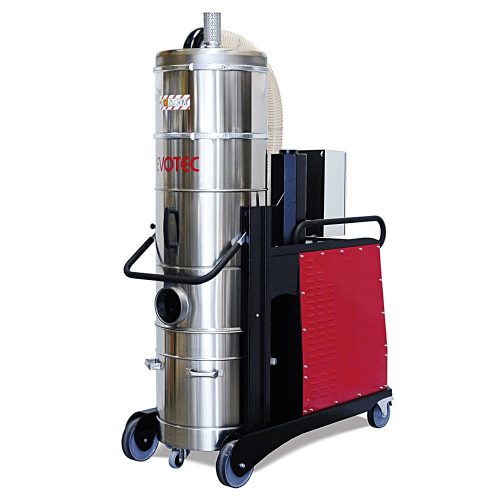
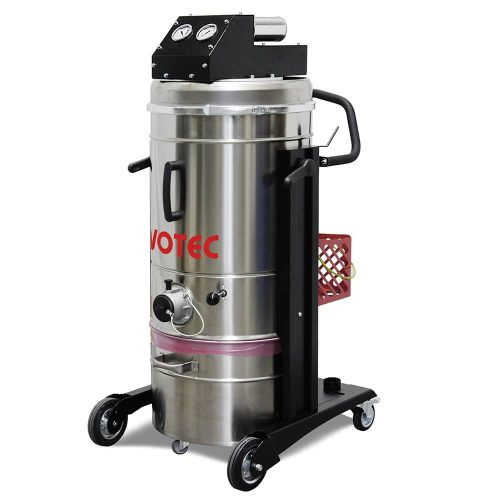
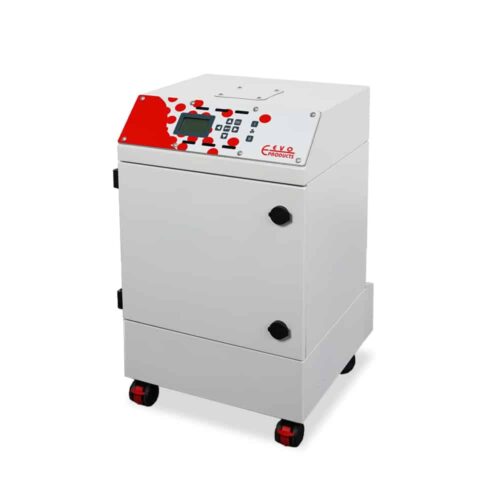
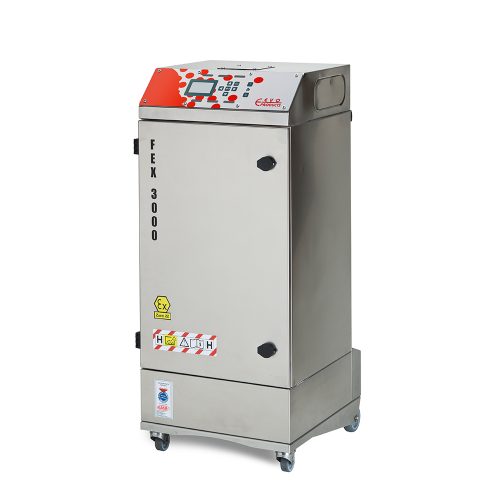
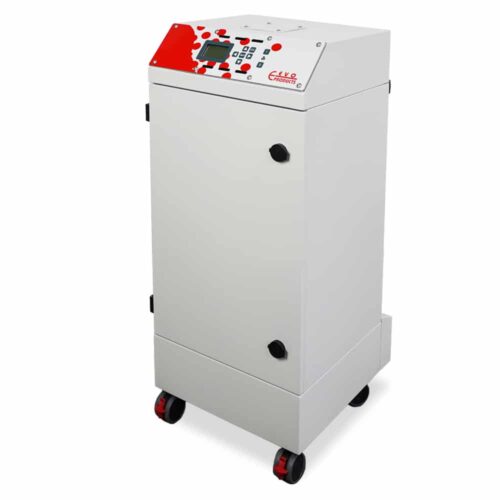
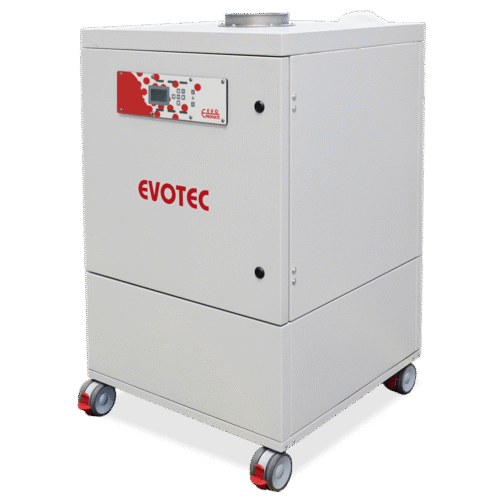
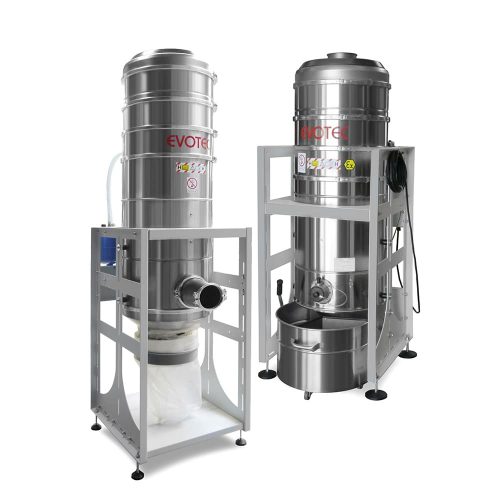
Mobile units are suitable for use at changing grinding stations, for local exhaust ventilation near tools, and for cleaning up accumulated dust. The units shown here, which are categorized by application, represent a preliminary selection. The dust class, suitability for continuous operation, container design, and safety features must be appropriate for the specific material being extracted.

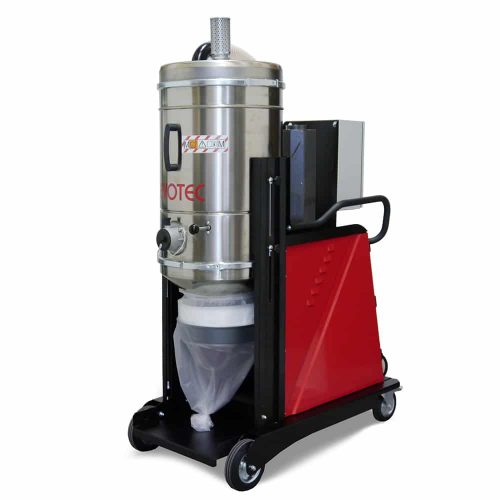
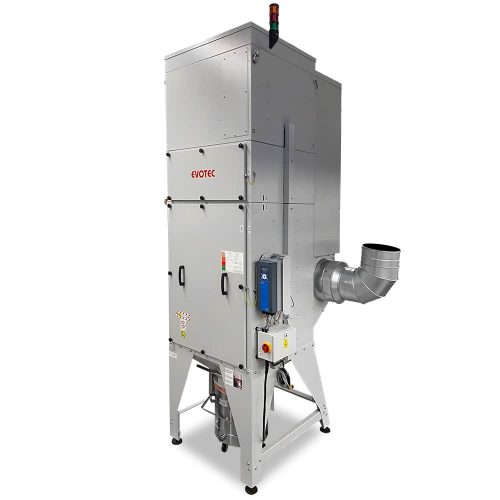
Stationary extraction systems for grinding workstations and machines

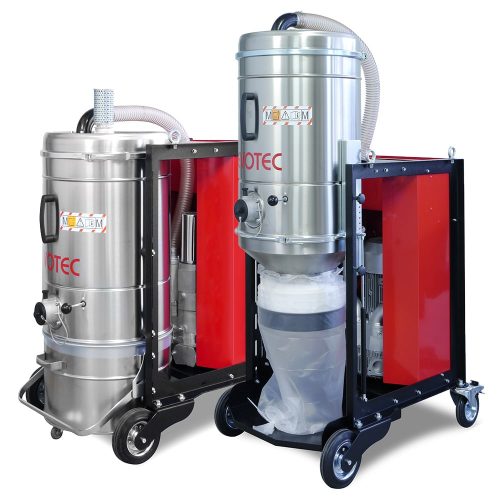
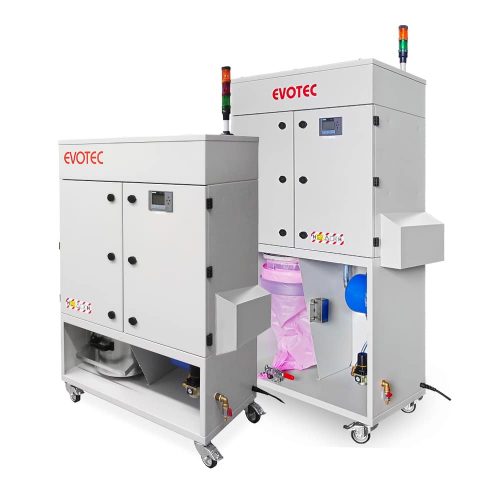
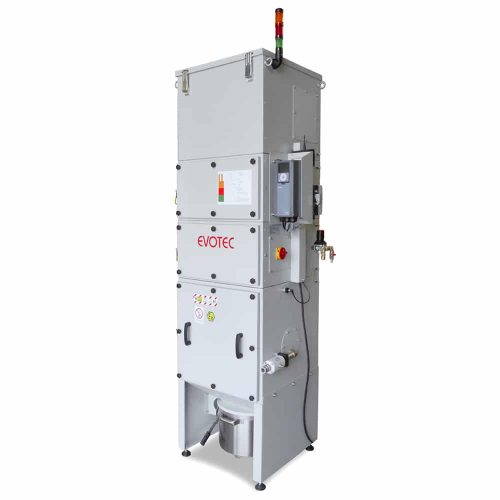
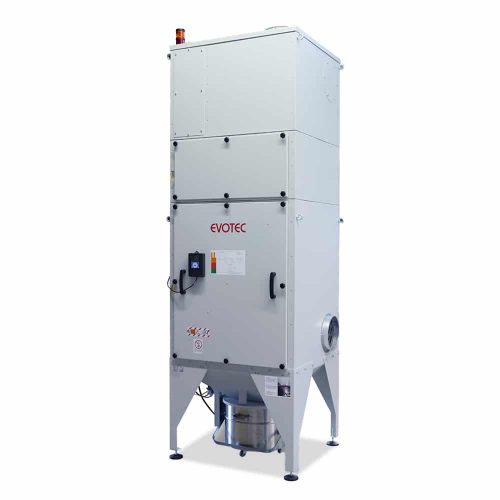
Stationary systems are suitable for permanently connected grinders, extraction tables, and multiple collection points. The series shown here are a preliminary selection. The required operating point, filter cleaning, discharge, and safety design are determined for the specific process.

Frequently Asked Questions About Grinding Dust Extraction (FAQ)

What dust class is required for sanding?

That depends on the material and the risk assessment. For many grinding operations, at least dust class M is used; for certain hazardous substances, dust class H may be required. The key factor is the equipment model specified for the specific material being extracted.

Mobile industrial vacuum cleaners are suitable for changing workstations, localized extraction, and cleaning tasks. Stationary systems are designed for permanently connected machines, multiple extraction points, and continuous operation. The choice depends on the operating mode and extraction requirements.

It depends on the situation. When dealing with flammable or reactive light-metal dusts, dry or wet methods, equipment suitability, ignition sources, and disposal must be evaluated together. Special requirements apply in such cases; a standard dry vacuum cleaner is not automatically suitable.

The required operating point depends on the type of hood or fume hood, the distance, airborne particles, hose and duct resistance, and the number of connections in use at the same time. A single specification for the motor or outdoor conditions is not sufficient for sizing purposes.

Only if the specific substances, the required separation efficiency, and the applicable requirements permit it. The filter condition, proof of effectiveness, and airflow must be taken into account; for hazardous or flammable dusts, exhaust air may be required.

EVO-PRODUCTS

Your partner for industrial extraction solutions

EVOTEC develops extraction systems and industrial vacuum cleaners for industrial applications and realizes application-specific special solutions in addition to near-series devices. Our systems are designed for process reliability, durability and individual requirements.

Years of experience
1 +
Developed models
1 +
Satisfied customers
1 +
MADE IN GERMANY
1 %
1
Analysis of the Situation
Consultation Meeting to Determine Customer-Specific Requirements
2
Concept Development
Joint development of potential solutions and formulation of an exhaust system concept, taking into account the existing infrastructure
3
Quotation Preparation
Detailed quotation based on specific customer requirements
4
Placing an Order
Final Project Planning and Contractual Arrangements
5
Production
Custom manufacturing of systems and components
6
Delivery, Installation, &
Commissioning
Safe delivery of the system, installation by EVO-PRODUCTS technicians, or detailed assembly instructions for customer installation
7
Training, After-Sales &
Maintenance
Equipment-specific training, optional maintenance contracts & services
document.addEventListener('DOMContentLoaded', function () { const mediaQuery = window.matchMedia('(max-width: 1439px)'); let observer = null; function initMobileTimeline() { const steps = document.querySelectorAll('.evo-step'); if (!steps.length) return; if (observer) { observer.disconnect(); observer = null; } steps.forEach(step => step.classList.remove('is-active')); if (!mediaQuery.matches) return; observer = new IntersectionObserver((entries) => { entries.forEach(entry => { if (entry.isIntersecting) { steps.forEach(step => step.classList.remove('is-active')); entry.target.classList.add('is-active'); } }); }, { root: null, rootMargin: '-35% 0px -35% 0px', threshold: 0.2 }); steps.forEach(step => observer.observe(step)); } initMobileTimeline(); window.addEventListener('resize', initMobileTimeline); });

Which grinding dust extraction system is right for your process?

Please let us know the material and coating, grinding method, dust volume, operating time, and your planned monitoring requirements. EVOTEC will assist you in selecting a suitable mobile or stationary solution.

Robin-graust..jpg

Robin Buschbaum
Sales D/A/CH
Specialist for extraction technology
vertrieb@evo-products.de
02642 9373-53

asim-03.jpg

Asim Zaman-Pahlke
Export Sales
export@evo-products.de
02642/9373-15

Scroll to Top