


Exhaust Systems for Powder Coating – Safely Collecting Powder and Keeping Equipment Clean
Home page » Powder coating
Exhaust Systems for Powder Coating—Safe from the Booth to the Cleaning Station
During powder coating, not all of the coating powder adheres to the workpiece. Overspray can be released or resuspended inside the booth, at openings, in recovery systems, and during color changes, refilling, and cleaning. It is therefore essential to have a coordinated system comprising capture, airflow management, separation, cleaning, and safe collection.
EVOTEC develops mobile and stationary extraction solutions for cleaning and process support in powder coating. The design is based on powder characteristics, the plant area, dust volume, zoning, and operational procedures.
The benefits of powder extraction:
Collect the powder as close as possible to the release point
Cabinet exhaust systems, machine connections, and cleaning procedures limit the spread of overspray and powder buildup.
Plan Explosion Protection on a Zone-by-Zone Basis, Not as a Blanket Measure
Powder properties, potential ignition sources, grounding, and the specific zone determine the required equipment and system design.
Distinguish Between Mobile Cleaning and Stationary Process Exhaust Systems
Mobile industrial vacuum cleaners are designed for specific cleaning tasks; stationary systems are designed for use in cabins, for recovery, and for permanently connected suction points.
Where does overspray occur in your powder coating process—and how is it cleaned up today? Please provide us with information on the type of powder, the system, the release points, and the zoning. We will work with you to review the collection, filtration, disposal, and safety design.
Where does powder dust form during powder coating?
Powder may be released during coating, conveying, recovery, refilling, and cleaning. The visible dust cloud alone is not sufficient for assessment: Deposits on cabin surfaces, floors, pipes, or filters can also become a factor if they are later stirred up.
Overspray in the spray booth and coating area
Powder that is not deposited on the workpiece is captured as overspray by the booth’s air circulation system. Openings, workpiece movement, and unfavorable airflow patterns can carry powder outside the booth. Therefore, the capture system must be designed to accommodate the booth’s geometry, conveying system, and application rate.
Powder Feeding, Recovery, and Color Change
Additional release points arise during refilling, sifting, conveying, emptying, and color changes. During recovery and separation, concentrations and zones may differ from those in the work area. Cross-contamination and product quality must also be taken into account for recovered powder.
Cleaning is part of the safety plan: Deposits should be removed using appropriate methods without stirring up dust over a large area. Dry sweeping or blowing with compressed air can increase dust levels and is particularly risky in areas at risk of explosion.
Why is the exhaust system important for safety?
Many organic coating powders are flammable and can be explosive when mixed with air as a dust-air mixture. Whether and where a hazardous explosive atmosphere occurs is assessed based on the powder characteristics, the probability of release, the effectiveness of the exhaust system, and the areas of the facility.
Zone classification is facility-specific
“Zone 22” is not a universal characteristic of every powder coating. For example, DGUV Information 209-052 specifies Zone 22 within powder coating booths and Zone 20 in enclosed powder recovery systems. The actual classification must be consistent with the workplace risk assessment and the explosion protection document.
Electrostatic Charge and Grounding
In electrostatic powder coating, particles are specifically charged. Conductive objects, workpieces, conveyor fixtures, and personnel must be reliably grounded or connected in a conductive manner in accordance with the safety plan. Paint buildup or powder deposits on hangers can impair the ground connection.
TRGS 727 describes the requirements for preventing electrostatic ignition hazards.
How is powder effectively collected and separated?
Effective extraction begins at the point of release and maintains a steady airflow throughout the coating process. The booth, exhaust system, and spray function should be coordinated to ensure safety. Sufficient negative pressure and proper containment limit powder leakage and buildup.
Intake and Airflow
Cabinet openings, workpiece throughput, and spray direction all affect coverage. Insufficient airflow can cause powder to escape; excessively high airflow can impair application and transfer efficiency. The key factor is the required operating point in the actual process.
Filtration, Cleaning, and Recovery
The filter area and cleaning process must be appropriate for the amount of powder, particle size, and operating time. Recovery systems require a defined separation of powder, air, and foreign materials. Whether powder can be reused also depends on quality requirements and the manufacturer’s specifications.
Safe Collection and Disposal
Containers, bags, or discharge systems must be appropriate for the amount of dust and the associated hazards. When changing them, avoid unnecessarily stirring up deposits. Different powders or cleaning dusts should not be collected together without first testing them.
Equipment suitable for each specific area
A device is suitable only if its dust class, intended use, zone or ATEX classification, and all accessories are appropriate for the application. Conductive hoses or ESD equipment alone do not replace a complete explosion protection assessment.
The key is the entire system: the chamber, the collection system, the pipe or hose run, the separator, the filter, the cleaning system, the grounding, and the discharge must all function safely together.
Mobile and stationary extraction systems
Mobile Cleaning with Industrial Vacuum Cleaners
Mobile devices are suitable for specific cleaning tasks on cabins, floors, suspension systems, and equipment components. Suitability depends on the type of powder, dust class, zone, ignition sensitivity, and location of use. The vacuuming process must not redistribute deposits through the use of unsuitable exhaust air or accessories.
Stationary Cabin and Process Exhaust Systems
Stationary systems are designed for continuous collection, powder recovery, and permanently connected extraction points. Air flow, vacuum pressure, the piping network, filter cleaning, discharge, and safety interlocks are all part of the overall design.
Color Changes and Equipment Cleaning
Frequent color changes require easily accessible surfaces, defined cleaning procedures, and a strategy to prevent cross-contamination. Mobile vacuum cleaners can assist with cleaning; however, their suitability for use inside booths or recovery systems must be explicitly verified.
Powder Recovery and Quality
Recovery can reduce material losses, but it places demands on screening, purity, and process control. A dust collection solution must not pit safety and quality requirements against each other; both are derived from the powder, the coating system, and the desired reuse.
Related Applications: Learn more about Fine Dust extraction, the extraction of potentially explosive dusts, and the extraction of grinding dust.
What factors determine the design of the powder extraction system?
Motor power or maximum flow rate alone say little about the system’s effectiveness in a real-world process. The appropriate operating point must be specified for the cabin or suction point—including the pipe or hose route, filter configuration, and the number of active detection points.
Powder and Explosion Characteristics
- Composition, particle size, density, and moisture content of the coating powder
- Flammability and relevant properties such as minimum ignition energy and ignition temperatures
- The most critical powder used during product or color changes
- Dust class, zone, and intended use of the device
Facility, Installation, and Operation
- Chamber type, openings, conveying system, and powder application rate
- Recovery, Filtration, Cleaning, and Discharge
- Cleaning procedures, color changes, and maintenance access points
- Mobile use or fixed installation with monitoring and locking
Avoid common mistakes: Unclear zone assignments, contaminated grounding points, unsuitable accessories, clogged filters, or mixing different powders can compromise safety and process quality. Any changes to the powder or equipment require a reassessment.
Which extraction system is right for your powder coating process?
Using the safety data sheet, powder specifications, facility description, zone classification, dust volume, and cleaning procedure, it is possible to make a reliable preliminary selection.
Jointly Evaluate the Zone, Powder Properties, and Ignition Sources
Explosion protection does not begin with equipment labeling, but with the risk assessment. Coating powders can vary significantly in terms of minimum ignition energy, ignition temperature, and explosive behavior. If no reliable data is available, safety data, manufacturer specifications, or an appropriate test should be consulted.
Zone classifications may vary within a single facility. A portable device suitable for Zone 22 is therefore not automatically suitable for a closed-loop recovery system or every cleaning application. Conductive components and grounding reduce the risk of electrostatic ignition, but they are no substitute for selecting the appropriate equipment and implementing an explosion protection plan.
Additional Information: IFA – Determination of the Fire and Explosion Properties of Dusts.
Stationary Exhaust Systems for Cabins, Recovery, and Process Connections
Stationary solutions for powder coating systems are designed on a process-specific basis. Airflow measurement, air volume, piping, filter cleaning, discharge, grounding, explosion protection, and control system interlocks must be tailored to the actual system.
Mobile Industrial Vacuum Cleaners for Powder Coating and Equipment Cleaning
The products shown here are suitable—depending on the model and operating limits—for mobile cleaning and extraction tasks. The dust class, zone or ATEX compliance, filters, accessories, and waste disposal must be appropriate for the specific powder and location of use.
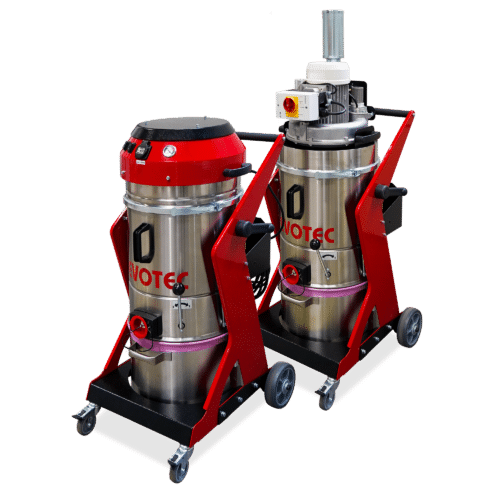
ECODustPro
High-performance industrial vacuum cleaner with a combination filter system ("M" + "H") for all types of dry dust, also available in explosion-proof or asbestos-safe models.
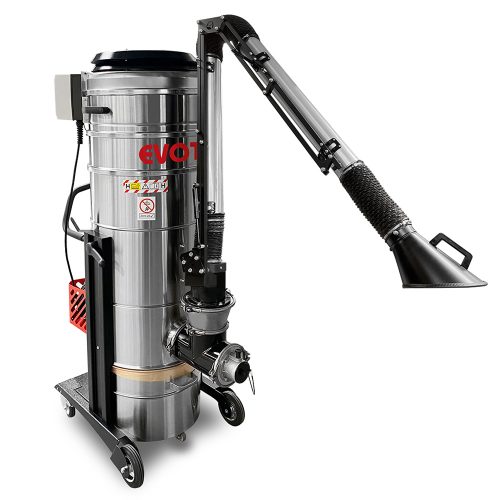
EP 1702/ 1703
High-performance industrial dust collector with very high airflow and a large filter area for capturing large quantities of dust and particles; also available in an EX version.
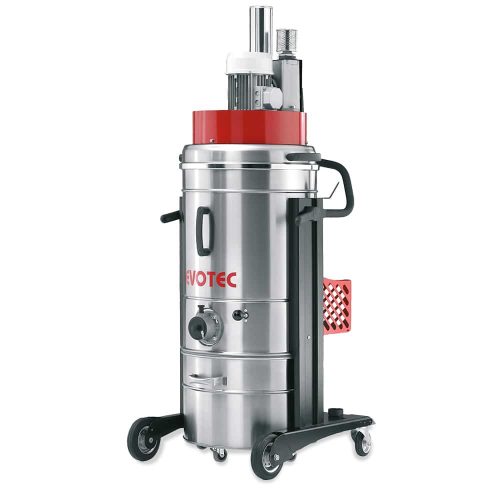
EP 2130 ECO
High-performance industrial vacuum cleaner with a modular design for flexible filter configurations, optionally available with explosion-proof protection for use in ATEX Zone 22.
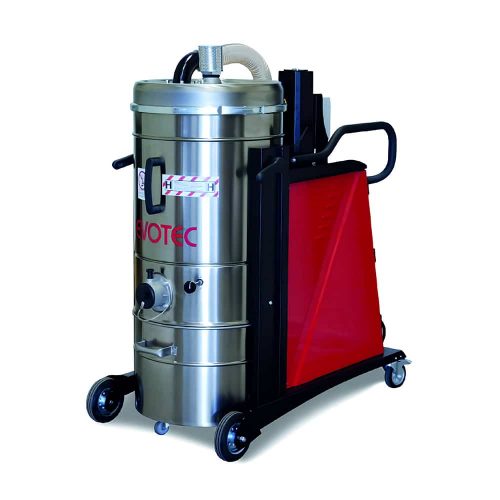
EP 2130/ EP 2140 ECO / EP 2155 ECO
Robust high-performance industrial vacuum cleaners with modular device configuration for variable filter, disposal and control options, also as EX version.
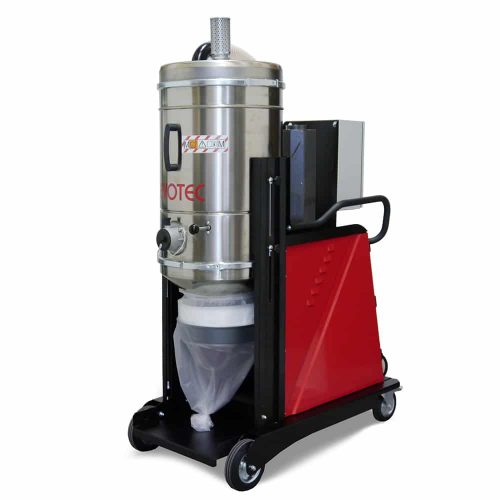
EP 2155/ EP 2175 ECO
Robust high-performance industrial vacuum cleaners with modular device configuration for variable filter, disposal and control options, also as EX version.
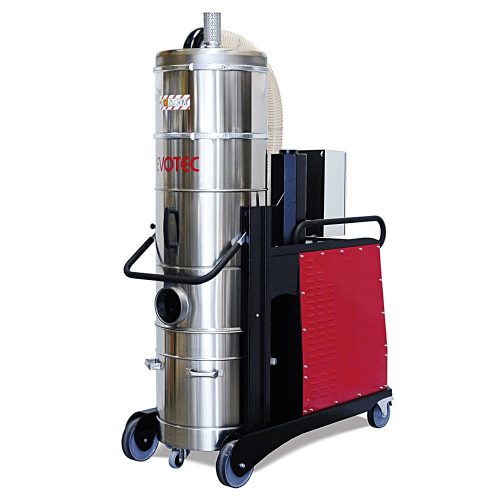
EP 2175 / EP 21130
Robust high-performance industrial vacuum cleaners with modular device configuration for variable filter, disposal and control options, also as EX version.
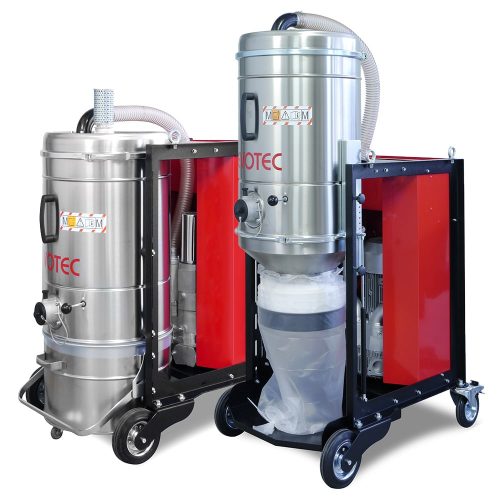
Robusto
Rugged, high-performance industrial vacuum cleaners with a modular design for flexible filter, waste disposal, and control options, also available in TRGS 519-certified asbestos or EX versions.
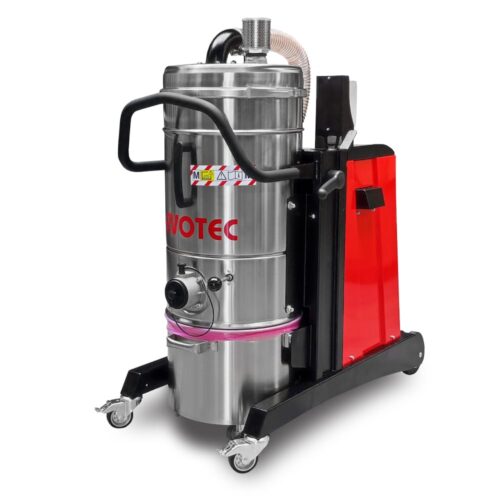
EPS SuperSilent
Sound-insulated high-performance industrial vacuum cleaner for quiet continuous operation with modular device configuration for variable filter, disposal and control options, also available as EX version.
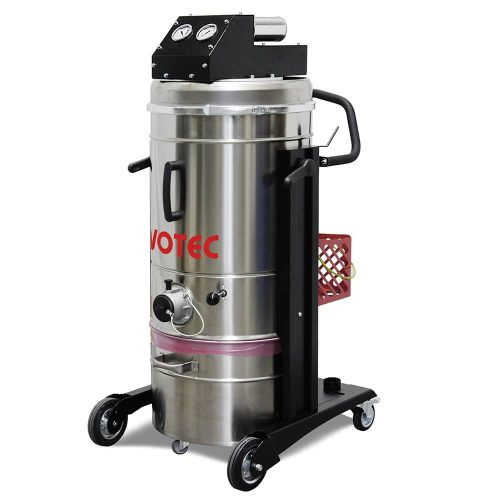
EP 312-60 Compressed air vacuum cleaner
High-performance industrial vacuum cleaner powered by compressed air for collecting all types of dry dust.
Frequently Asked Questions About Exhaust Systems for Powder Coating (FAQ)
Can a potentially explosive atmosphere form during powder coating?
Yes. Many coating powders are flammable and, when suspended in the air as dust, can form an explosive mixture. Whether a hazardous explosive atmosphere develops depends on the powder’s properties, concentration, release, ventilation, and the area of the facility.
Is a vacuum cleaner suitable for Zone 22 always sufficient?
No. Zone 22, for example, may apply to certain areas of a cabin; in enclosed recovery systems, an explosive atmosphere may occur more frequently, resulting in a different zone. The equipment, accessories, and intended use must be appropriate for the actual location of use.
When is a mobile device the better choice—and when is a stationary system?
Mobile industrial vacuum cleaners are designed for specific cleaning tasks and use in various locations. Stationary systems handle continuous cabin or process extraction, recovery, and multiple permanently connected suction points. Both applications require a separate safety assessment.
Why are grounding and conductive components important?
Electrostatically charged powder particles and isolated conductive parts can pose a risk of ignition. Therefore, workpieces, hangers, conductive equipment components, and personnel must be grounded or connected to a conductive system in accordance with the safety plan. Deposits must not interrupt the ground connection.
Can vacuumed-up coating powder be reused?
Only if the powder quality, screening, purity, and equipment manufacturer permit it. Cleaning dust, foreign materials, or mixed colors may preclude reuse. Safety and quality requirements must be reviewed jointly.
Your partner for industrial extraction solutions
EVOTEC develops extraction systems and industrial vacuum cleaners for industrial applications and realizes application-specific special solutions in addition to near-series devices. Our systems are designed for process reliability, durability and individual requirements.
Commissioning
Maintenance
Which extraction system is right for your powder coating process?
Please provide us with the type of powder, the facility, the release points, the zoning, the cleaning procedure, and your desired recovery rate. EVOTEC will assist you in selecting a suitable mobile or stationary solution.

Robin Buschbaum
Sales D/A/CH
Specialist for extraction technology
vertrieb@evo-products.de
02642 9373-53

Lars Blankenburg
Sales
lars.blankenburg@evo-products.de
02642 9373-10

Asim Zaman-Pahlke
Export Sales
export@evo-products.de
02642/9373-15