Extracting Soldering and Welding Fumes – Capturing Emissions Directly at the Source

Monitor particles, vapors, and gases in accordance with process requirements. Reduce exposure. Ensure clean workplaces.

Effectively Extract Soldering and Welding Fumes—Tailored to the Process, Material, and Worksite

Welding and soldering produce various mixtures of hazardous substances. Welding fumes consist primarily of very fine particulate matter; depending on the process, base and filler materials, coatings, and process parameters, gaseous hazardous substances may also be present. Soldering fumes contain, among other things, particles and decomposition products of the flux. Their composition and associated hazards must therefore be assessed on a case-by-case basis.

EVOTEC tailors the intake, airflow rate or negative pressure, filter stages, air recirculation, and exhaust to the actual workplace—either as a mobile solution for changing locations or as a stationary solution for permanently connected processes and multiple intake points.

Your benefits with soldering and welding fume extraction:

Measuring Emissions Directly at the Source

Burner-integrated extraction systems, extraction arms, flanges, tables, or hoods capture smoke and fumes as close as possible to where they are generated.

Adapt the filtration concept to the process

Particulate filters, sorption stages for gaseous components (if applicable), and W3 requirements are selected based on the specific hazard.

Mobile and stationary solutions

Mobile devices support flexible workstations; stationary systems support continuously connected processes and multiple data collection points.

What emissions are generated during your soldering or welding process—and where can they be most effectively captured? Please provide us with details on the processes, materials, filler materials, fluxes, and operating procedures. We will work with you to review the data collection and filtering approach.

What happens during welding and soldering?

Welding fumes and soldering fumes are not uniform substances. The key factors are the process, temperature, workpiece, filler material, flux, coatings, and contaminants. The risk assessment must therefore take into account both particulate and gaseous components.

Welding fumes: fine particles and process gases

Welding operations generate very fine particulate hazardous substances. Depending on the process and material, these may include, for example, metal oxides as well as gaseous substances such as ozone or nitrous gases. The composition is largely determined by the base and filler materials, coatings, and process parameters.

Basis: TRGS 528 “Welding Operations.”

Solder Fumes: Flux Products, Particles, and Vapors

During soft or hard soldering, metal-containing particles and decomposition products from fluxes may be produced. Rosin, amines, and other reaction products can irritate the respiratory tract and eyes. Therefore, it is not enough to assess only visible fume; gaseous components and the specific brazing chemistry must also be taken into account.

Technical Note: BG ETEM on solder fume emissions during soft soldering.

Appearance and odor are not reliable indicators of hazard. Protective measures must be tailored to the substance data, the process, the duration of exposure, and the actual exposure conditions.

Why is collection at the source so important?

The closer the extraction system is to the source of the fume, the less fume enters the breathing zone and the air in the hall. The measurement must account for thermal buoyancy and process movement without disrupting the inert gas flow or the process.

Detection near the source before it spreads

Burner-integrated extraction systems, extraction flanges, adjustable extraction arms, extraction tables, or enclosures capture emissions directly at the process. The appropriate option depends on the component, the seam path, the range of motion, and the required air flow rate or negative pressure.

Room ventilation is a supplement

Mechanical ventilation can capture residual emissions and protect third parties, but it does not replace effective capture at the source. TRGS 528 generally requires local exhaust ventilation at the source during manual welding; additional general ventilation is designed according to the specific conditions.

How are soldering and welding fumes captured?

An effective system combines proper collection with proper separation. Particles, gaseous components, sparks, filter loading, and planned air recirculation must be considered together.

Sensing Element and Operating Point

The extraction arm, burner exhaust, hood, or table must be aligned with the direction in which the fume spreads. Key factors include the capture distance, tracking, air flow rate, negative pressure, and disruptive cross-drafts. An improperly positioned capture system may remain ineffective despite high system performance.

Particle Filtration and W3

Welding fume particles are captured in appropriate filter stages. When recirculating purified air and carcinogenic welding fume components, the specific requirements must be observed. Equipment tested in accordance with DIN EN ISO 21904-1 and -2 may be labeled as W3 and approved for the corresponding air recirculation.

Technical Note: IFA/DGUV on the Testing and Certification of Welding Fume Extraction Systems.

Gaseous Components in Soldering

Particle filters alone do not reliably remove gaseous decomposition products. If such substances are a concern, an application-specific sorption stage—often using activated carbon—is added. Sorption media have a limited adsorption capacity and must be monitored and replaced as appropriate for the mixture of substances.

Sparks, Filter Maintenance, and Safe Disposal

During welding processes, sparks and hot particles can enter the extraction system. Pre-filtration, spark traps, appropriate filter media, and safe discharge and replacement procedures reduce the risk of fire and exposure. Maintenance and filter replacement should be part of a defined safety plan.

Filter class or nominal airflow alone do not guarantee a safe solution. It is the combination of air intake, airflow, filtration, monitoring, maintenance, and the intended air recirculation that determines the system’s effectiveness.

Mobile and stationary extraction systems

Mobile Devices for Flexible Workplaces

Mobile extraction and suction units are suitable for changing workstations, rework, maintenance, and tasks confined to a specific area. The collection element, filter configuration, and suitability for continuous operation must be appropriate for the specific soldering or welding process.

Stationary systems for multiple data collection points

Stationary systems supply permanently connected extraction arms, machines, tables, hoods, or robotic welding cells. The ductwork, simultaneous-use factor, pressure drop, filter cleaning, and discharge are designed for the actual operating point.

High vacuum and burner-integrated detection

Systems with integrated burners capture welding fumes very close to the source and typically operate with low flow rates and higher negative pressure. The design must ensure that the fume plume is captured without interfering with the shielding gas process.

Low vacuum with arm, hood, or table

Exhaust arms, hoods, and tables operate with larger air volumes and capture emissions over a larger area. Capture distance and tracking remain critical; in automated processes, enclosures and tracked capture are often particularly effective.

Typical extraction solutions: burner-integrated · extraction arm or flange · extraction table · hood or enclosure.

What does the interpretation depend on?

A robust design starts with the actual process. The material, additives, flux, emission rate, workstation geometry, operating time, and air recirculation determine the technical solution—not just the visible amount of smoke.

Processes, Materials, and Additives

Welding processes, current, wire or electrode, base material, coating, and surface contaminants all influence the type and amount of emissions. In soldering, the solder alloy, flux, temperature, and number of workstations are additional factors.

Measurement, Operation, and Air Recirculation

The following factors must be clarified: type of monitoring, required airflow, pressure drop, simultaneous operation, shift work, filter service life, maintenance, discharge, and exhaust or recirculation mode. For carcinogenic substances, additional requirements apply to air recirculation.

Effectiveness must be verified during commissioning and during operation. For welding fume extraction systems, the DGUV recommends checking the extraction flow rates during commissioning and at regular intervals, at least once a year.

Which extraction system is right for your workplace?

Please provide us with details regarding soldering or welding processes, materials, filler materials, workstation geometry, operating time, and desired air recirculation. EVOTEC will assist you in selecting a suitable mobile or stationary solution.

Correctly Classify W3 Labeling and Air Recirculation

W3 refers to a tested welding fume filtration class for appropriately certified equipment. It is particularly relevant when purified air containing welding fumes with carcinogenic components is to be recirculated into the work area. However, a W3 designation does not replace the risk assessment or the proper selection, installation, maintenance, and performance monitoring of the equipment. For soldering fumes and their gaseous components, the filtration system must be evaluated separately.

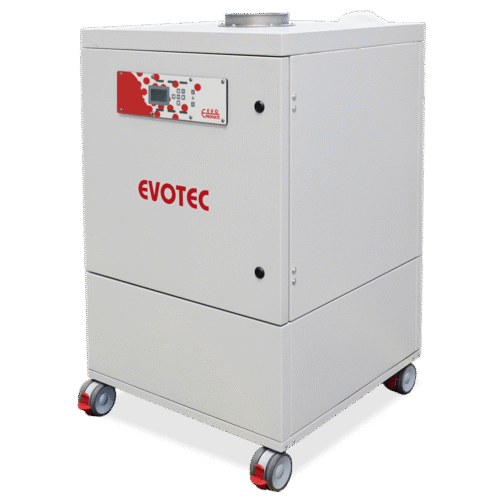
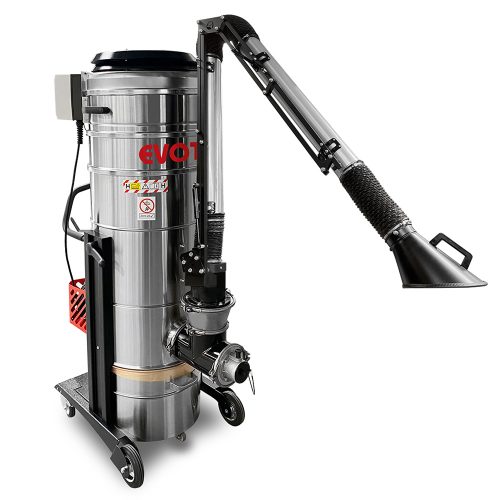
Mobile Devices for Various Soldering and Welding Tasks

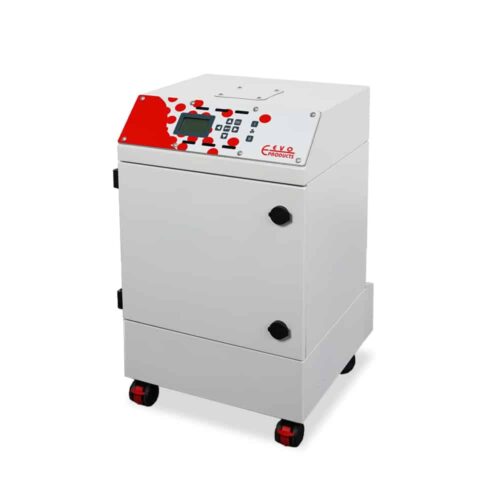
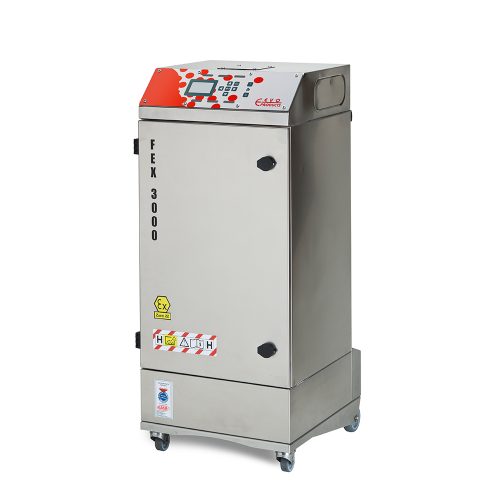
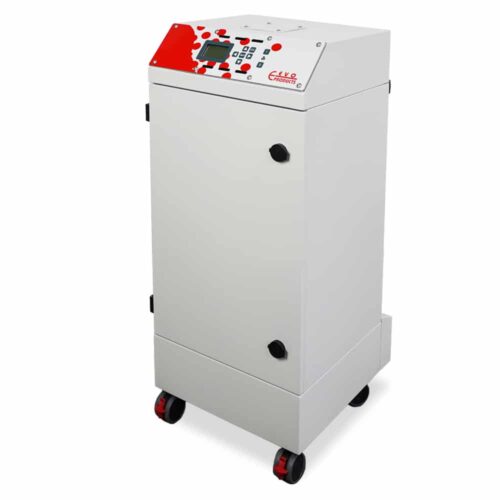
Mobile units are suitable for changing workstations, localized tasks, and cleaning in environments involving soldering and welding processes. The product shown here, which is specific to this application, is a preliminary selection. The sensing element, airflow capacity, filter stages, suitability for continuous operation, and permissible air recirculation must be appropriate for the specific process.

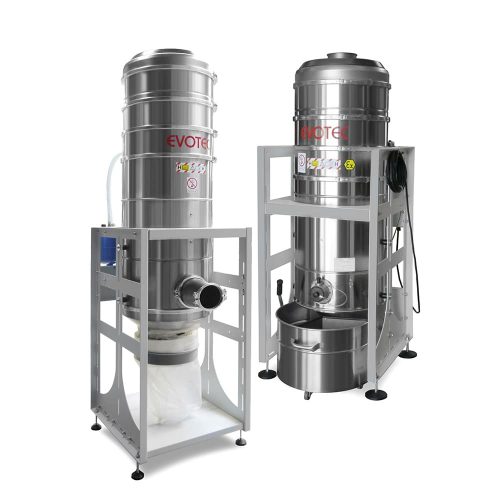
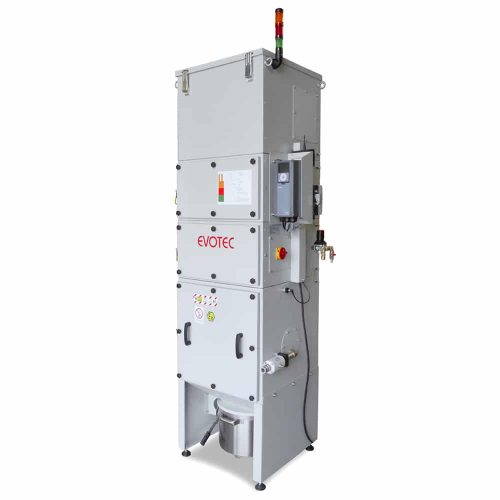
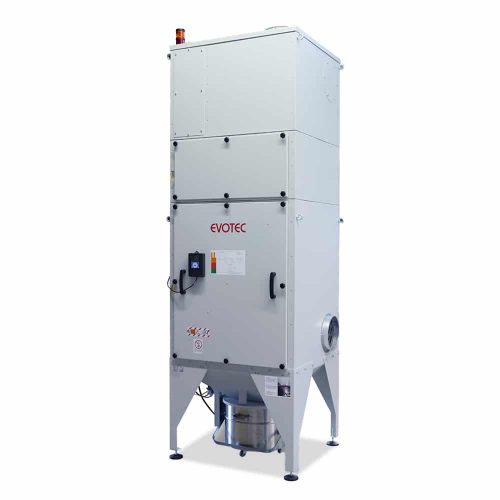
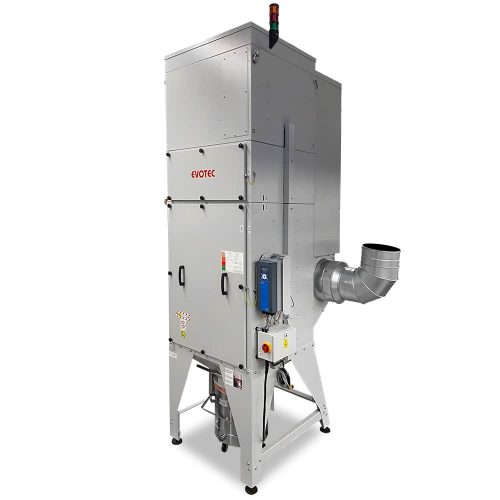
Stationary extraction systems for soldering and welding fumes

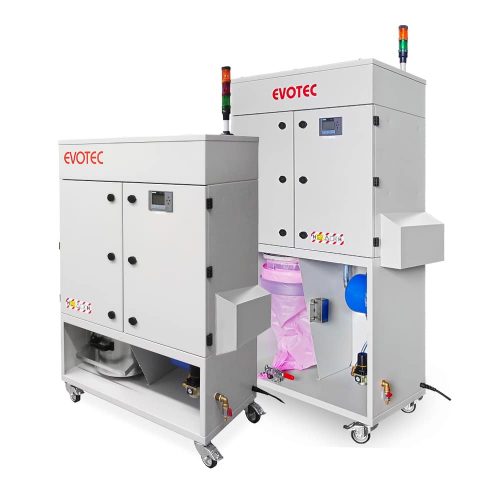
Stationary systems are suitable for permanently connected extraction arms, welding tables, enclosures, robotic cells, and multiple extraction points. The tagged series shown here are a preliminary selection. The ductwork, operating point, filter and discharge systems, and safety features are designed to meet the requirements of the actual process.

Frequently Asked Questions About Soldering and Welding Fume Extraction (FAQ)

What is the difference between soldering fumes and welding fumes?

Welding fumes consist primarily of very fine particles and, depending on the process and material, may contain additional gaseous hazardous substances. Soldering fumes contain particles and decomposition products from solder and flux. For this reason, the collection and filtration stages for both processes are evaluated separately.

As close as possible to the source of the fumes and in such a way that thermal convection is utilized. Depending on the application, options include burner-integrated extraction, an extraction arm, a flange, a table, a hood, or an enclosure. Cross-drafts and excessive distance can significantly impair extraction.

W3 is particularly relevant when welding fumes containing carcinogenic components need to be captured and the purified air recirculated back into the work area. The key factors are the risk assessment, current regulations, and the certification of the entire unit—not just a single filter element.

Mobile units are suitable for changing work locations and tasks confined to a specific area. Stationary systems are designed for permanently connected processes, multiple collection points, and continuous operation. Airflow, negative pressure, the simultaneous operation factor, and the filtration concept determine the selection.

Replacement intervals depend on emissions, operating time, filter loading, and the manufacturer’s specifications. The exhaust airflow rates must be checked during commissioning and at regular intervals; the DGUV requires at least one annual inspection for welding fume extraction systems. In addition, differential pressure, detection, and safe filter replacement must be monitored.

EVO-PRODUCTS

Your partner for industrial extraction solutions

EVOTEC develops mobile and stationary extraction solutions for industrial soldering and welding processes and produces not only production-ready equipment but also application-specific custom solutions. Our systems are designed for effective extraction, process reliability, durability, and specific operating conditions.

Years of experience
1 +
Developed models
1 +
Satisfied customers
1 +
MADE IN GERMANY
1 %
1
Analysis of the Situation
Consultation Meeting to Determine Customer-Specific Requirements
2
Concept Development
Joint development of potential solutions and formulation of an exhaust system concept, taking into account the existing infrastructure
3
Quotation Preparation
Detailed quotation based on specific customer requirements
4
Placing an Order
Final Project Planning and Contractual Arrangements
5
Production
Custom manufacturing of systems and components
6
Delivery, Installation, &
Commissioning
Safe delivery of the system, installation by EVO-PRODUCTS technicians, or detailed assembly instructions for customer installation
7
Training, After-Sales &
Maintenance
Equipment-specific training, optional maintenance contracts & services

Which soldering or welding fume extraction system is right for your process?

Please provide us with information on the processes, materials, filler materials or fluxes, the collection point, operating time, number of workstations, and planned air recirculation. EVOTEC will assist you in selecting a suitable mobile or stationary solution.

Robin-graust..jpg

Robin Buschbaum
Sales D/A/CH
Specialist for extraction technology
vertrieb@evo-products.de
02642 9373-53

asim-03.jpg

Asim Zaman-Pahlke
Export Sales
export@evo-products.de
02642/9373-15

Scroll to Top