


Extraction Systems for Metalworking – Capturing Dust, Fumes, Swarf, and Aerosols
Home page » Metal processing
Exhaust Systems for Metalworking – Tailored to Processes, Materials, and Emissions
Depending on the process, turning, milling, drilling, grinding, polishing, Welding, and laser cutting generate metal chips, grinding dust, fume, sparks, as well as cooling lubricant aerosols and vapors. The type, quantity, and level of hazard depend on the material, coating, tool, process energy, and operating mode. EVOTEC tailors the collection, airflow capacity, separation, discharge, and system integration to the specific manufacturing step—from individual machines to centralized extraction systems.
Your advantages in metalworking:
Measure Emissions Directly During the Manufacturing Process
Dust, fume, and aerosols are captured by the machine, tool, or collection element before they spread throughout the work area.
Protecting Machinery, Components, and Process Quality
Fewer deposits in machines, on workpieces, and on sensors help ensure stable machining conditions and predictable maintenance.
Clearly Separate Process Exhaust and Cleaning
Stationary systems monitor continuous emissions; mobile vacuum cleaners handle swarf, liquids, cleaning, and various maintenance tasks.
Which metalworking processes at your facility generate dust, fume, swarf, aerosols, or liquids? Please provide us with the material, process, discharge point, cycle time, and the machine you have available. We will work with you to evaluate data acquisition, filtration technology, and integration.
What emissions are generated during metal processing?
Metalworking involves mechanical, thermal, and surface treatment processes. Therefore, it is first necessary to determine whether coarse swarf, fine dust, Welding or laser fumes, coolant aerosols, vapors, or liquids are present. Visibility alone is not a reliable measure of particle size, composition, or hazard.
Swarf, grinding dust, and fine metal particles
Turning, milling, drilling, and sawing produce swarf and abrasion. Grinding, brushing, and polishing produce significantly finer particles that can become airborne or accumulate as deposits. The material, alloy, coating, and machining method determine which substances are actually released.
Fume, aerosols, vapors, and liquids
Welding, soldering, oxy-fuel cutting, and laser processing generate fume and very fine particles. In machining centers, cooling lubricants can be released as aerosols and vapors; during cleaning and maintenance, emulsions, oils, and solid-liquid mixtures are also generated. These types of substances require different collection and separation methods.
The technical assessment begins with material and process data, safety data sheets, machining parameters, and the actual release pathway. Particularly in the case of high-alloy steels, coated components, and aluminum or magnesium materials, one must not make a blanket assumption that “metal dust” is present.
Where does effective data collection begin?
Emissions are captured as close as possible to their source or point of discharge. Machine enclosures, designated machine connections, extraction tables, hoods, and tracking capture elements reduce by-pass air and prevent dust, fume, or aerosols from spreading throughout the facility in the first place. Room ventilation supplements source capture but does not replace it.
Machine Tools and Coolant Lubricants
Machining centers should be enclosed as much as possible and equipped with exhaust systems at the exhaust points. The airflow design must account for spray mist, thermal effects, tool movement, door openings, and pressure conditions. Swarf and liquids should be separated as early as possible to avoid placing an unnecessary load on the ductwork and separators.
Grinding, welding, laser cutting, and manual workstations
During grinding, the extraction system must be positioned in the direction of the particle and spark stream. Welding and laser fumes are captured directly at the torch, the work area, the hood, or the enclosure. Distance, thermal conditions, shielding gas, component geometry, and accessibility determine the required airflow rate and negative pressure.
How are emissions from metalworking captured?
Capture, piping network, pre-separation, filtration, and discharge form a complete system. Particle size, dust volume, sparks, temperature, moisture, liquid content, stickiness, and any gaseous components determine the necessary stages. A single filter characteristic does not replace an evaluation of the entire process.
Separate swarf and liquids
Coarse swarf, abrasives, oil, and emulsion should be separated before reaching the filter stages or vacuum system, if possible. Swarf baskets, pre-separators, and suitable collection containers facilitate recovery, emptying, and disposal. For aluminum, magnesium, or mixtures of materials, check whether combined collection is permitted.
Filtering Sanding Dust and Fume
Storage or washable filters are selected based on the type of dust and the level of contamination. Spark traps or other pre-filters may be required. Additional material- and process-specific requirements apply in the case of metal components that pose a health hazard, welding fumes, and possible air recirculation.
Separating Coolant Aerosols
Aerosols from machine tools require suitable separators and controlled airflow. Gaseous components and vapors are not reliably captured by standard particle filters. The separation system, exhaust air ducting, and maintenance intervals are therefore adapted to the cooling lubricant and the machining process.
Plan Discharge, Cleaning, and Maintenance
Container changes, filter cleaning, and waste disposal should be carried out with as little dust and emissions as possible. Deposits in piping, machinery, and work areas must be minimized through appropriate airflow, access points for cleaning, and a coordinated maintenance schedule.
Important: Particles, liquids, and gaseous substances must not be treated the same way from a technical standpoint. The IFA practical guidelines on cooling lubricants point out that cooling lubricant aerosols must be effectively captured at the points of generation and discharge; the suitability of the separator must be verified for the specific application.
Stationary Process Exhaust and Mobile Cleaning
Stationary Systems for Machines and Production Lines
Stationary systems are suitable for continuous processes, fixed machine connections, and multiple collection points. They can supply machining centers, grinding stations, welding cells, or laser systems and centrally monitor airflow, filter status, exhaust, and machine approvals.
Portable Vacuum Cleaners for swarf, Liquids, and Cleaning
Mobile industrial vacuum cleaners are used for cleaning machinery, collecting oil and emulsions, extracting metal shavings, maintenance, and working in various locations. Their suitability depends on the medium, liquid content, dust class, temperature, and potential fire or explosion hazards. They are not a substitute for permanent process extraction systems.
Decentralized or centralized exhaust
Decentralized systems keep material flows short and facilitate separation. Centralized systems serve multiple similar processes. The concurrency factor, piping network, pressure loss, material changes, redundancy, and maintenance access determine the appropriate architecture.
Automation and Machine Integration
In automated manufacturing cells, the exhaust system, machine tool, and control system must work together seamlessly. Operational approval, airflow monitoring, filter status, container fill level, and error messages are integrated in such a way that detection effectiveness and system availability remain traceable.
This distinction is crucial: stationary systems capture emissions during machining; mobile units handle flexible cleaning, swarf removal, and fluid management tasks. Both systems are tailored to the material, medium, and risk assessment.
What does the interpretation depend on?
A reliable design requires specific information on the material, alloy, coating, process, emission type, emission source, processing time, and shift operations. Equally important are the cooling lubricant, cleaning procedures, desired air recirculation, maintenance access, and interfaces with the machine.
Materials, Media, and Risk Assessment
Health hazards, flammability, explosion parameters, temperature, sparks, moisture, and potential interactions must be assessed. High-alloy steels, aluminum, magnesium, cooling lubricants, and coated workpieces may each require different protective measures and separate material handling routes.
Airflow, Ductwork, and Process Integration
The technical design is determined by the detection distance, opening areas, air flow rate, negative pressure, duct routing, concurrency factor, filter cleaning, discharge, and control system. For machine tools, door cycles, machining phases, and dwell times are taken into account early in the design process.
Before commissioning and on a recurring basis, verify that the collection, airflow, monitoring, and safe disposal systems function properly under actual operating conditions. Changes to materials, cooling lubricants, tools, process parameters, or cycle time may require a reassessment.
Which extraction system is right for your metalworking operations?
Please provide us with the manufacturing step, material, emissions, safety data, release point, operating time, and desired machine integration. EVOTEC will use this information to develop a suitable stationary or mobile extraction system.
Properly Classifying Fire, Explosion, and Hazardous Materials Protection
Fine metal dusts may be flammable or explosive, depending on the material and composition. In the case of aluminum and magnesium, reactivity, spontaneous combustion, and potential hydrogen formation must also be taken into account. Whether an explosive atmosphere can form and what protective measures are required depends on the material’s properties, release, quantity, ventilation, and risk assessment. A conductive design or the “ATEX” designation is not a one-size-fits-all solution for every metalworking process. Guidance is provided by TRGS 720, TRGS 727, and DGUV Information 209-002 on grinding. Separate substance- and process-specific regulations also apply to cooling lubricants and welding fumes.
PROCESS SOLUTIONS
Relevant Exhaust Applications in Metalworking
Each manufacturing step has different requirements for detection, separation, and safety design. Select the appropriate process solution to view the technical background and suitable devices for each specific application.
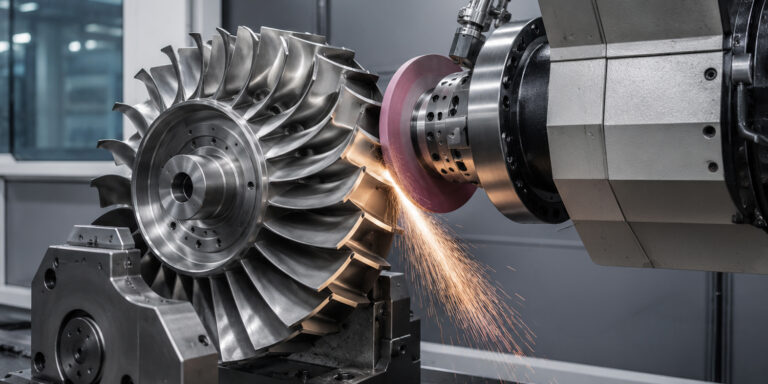
Grinding and Polishing Dust Extraction
For grinding, deburring, brushing, and polishing with particle and spark capture—tailored to the material and dust characteristics.
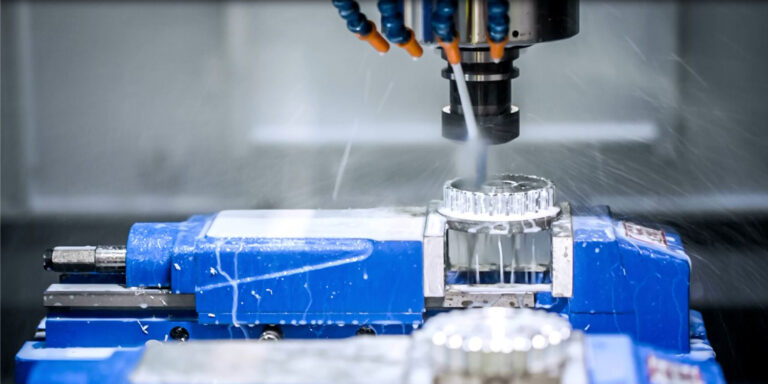
Oil, Emulsion, and Chip Extraction
For machining centers, machining, maintenance, and machine cleaning, with controlled collection and separation of swarf, oils, and emulsions.
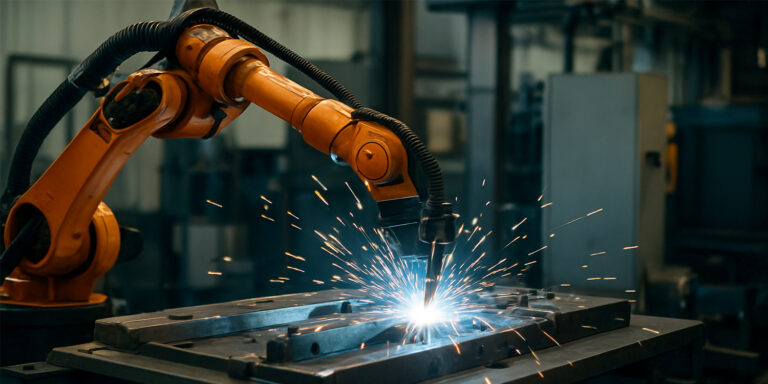
Welding and Soldering Fume Extraction
For manual joining processes, automated welding cells, and rework, with in-process detection of fume and very fine particles.
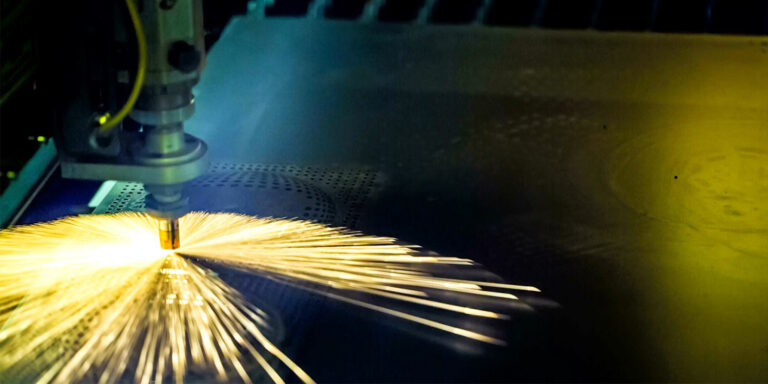
Laser Fume Extraction
For laser cutting, laser welding, marking, and cleaning with detection directly at the processing zone or inside an enclosed laser system.

Fine dust extraction
For very fine machining dust and particles, where collection, filter selection, low-dust discharge, and possible air recirculation must be coordinated.
Is your metalworking process not listed?
Please describe the manufacturing step, material, and emissions to us. We’ll determine which monitoring and filtration solution is best suited for your application.
Frequently Asked Questions About Exhaust Systems in Metalworking (FAQ)
What emissions are generated during metal processing?
Depending on the process, metal chips, grinding and polishing dust, welding or laser fumes, coolant aerosols, vapors, and mixtures of oil and emulsion may be generated. The actual composition depends on the material, alloy, coating, tool, and process parameters.
When is a stationary process exhaust system recommended?
Stationary systems are appropriate when machines, grinding stations, welding cells, or multiple collection points are permanently connected; when operations are continuous; or when airflow and filter condition need to be monitored centrally. The ductwork and the simultaneous-use factor are designed for actual operating conditions.
When is a mobile industrial vacuum cleaner the right choice?
Mobile vacuum cleaners are suitable for cleaning machinery, performing maintenance, collecting swarf and liquids, and for use in various locations. The selection depends on the medium, dust class, liquid content, temperature, and potential fire or explosion hazards. A vacuum cleaner is not a substitute for required process exhaust systems.
How are swarf, emulsions, and metal dust separated?
Coarse swarf and liquids are separated as early as possible using swarf baskets, pre-separators, or suitable collection containers. Fine dusts and aerosols require their own filtration or separation stages. Whether material streams may be collected together must be determined based on the material, medium, and possible reactions.
Is metal dust always a fire hazard?
No. The key factors are the material, particle size, dust concentration, release, and the presence of ignition sources. Fine aluminum and magnesium dusts require special attention; other metal dusts may also be flammable or explosive under certain conditions. Protective measures are determined based on the risk assessment.
Your partner for industrial extraction solutions
EVOTEC develops stationary extraction systems and mobile solutions for demanding metalworking processes. From individual machine tools to centralized ductwork systems, airflow capacity, filtration technology, pre-separation, discharge, monitoring, and interfaces are all tailored to actual operating conditions. For metalworking applications, we combine process extraction, controlled cleaning, and the safe handling of dust, fumes, swarf, and liquids.
Commissioning
Maintenance
Which extraction solution is right for your metalworking operations?
Please provide us with information on the manufacturing step, material, safety data, type of emission, release point, processing duration, plant environment, and potential fire or explosion hazards. EVOTEC will assist you in designing a suitable stationary or mobile solution.

Robin Buschbaum
Sales D/A/CH
Specialist for extraction technology
vertrieb@evo-products.de
02642 9373-53

Lars Blankenburg
Sales
lars.blankenburg@evo-products.de
02642 9373-10

Asim Zaman-Pahlke
Export Sales
export@evo-products.de
02642/9373-15