


Extraction Systems for Rechargeable Cell and Battery Manufacturing – Monitoring Emissions Close to the Process
Home page » Battery cell production
Extraction Technology for Battery Cell Manufacturing—Tailored to the Material, Process, and Safety Concept
From electrode manufacturing to cell assembly, depending on the process, fine powders and particles, coating and solvent vapors, as well as fume from cutting, laser, or joining processes are generated. At the same time, dry room conditions, product purity, material separation, and potential fire or explosion hazards place special demands on the extraction technology.
EVOTEC tailors the detection, airflow capacity, filter stages, exhaust, and system integration to the material, release path, and operating mode—for individual workstations, machines, or permanently connected production lines.
Your advantages in battery cell and battery manufacturing:
Measuring Emissions Directly at the Process Site
Powders, particles, vapors, and fumes are captured during dosing, coating, machining, or assembly before they can spread.
Supporting purity and material separation
Proper collection and low-dust discharge reduce deposits, cross-contamination, and the introduction of particles into sensitive process areas.
Specify the safety configuration
Filters, ESD-rated designs, explosion protection, sorption stages, and monitoring are determined based on material data and a hazard assessment.
At which stage of the manufacturing process do particles, fumes, or fumes occur in your facility? Please describe the materials, process, release point, operating duration, and layout to us. We will work with you to review the capture system, filter technology, and system integration.
What emissions are generated during battery cell manufacturing?
The manufacturing process involves a wide variety of materials and process steps. Powdered active materials, conductive additives, binders, solvents, electrolytes, and processing residues can each pose different health, fire, explosion, and quality risks. A one-size-fits-all “battery dust” solution is therefore not reliable.
Powders and Particles from Electrode Manufacturing
During dosing, transfer, mixing, grinding, and cleaning, fine active materials, graphite, carbon black, or other additives may be released. The composition, particle size, dusting behavior, moisture sensitivity, and safety parameters determine the collection and filtration concept.
The basis for the assessment is the activity-based risk assessment; the BAuA notes that inhalation, dermal, fire, and explosion hazards must be assessed separately.
Vapors, Aerosols, and Thermal Processes
During mixing, coating, drying, or filling, vapors or aerosols may be generated, depending on the formulation and equipment. Laser cutting, laser welding, and other thermal joining processes can also release fume and very fine particles. Different stages of separation or sorption are required for these groups of substances.
The design process therefore always begins with safety data sheets, process parameters, and the actual release pathway. Visibility or odor alone are not sufficient for the assessment.
What are the key elements of effective ventilation?
Emissions are measured as close as possible to the source. Enclosed transfer points, enclosures, and machine-integrated detection prevent contamination from spreading into drying rooms, cleanrooms, or production halls, while also reducing the required airflow rate.
Mixing, Dosing, Coating, and Transfer
Enclosed transfer points and designated extraction points are particularly effective for emptying bags or containers, dosing, feeding mixers, and transferring powders. For coating and drying processes, exhaust air management, solvents, temperature, and potential explosion protection must be considered in conjunction with the process equipment.
Cutting, Laser Cutting, Joining, and Assembly
Cutting and punching generate edge and abrasion particles; laser and thermal joining processes can produce fume and aerosols. The ventilation system must take into account tool movement, component geometry, and process gases. During assembly and rework, local ventilation and safe cleaning are also required.
How are particles and vapors safely captured?
Capture, separation, and discharge form a single integrated system. The particulate and gas phases, hygroscopic or reactive properties, flammable substances, material compatibility, and the desired recirculation of the purified air must be evaluated collectively.
Closed-loop control and defined operating point
Enclosures, extraction booths, machine connections, and locally adjusted extraction reduce by-pass air and improve extraction efficiency. Airflow, negative pressure, and pressure drop are selected to ensure that the process remains stable and the indoor air concept is not affected in an uncontrolled manner.
Particulate filter and low-dust discharge
Filter area, separation efficiency, cleaning, and discharge depend on the amount of dust and the level of risk. Depending on the substance, additional fine-particle or airborne-particle filters may be required. However, a single H13 or H14 filter element is no substitute for a properly designed and tested complete system.
Vapors and Solvents
Gaseous substances are not reliably captured by particulate filters. Depending on the solvent or electrolyte component, a tailored exhaust air system or sorption stages may be considered. Sorption media have a limited capacity; breakthrough, replacement intervals, and fire load must be taken into account.
Material Separation, Cleaning, and Disposal
Separate systems or clearly defined cleaning and replacement procedures reduce cross-contamination between anode, cathode, and other materials. Low-dust filter replacement, enclosed discharge systems, and appropriate disposal containers limit exposure during maintenance and servicing.
For moist or reactive substances, flammable powders, and processes involving solvents, it is necessary to verify which combinations of substances are permitted in the extraction system. Not every mixture of materials may be extracted or collected together.
Stationary Process Exhaust and Mobile Cleaning
Stationary Systems for Machines and Production Lines
Stationary systems are suitable for continuous processes, multiple feed points, and defined piping networks. They can supply mixers, dosing units, coaters, processing machines, laser cells, or assembly areas and can be monitored centrally.
Mobile Solutions for Cleaning and Special Cases
Mobile vacuum cleaners facilitate controlled cleaning, maintenance, tool changes, and localized work. Whether a device is suitable for the specific battery material, the drying room, and a potential EX zone must be verified separately. ESD features alone do not provide explosion protection.
Decentralized or centralized exhaust
Decentralized systems limit material flow paths and facilitate material separation. Centralized systems can serve multiple similar processes. The concurrency factor, piping network, pressure loss, recirculation, maintenance access, and emergency response plan determine the appropriate architecture.
Dry Room and Indoor Air Balance
In dry and clean areas, every exhaust system affects the air balance. Airflow measurement and system performance are coordinated with room pressure, supply air, humidity control, and the airlock design. This improves protection against hazardous substances without unnecessarily destabilizing process conditions.
Important: Process exhaust systems, ventilation systems, fire protection, and explosion protection must be considered as an integrated concept.
What does the interpretation depend on?
A safe design requires specific material and process data. These include formulation or safety data, particle or vapor release, production volume, shift operations, room class, humidity requirements, and the planned system integration.
Substance Data and Hazard Assessment
The following must be assessed: health hazards, flammability, explosion characteristics, reactivity, sensitivity to moisture, and potential hazardous interactions. For flammable dusts or vapors, the explosion hazard is assessed in accordance with the relevant regulations; a zone must not be determined based solely on the product name.
Process, Operating Point, and Plant Integration
The technical design is determined by the collection geometry, air flow rate, negative pressure, ductwork, simultaneity factor, filter cleaning, discharge, monitoring, and maintenance. Interfaces with the machine and the control system are defined at an early stage.
Before commissioning and on a recurring basis, verify that the collection system, airflow, filter monitoring, and safe disposal are functioning properly under actual operating conditions. Changes to the formulation or process may require a reassessment.
Which extraction technology is right for your battery production?
Please provide us with the process steps, materials, substance data, release point, operating duration, layout, and safety requirements. EVOTEC will use this information to develop a suitable stationary or mobile extraction system.
Understanding Explosion Protection and ESD
Flammable dusts, vapors, or hybrid mixtures can pose an explosion hazard. Whether zones are required and what protective measures are necessary are determined based on substance characteristics, release rates, and risk assessments in accordance with the TRGS 720 series. TRGS 727 additionally addresses ignition hazards caused by electrostatic charging. Grounding and conductive components are important individual measures, but they do not replace a comprehensive explosion protection concept.
PROCESS SOLUTIONS
Relevant Exhaust Applications in Battery Cell and Battery Manufacturing
Each manufacturing step has different requirements for data acquisition, filtering, and safety implementation. Select the appropriate process solution to view the technical details and suitable devices.

Fine dust extraction
For fine electrode powders, graphite, conductive additives, and machining residues during dosing, mixing, cutting, and cleaning.
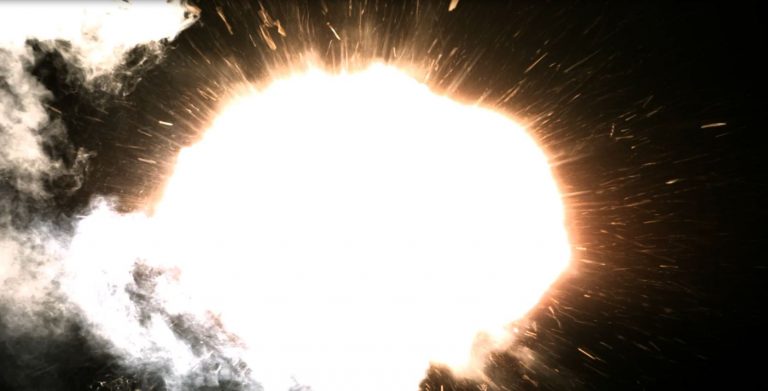
EX-protected extraction
For manufacturing steps in which flammable dusts, vapors, or hybrid mixtures must be safely controlled following a risk assessment.
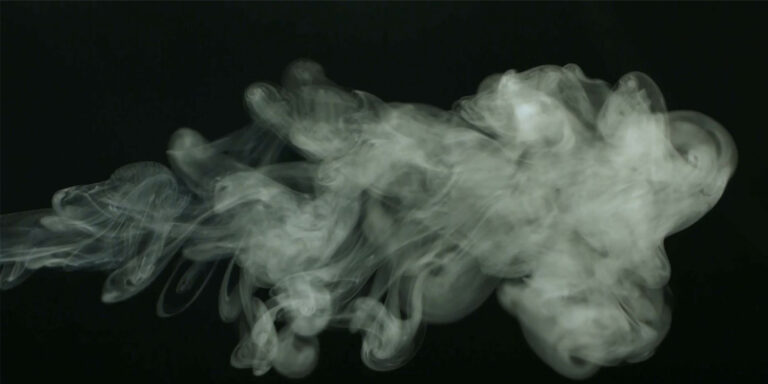
Fume and steam extraction
For coating, solvent, electrolyte, and other gaseous emissions that cannot be captured using particulate filters alone.
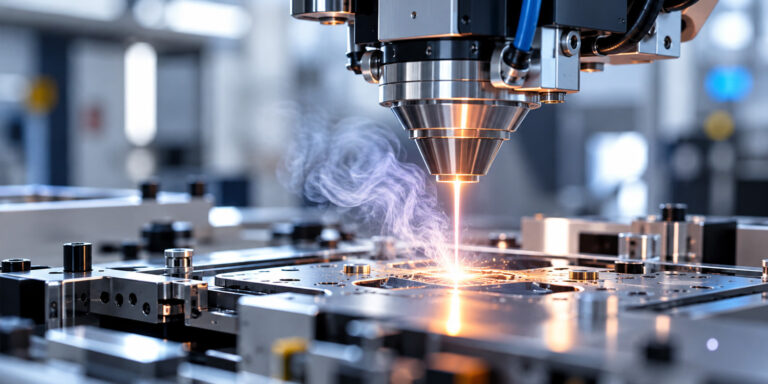
Laser Fume Extraction
For laser cutting, laser cleaning, and laser welding in cell, module, and pack manufacturing with real-time process monitoring.
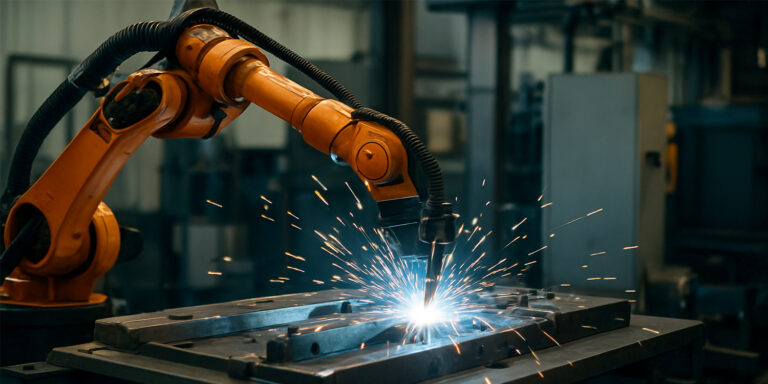
Welding and Soldering Fume Extraction
For contact making, electrical connections, assembly, and rework that generate fume, particles, or flux byproducts.
Is your process not listed?
Please describe the manufacturing step, material, and emissions to us. We’ll determine which collection and filtration solution is best suited for your application.
Frequently Asked Questions About Exhaust Systems in Battery Manufacturing (FAQ)
What emissions are generated during battery cell manufacturing?
Depending on the manufacturing step, electrode powders, graphite, conductive additives, machining particles, coating or solvent vapors, as well as laser and joining fumes may be generated. The actual composition is determined by the formulation, safety data, and process parameters.
When is a stationary extraction system a good idea?
Stationary systems are particularly well-suited when machines or multiple collection points are permanently connected, when operations are continuous, or when airflow and filter condition need to be monitored centrally. The ductwork and the concurrency factor are designed for actual operating conditions.
Is an EX system always required for battery dust?
No. The key factor is whether flammable dusts or vapors can occur in hazardous concentrations. This assessment is based on substance properties, release rates, and operating conditions. Only then are zones, equipment categories, and other explosion protection measures determined.
What role do ESD and material separation play?
ESD measures reduce electrostatic charge and can protect components and processes. However, they do not automatically provide complete protection against explosions. Material separation also prevents unwanted mixing and cross-contamination in the product, filter, and collection container.
When are gas or activated carbon filters used?
Particulate filters do not reliably remove gases and vapors. For emissions containing solvents or electrolytes, exhaust air ducting or appropriate sorption stages may be required, depending on the substance. Activated carbon is selected based on the substance and volume of emissions and must be replaced before breakthrough occurs.
Ihr Partner für industrielle Absauglösungen
EVOTEC develops stationary extraction systems and mobile solutions for sensitive industrial manufacturing processes. From individual extraction points to networked production facilities, airflow capacity, filtration technology, material separation, monitoring, and safety features are tailored to battery manufacturing.
Commissioning
Maintenance
Which extraction solution is right for your battery manufacturing process?
Please provide us with details regarding the process steps, materials, safety data, release point, production volume, operating duration, layout, and potential fire or explosion hazards. EVOTEC will assist you in designing a suitable solution.

Robin Buschbaum
Sales D/A/CH
Specialist for extraction technology
vertrieb@evo-products.de
02642 9373-53

Lars Blankenburg
Sales
lars.blankenburg@evo-products.de
02642 9373-10

Asim Zaman-Pahlke
Export Sales
export@evo-products.de
02642/9373-15