
Vacuuming up coarse debris and heavy dust—robust solutions for high material loads
Home page » Coarse dirt
Extraction of coarse debris and heavy dust—tailored to the material, conveying path, and operating mode
Rock fragments, granules, pellets, metal parts, swarf, broken glass, production waste, and other heavy residues present different challenges than pure Fine Dust. The decisive factors are not just motor power or maximum vacuum, but the interplay of vacuum, airflow, intake geometry, hose diameter, conveying length, and material properties.
EVOTEC tailors the suction unit, pre-separation system, filter, hopper, and discharge system to the specific bulk material—for both mobile cleaning tasks and stationary collection and conveying stations.
Benefits for dealing with coarse dirt and heavy dust:
Reliably handle heavy materials
Vacuum pressure, flow rate, hose cross-section, and collection accessories are combined in such a way that material is transported from the collection point to the container.
Take both coarse and fine components into account together
Pre-separation, the filter surface, and the discharge system protect the system from overload, wear, and unwanted dust release.
Clearly Separate Mobile and Stationary Tasks
Mobile vacuum cleaners offer flexible cleaning; stationary systems handle recurring collection and transport tasks at fixed locations.
What kind of footage would you like to shoot—and from what distance? Please provide us with the particle size, density, quantity, moisture content, discharge height, hose run, and operating time. We will work with you to evaluate suction capacity, pre-separation, filtration, and discharge.
What counts as coarse dirt and heavy dust?
“Coarse contaminants” does not refer to a uniform group of substances. It refers to particles and bulk materials that, due to their size, density, or shape, place higher demands on collection and pneumatic conveying. At the same time, many residues contain a portion of fine dust, which remains critical for filtration and occupational safety.
Coarse, heavy, and angular components
Typical examples include granules, pellets, rock and concrete debris, broken glass, sand, metal parts, swarf, blasting media, and compact production waste. Sharp-edged and abrasive components can place greater strain on hoses, elbows, separators, and containers.
Don't Overlook Fine Particles and Chemical Hazards
Even a material that is predominantly coarse can contain fine dust. The dust class and filter design are not based on the visible coarse fraction, but rather on the constituents, occupational exposure limits, fine fraction, and risk assessment.
Before processing, the material density, particle size distribution, shape, abrasiveness, moisture content, temperature, and any foreign matter are recorded. For varying mixtures, a representative sample or a practical test is often more informative than a general description.
Where do coarse dirt and heavy residues form?
Heavy material loads occur in manufacturing, recycling, construction, metalworking, bulk material handling, and maintenance. The appropriate solution depends on whether residues lie loosely on surfaces, accumulate in specific locations on machines, or are regularly transported between process stages.
Production, Processing, and Treatment
Cutting, milling, turning, blasting, crushing, sorting, and deburring produce swarf, abrasion particles, splinters, and heavy dust mixtures. Near machines, dedicated connections and short distances are advantageous; in open work areas, the nozzle and operating controls determine the intake.
Floors, areas surrounding facilities, and collection points
Routine cleaning involves traffic areas, machine foundations, pits, containers, and hard-to-reach areas. Large volumes or long distances require durable hoses, appropriate diameters, and a discharge system compatible with the facility’s waste disposal process.
How can heavy materials be effectively loaded and transported?
Reliable material conveyance depends on the correct operating point. Negative pressure overcomes resistance and helps lift heavy particles; sufficient airflow and air velocity keep the material moving inside the hose. The cross-sectional area, length, bends, and elevation differences significantly affect the achievable transport capacity.
Consider Negative Pressure and Flow Rate Together
High vacuum pressure alone does not guarantee good flow rate. For dense or compact materials, the suction unit must also provide sufficient airflow when connected to the actual hose system. Cross-sections that are too large can reduce flow velocity; cross-sections that are too small increase resistance and the risk of clogging.
Hose Routing and Mounting Accessories
Short, straight conveying paths with few tight bends reduce pressure losses and wear. Floor nozzles, suction tubes, machine connections, and handpieces are adapted to the particle size, surface, and shape of the material so that coarse parts can enter without unnecessarily restricting the system.
Pre-separation and wear-resistant components
When dealing with large volumes of material, pre-separators or collection tanks help reduce the load on the filter stage. For abrasive or sharp-edged materials, reinforced hoses, sturdy elbows, and suitable separators may be required. Foreign objects and hot components must be evaluated in advance.
Containers, Discharge, and Disposal
Tipping containers, collection carts, big-bag, airlock, or drum solutions are selected based on material volume, weight, and disposal method. The design takes into account the permissible container load, ergonomic handling, and low-dust container changes.
The entire conveying system is critical: the intake, hose or pipe network, suction unit, pre-separator, filter, hopper, and discharge must function as a single system. Bottlenecks or unsuitable transitions can limit performance even if the vacuum cleaner is adequately sized.
Extraction Concepts by Application Type
Mobile Cleaning and Changing Work Locations
Mobile industrial vacuum cleaners are suitable for floors, areas around machinery, pits, maintenance, and spot material collection. They are transported to the work site and, with the right hoses, pre-separators, and containers, can flexibly handle varying volumes.
Stationary installation at fixed process points
Stationary systems are suitable for recurring tasks on machines, transfer points, or collection points. The piping network, suction points, simultaneous operations, and discharge are permanently tailored to the process. This reduces setup times and enables controlled operating conditions.
Large quantities and a continuous flow of material
In the event of high or continuous throughput, pre-separation, larger collection volumes, and automatic discharge can ease the operational load. The required reserve is determined by the conveying rate, peak loads, and discharge intervals.
Moist Materials and Liquid Content
Moist residues or mixtures of solids and liquids require suitable wet/dry systems. Filters, containers, seals, and drainage systems must be compatible with the substances being handled. Dry hazardous substances must not be mixed with liquids without first being tested.
Related Applications: Learn more about the extraction of abrasive dust, metal chip extraction, and extraction technology for recycling facilities.
What factors determine the design for coarse debris?
The selection process begins with the material and ends with discharge. A description such as “heavy dust” is not sufficient: Specific information is required regarding the most challenging material, the longest transport distance, and the maximum simultaneous volume.
Material and Hazards
- Particle size, shape, density, and bulk density
- Particle size, abrasiveness, humidity, and temperature
- Ingredients, Limit Values, and Required Dust Class
- Flammability, Ignition Sources, and Potentially Explosive Atmospheres
Conveyor Path and Operating Mode
- Hose or pipe diameter, length, bends, and delivery head
- Intake Type, Suction Points, and Simultaneously Active Connections
- Amount of material per operation or hour
- mobile, intermittent, or continuous operation
Avoid common mistakes: Conveyor paths that are too long or too narrow, unsuitable nozzles, overfilled containers, lack of pre-separation, and clogged filters reduce performance. According to TRGS 500, dry sweeping or blowing away dust deposits is generally not permitted.
Which solution is right for your material?
A material sample, photos of the collection site, and information on quantity, conveying distance, operating time, and disposal enable a reliable preliminary selection. For critical or variable materials, a field test can validate the design.
Assess hazardous or flammable fine particles separately
Coarse residues do not rule out the presence of hazardous fine particles. The dust class is selected based on the specific substance; the IFA explains dust classes L, M, and H. If flammable dusts can occur in hazardous concentrations, the substance’s characteristics, ignition sources, zone classification, and protective measures must be assessed separately. Equipment labeling does not replace this hazard assessment.
Mobile industrial vacuum cleaners for coarse debris and heavy residues
Mobile devices are suitable for flexible cleaning tasks, maintenance, and spot collection at varying locations. The products shown here are designed for use with coarse debris and heavy dust; their specific suitability depends on the material, quantity, conveying path, proportion of fine particles, and potential hazards.
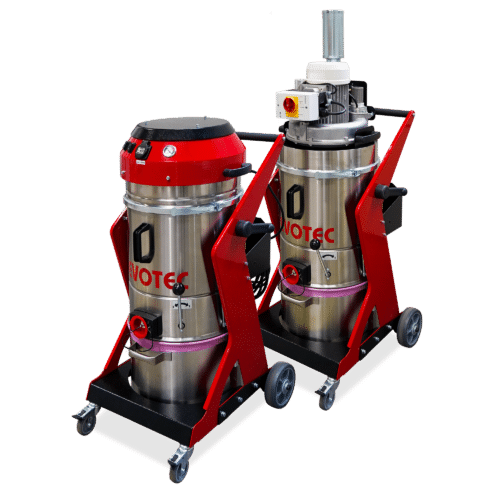
ECODustPro
High-performance industrial vacuum cleaner with a combination filter system ("M" + "H") for all types of dry dust, also available in explosion-proof or asbestos-safe models.
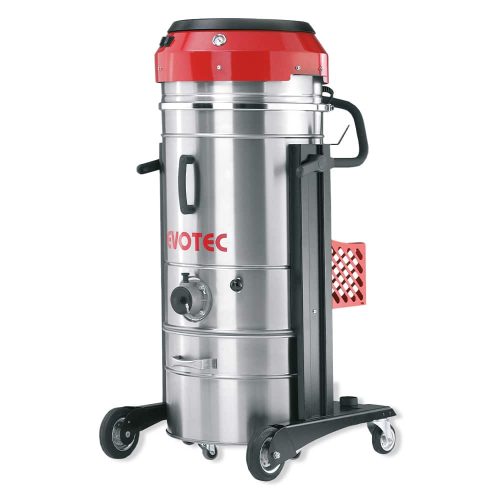
EP 1136
Powerful dry vacuum cleaner for industrial applications with modular design for different filter and disposal solutions.
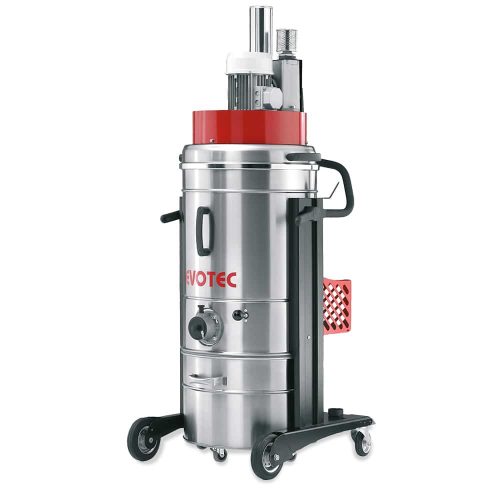
EP 2130 ECO
High-performance industrial vacuum cleaner with a modular design for flexible filter configurations, optionally available with explosion-proof protection for use in ATEX Zone 22.
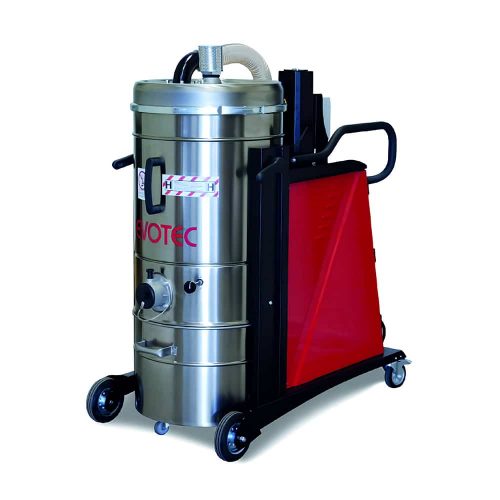
EP 2130/ EP 2140 ECO / EP 2155 ECO
Robust high-performance industrial vacuum cleaners with modular device configuration for variable filter, disposal and control options, also as EX version.
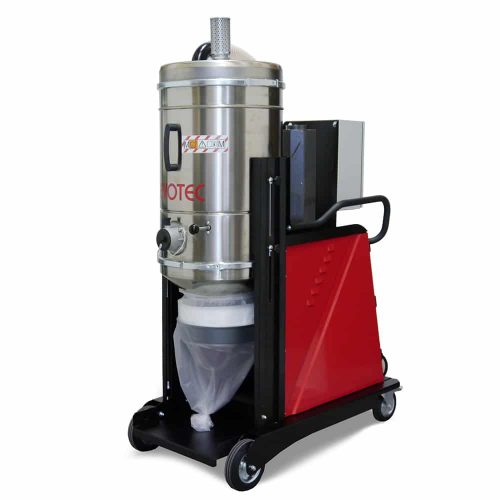
EP 2155/ EP 2175 ECO
Robust high-performance industrial vacuum cleaners with modular device configuration for variable filter, disposal and control options, also as EX version.
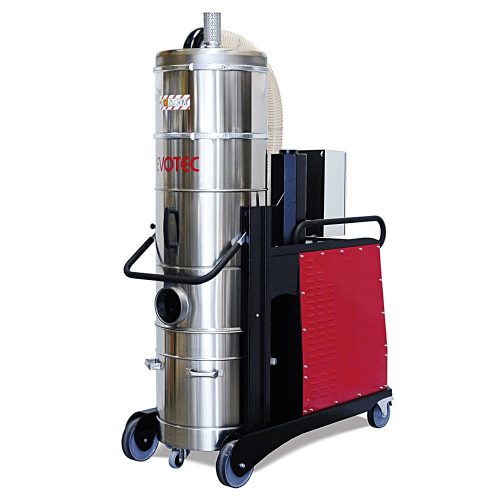
EP 2175 / EP 21130
Robust high-performance industrial vacuum cleaners with modular device configuration for variable filter, disposal and control options, also as EX version.
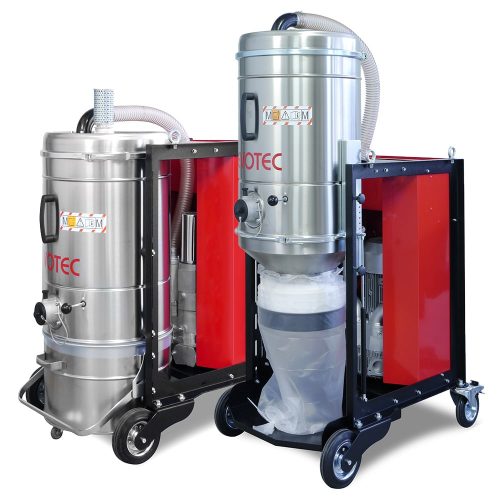
Robusto
Rugged, high-performance industrial vacuum cleaners with a modular design for flexible filter, waste disposal, and control options, also available in TRGS 519-certified asbestos or EX versions.
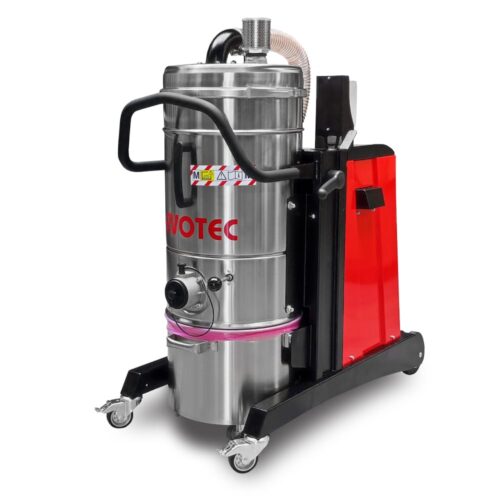
EPS SuperSilent
Sound-insulated high-performance industrial vacuum cleaner for quiet continuous operation with modular device configuration for variable filter, disposal and control options, also available as EX version.
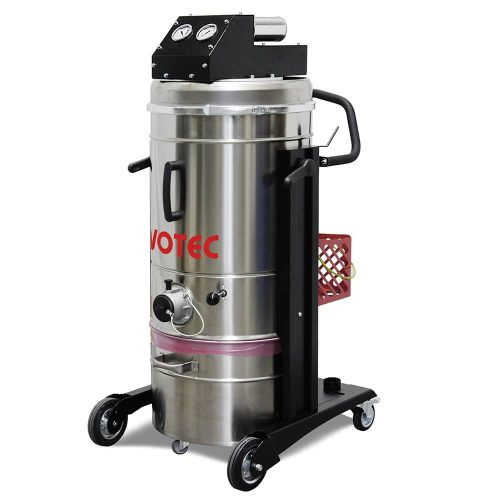
EP 312-60 Compressed air vacuum cleaner
High-performance industrial vacuum cleaner powered by compressed air for collecting all types of dry dust.
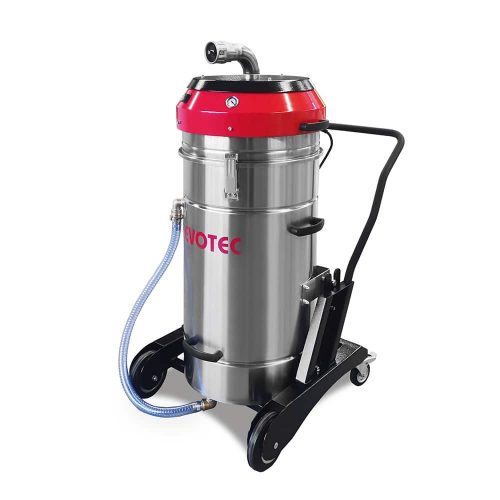
EP 1036 Wet/dry vacuum cleaner
Powerful wet/dry vacuum cleaner with tilting chassis and electronic fill level control for automatic motor switch-off.
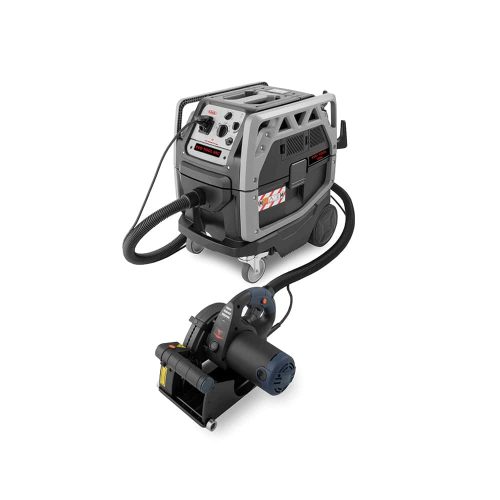
EVO TOOL VAC
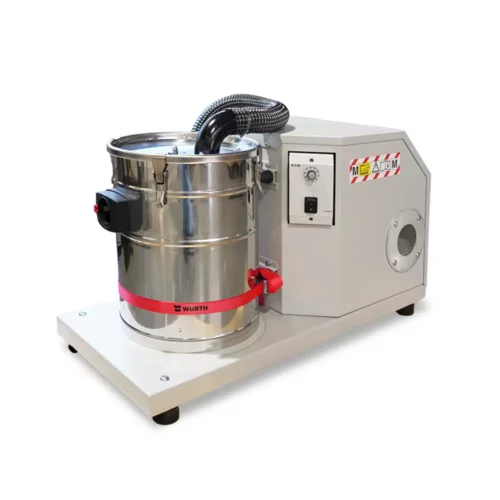
Stationary extraction system for fixed extraction points and recurring tasks
Stationary systems are suitable for permanently connected machines, transfer points, cleaning networks, or central collection points. The product shown is designed for this specific application; the piping network, intake capacity, hopper, and discharge are designed on a project-by-project basis.
EBG built-in vacuum cleaner
- EC motor for continuous operation (24/7) and EX protection
- Process-adaptable extraction unit with high negative pressure for the extraction of all dry dusts
- Simple under-sink appliance with intelligent features
- Stainless steel version on request
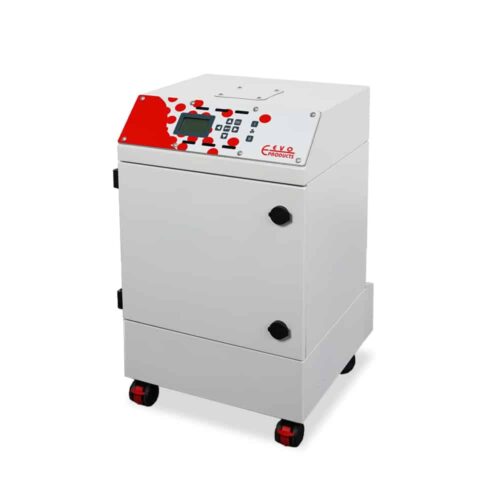
FEX 1000.1: Welding fume, soldering fume and dust extraction
- Powerful EC blower suitable for continuous operation (24/7), large air volume, infinitely variable volume flow control
- Due to low construction height also usable as an under-table unit
- Modern control technology with display of device status and filter messages
- Reliable filtration through multi-stage combined filter system
- Connection for on/off remote control
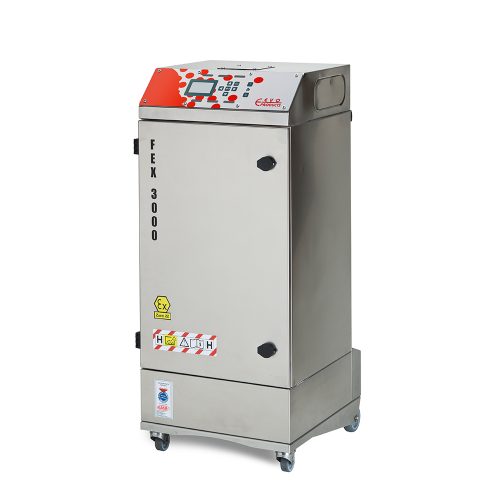
FEX 3000 VA welding fume, soldering fume and dust extraction system
- Powerful EC blower, suitable for continuous operation,
- Large air volume, infinitely variable volume flow control
- Modern control technology with display of appliance status and error messages, connection for on/off remote control
- Reliable filtration thanks to graduated combination filter system
- available in the "EX" or"W3" versions
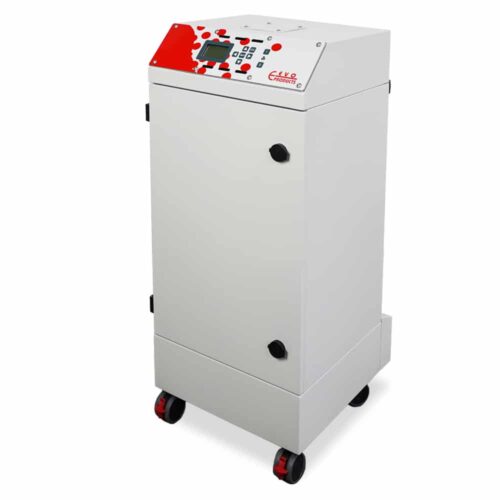
FEX 3000.1/ .2: Welding fume, soldering fume and dust extraction
- Powerful EC blower suitable for continuous operation (24/7), large air volume, infinitely variable volume flow control
- Modern control technology with display of device status and filter messages
- Reliable filtration through multi-stage combined filter system
- Connection for on/off remote control
- FEX 3000.2 with silencer and air outlet diffuser for extra low sound pressure level
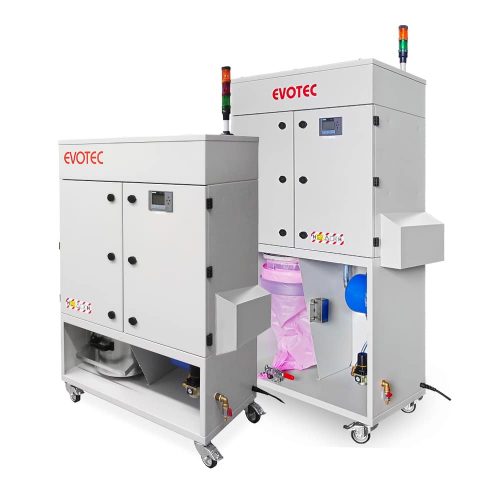
FEX 4000 fume and dust extraction system
- Mobile, robust system with ESD powder coating
- Reliable filtration thanks to multi-stage filter system with pneumatic cleaning (compressed air required)
- EC blower suitable for continuous operation (24/7) with infinitely variable volume flow control
- Modern control technology with display of appliance status and error messages, optional connection for on/off remote control
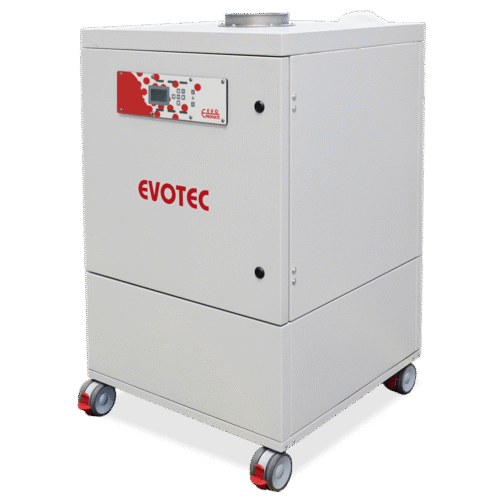
FEX 5000 PRO: Welding fume, soldering fume and dust extraction
- Powerful EC or medium-pressure blowers, suitable for continuous operation (24/7), large air volume
- Modern control technology with display of device status and filter messages (PRO.1/ .2)
- High air volume and large filter surface
- Silencer and outlet diffuser for extra low sound pressure level
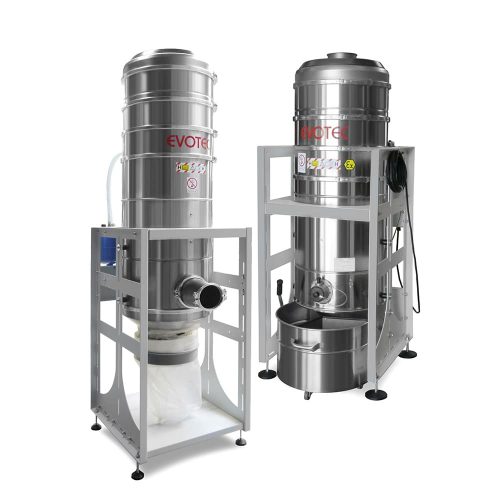
EP 2701-02-03 Industrial dust extractor
- Robust equipment with V2A stainless steel (1.4301)
- Powerful EC suction motors, suitable for continuous operation
- Automatic pneumatic filter cleaningvia PLC control
- Optional: ESD version or EX protection ATEX Zone 22
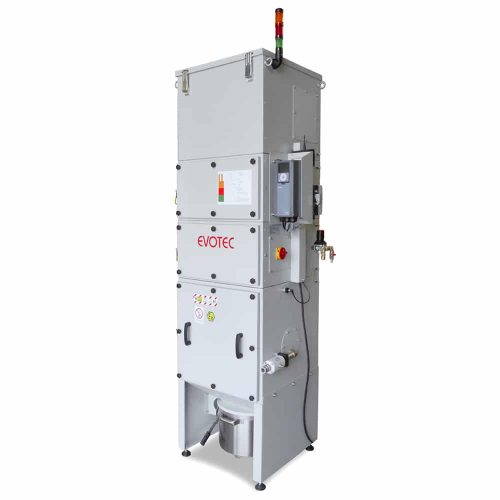
EP 2815/ 2822 Industrial extraction system
- For extracting free-flowing, dry dusts, as well as suspended dusts and fumes during Welding, grinding, polishing
- Powerful medium-pressure turbine suitable for continuous operation (24/7)
- Large air volume, frequency converter (FC) for volume flow control
- Large filter cartridges with automatic compressed air cleaning for long filter service life
- PreCoat as a filter aid (optional) for complicated dusts
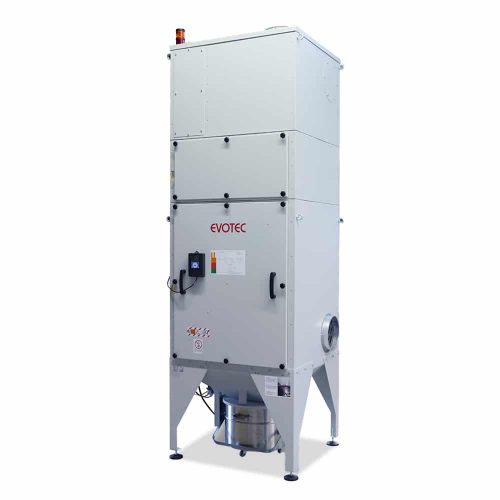
EP 2830/ 2855/ 2875 Industrial extraction system
- Very strong suction power, suitable for pipe systems, with various openings for connection
- Frequency inverter for automatic volume flow control, fully equipped with safety features
- Remote on/off possible with practical handheld
- Monitoring of dirt container fill level, including convenient lowering for disposal
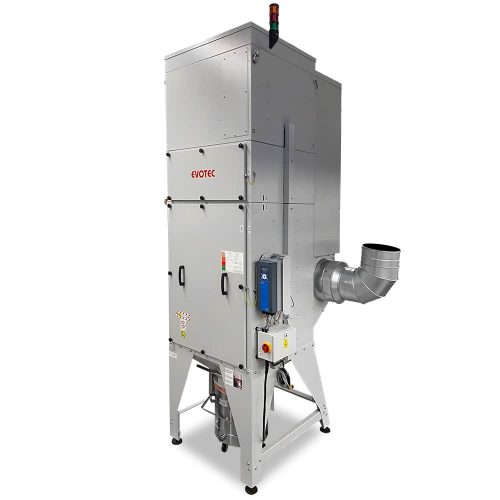
EP 28110 Industrial extraction system
- Very strong suction power, suitable for pipe systems, with various openings for connection
- Frequency inverter for automatic volume flow control, fully equipped with safety features
- Monitoring of dirt container fill level, including convenient lowering for disposal

Frequently Asked Questions About the Extraction of Coarse Debris and Heavy Dust (FAQ)
What counts as coarse dirt and heavy dust?
These include coarse or dense residues such as granules, pellets, rock fragments, broken glass, metal parts, swarf, and compact production waste. The key factors are particle size, shape, density, abrasiveness, and the proportion of fine particles present.
Is the highest possible vacuum sufficient for heavy materials?
No. Negative pressure helps lift and overcome resistance; however, sufficient flow rate and air velocity are also required for transport through the hose. The hose diameter, length, bends, lift height, and attachment accessories determine the actual operating point.
When is a mobile device the better choice—and when is a stationary system?
Mobile vacuum cleaners are suitable for varying cleaning and maintenance tasks. Stationary systems are a good choice when machines, transfer points, or multiple suction points are permanently connected and large volumes are generated on a regular basis.
What dust class is required for coarse dirt?
The dust classification is based not on particle size or weight, but on the health hazard posed by the dust in question. Therefore, fine particles, constituents, and occupational exposure limits must also be assessed even when the material consists primarily of coarse particles.
When must fire or explosion hazards be taken into account?
If combustible fine particles can be stirred up, or if ignition sources, hot particles, or reactive substances are present, the risk of fire and explosion must be assessed. This determines the equipment design, zone classification, and other protective measures.
Ihr Partner für industrielle Absauglösungen
EVOTEC develops extraction systems and industrial vacuum cleaners for industrial cleaning and material handling tasks. In addition to standard models, we provide application-specific solutions with customized pre-separation, filtration technology, collection capacity, and discharge systems.
When dealing with coarse dirt and heavy dust, we view the material, the conveying path, and the discharge as an integrated system—whether mobile or stationary—tailored to your operations.
Commissioning
Maintenance
Which extraction solution is right for your coarse debris?
Please provide us with information on the material, particle size, density, fines content, quantity, moisture content, conveying distance, operating time, and any potential fire, explosion, or health hazards. EVOTEC will assist you in designing a suitable solution.
Robin Buschbaum
Sales D/A/CH
Specialist for extraction technology
vertrieb@evo-products.de
02642 9373-53
Lars Blankenburg
Sales
lars.blankenburg@evo-products.de
02642 9373-10
Asim Zaman-Pahlke
Export Sales
export@evo-products.de
02642/9373-15