


Extracting Abrasive Dust—Controlling Wear and Safely Cleaning Processes
Home page » Abrasive dusts
Extraction of Abrasive Dust—Tailored to the Material, Particle Shape, Conveyance Path, and Material Load
Abrasive dust is generated, among other things, during grinding, blasting, cutting, crushing, milling, and the machining of mineral, ceramic, or metallic materials. Hardness is not the only factor determining wear: particle size, angular shape, particle concentration, conveying speed, angle of impact, and travel distance also affect hoses, elbows, separators, filters, and discharge systems.
EVOTEC therefore considers the entire conveying chain. Collection close to the source, appropriate pipe cross-sections, low-wear flow guidance, pre-separation, and a suitable discharge system reduce stress on the system. Health and explosion hazards are assessed separately based on the specific material.
Your benefits when dealing with abrasive dusts:
Take Wear and Tear Into Account From the Start
Material, particle size, angularity, conveying speed, and impact zones are already taken into account in the design of hoses, pipe networks, elbows, and separators.
Protect the filter and vacuum unit from material buildup
Proper collection and pre-separation keep coarse or highly abrasive particles away from sensitive filter and blower areas as much as possible.
Clearly Separate Mobile and Desktop Tasks
Mobile vacuum cleaners handle flexible cleaning; stationary systems capture recurring emissions and fixed process points.
What type of abrasive material do you generate—and where is it collected? Please provide us with the material, particle size, shape, hardness or abrasiveness, quantity, moisture content, temperature, conveying path, operating time, and any hazardous substances. We will evaluate wear protection, pre-separation, filtration, and discharge as an integrated system.
What makes dust abrasive?
“Abrasive” describes a material’s abrasive properties, not its health hazards or dust classification. Fine mineral particles can be just as abrasive as coarse blasting media. At the same time, abrasive dust may contain quartz, be toxic, flammable, or chemically reactive. These properties are assessed separately in the hazard assessment.
Hardness, Shape, and Particle Size
Corundum, quartz, glass, ceramics, slag, sand, and cement, rock, and metal abrasives are typical examples. Hard, sharp-edged particles are particularly damaging to surfaces. Large particles cause impact and shock loads; high levels of fine particles can clog filters and penetrate into gaps or seals.
Quantity, Velocity, and Angle of Impact
During operation, wear occurs primarily in areas where particles are accelerated, deflected, or concentrated. Tight bends, T-pieces, transitions, impact surfaces, and unsuitable nozzles are typical areas of stress. Even a material that is suitable in itself can wear out prematurely if the flow is not properly guided.
Material data and actual operating conditions are combined for the design. A representative sample, photos of the sampling site, and information on the most unfavorable load case are often more informative than a general material designation when dealing with varying mixtures.
Where do abrasive dusts form?
Abrasive particles occur both as airborne process dust and as deposited material. The collection point and cleaning method therefore differ significantly: A machine exhaust system must control emissions during processing, while an industrial vacuum cleaner collects dust and residues that have already settled.
Grinding, Blasting, Cutting, and Machining
Grinding, brushing, blasting, sawing, cutting, and deburring generate particles from tools, abrasives, workpieces, and existing coatings. As a result, the composition of the particles can change during a process. Capturing or enclosing the particles as close to the source as possible limits their spread and shortens the conveying distance.
Crushing, Grinding, Conveying, and Plant Cleaning
In building materials, foundry, recycling, and bulk material processes, mineral or metallic dust accumulates at crushers, mills, screens, transfer points, and collection points. During routine cleaning, floors, machines, pits, and containers are vacuumed. This process can involve large volumes of material, foreign objects, and long hose runs.
How is the extraction system protected against abrasion?
A system designed to withstand wear is not created by a single “abrasion-resistant” component. The key factors are material capture, conveying speed, route guidance, pre-separation, filter flow, hoppers, and discharge. The material should be transported reliably without generating unnecessarily high speeds or sharp turns.
Data collection close to the source and appropriate conveying speed
Short distances and appropriate collection elements reduce the required transport distance. Airflow and negative pressure are combined in such a way that the material is carried along safely. Too low a velocity promotes material buildup; unnecessarily high velocity increases pressure loss and wear.
Cable routing and reinforced wear zones
Large radii, flow-optimized branches, and as few direction changes as possible reduce impact loads. Hoses, elbows, transitions, and impact surfaces subject to particularly high stress can be designed using suitable materials, wall thicknesses, or replaceable wear inserts.
Pre-separation before the filter and vacuum unit
Cyclones, pre-separators, or collection stages can remove coarse and heavy particles from the air stream at an early stage. This reduces the load on filters and downstream components. However, the type of separator and the discharge method must be suited to the particle size, density, fine fraction, and material volume.
Filters, hoppers, and low-dust discharge
The filter is selected based on particle size, hazardous substances, moisture content, and operating conditions—not solely on abrasiveness. Filter airflow and cleaning should minimize material buildup. Containers, tipping, drum, or big-bag solutions are tailored to weight, emptying intervals, and a changeover process that generates as little dust as possible.
The overall system is crucial: If only one wear-resistant part is used, other weak points will remain. The intake, hose, piping system, separator, filter, suction unit, and discharge must be designed to handle the most adverse material and load conditions.
Extraction Systems for Abrasive Dusts
Mobile Cleaning and Changing Work Locations
Mobile industrial vacuum cleaners are suitable for floors, areas around machinery, construction sites, maintenance, and spot cleaning. When dealing with abrasive materials, sturdy suction hoses, appropriate nozzles, short suction paths, and, if necessary, pre-separators are particularly important. The specific dust class depends on the material.
Stationary measurement at fixed process points
Stationary systems are suitable for continuously operating grinding, blasting, crushing, cutting, or conveying processes. The collection system, piping network, wear zones, filters, and discharge system are designed on a project-by-project basis. Regular inspections focus on elbows, transitions, and other known stress points.
High material load and continuous operation
In the event of a continuous flow or large peak volumes, pre-separation and larger collection volumes reduce the load on the filter stage. Flow rate, simultaneous operation, emptying intervals, and wear allowance are considered for normal operation, startup, and malfunctions.
Damp, sticky, or hot materials
Moisture can bind dust, but it can also cause buildup, corrosion, and filter problems. Sticky or hot materials require specialized solutions. Smoldering or unauthorized hot particles must not be collected using a standard extraction system.
Related Applications: Learn more about the extraction of grinding dust, the collection of coarse debris and heavy dust, fine dust extraction, and the construction, stone, and earth industries.
What factors determine the design for abrasive dusts?
For a reliable selection, information such as “sand,” “grinding dust,” or “blasting media” is not sufficient. Data is required on the material, the particle size distribution, the actual abrasiveness, and the longest or most challenging conveying path.
Material, Fine Particles, and Health Risks
- Material, hardness, sharpness, and grain size distribution
- Bulk density, material quantity, moisture content, and temperature
- Quartz, metal, coating, or hazardous substance content
- Flammability, Reactivity, and Potentially Explosive Atmospheres
Conveyor Path, Wear Zones, and Operating Mode
- Hose or pipe diameter, length, bends, and delivery head
- Intake Type, Suction Points, and Simultaneously Active Connections
- Continuous flow, peak loads, and foreign matter
- Discharge, Maintenance Access, and Permissible Downtime
Avoid common mistakes: Excessive flow velocity, tight bends, unsuitable standard hoses, lack of pre-separation, and hard-to-reach wear points shorten service life. DGUV Rule 109-002 recommends stationary extraction solutions for work sites that remain the same, and mobile extraction solutions for changing work areas, and emphasizes effective capture at the point of emission.
Which solution is right for your abrasive material?
A material sample, photos or drawings of the collection point, as well as information on quantity, conveying route, operating time, hazardous substances, and disposal, enable a reliable preliminary selection. For unknown mixtures or critical conveying routes, a field test can validate the design.
Assess health, fire, and explosion hazards separately
Abrasiveness does not indicate any health effects. Fine particles containing quartz, metal dusts, or components of removed coatings may require special protective measures. TRGS 559 requires that dust containing quartz be extracted as close to the source as possible and that cleaning be performed with minimal dust generation. For blasting operations, DGUV Rule 100-500 addresses, among other things, extraction, safe dust removal, and fire and explosion hazards. Flammable metal or mixed dusts require a separate risk assessment; different critical material streams must not be combined without prior testing.
Mobile industrial vacuum cleaners for abrasive dusts
The following mobile vacuum cleaners are designated for use with “abrasive dusts.” Their specific suitability depends on the material, particle size, abrasiveness, volume, conveying distance, dust class, and any potential EX requirements. For high material loads, it may be advisable to install an upstream dust collector.
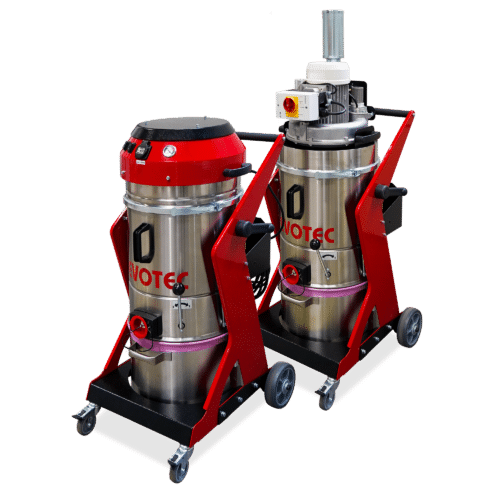
ECODustPro
High-performance industrial vacuum cleaner with a combination filter system ("M" + "H") for all types of dry dust, also available in explosion-proof or asbestos-safe models.
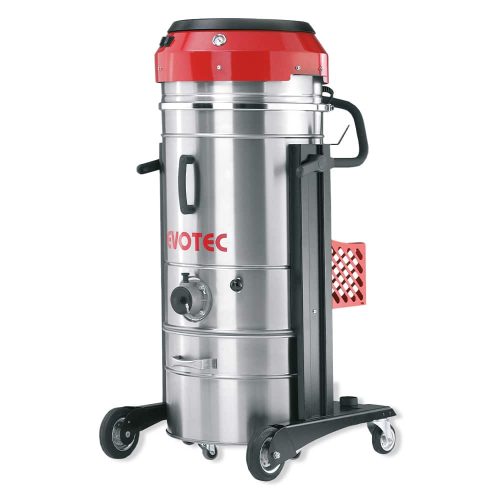
EP 1136
Powerful dry vacuum cleaner for industrial applications with modular design for different filter and disposal solutions.
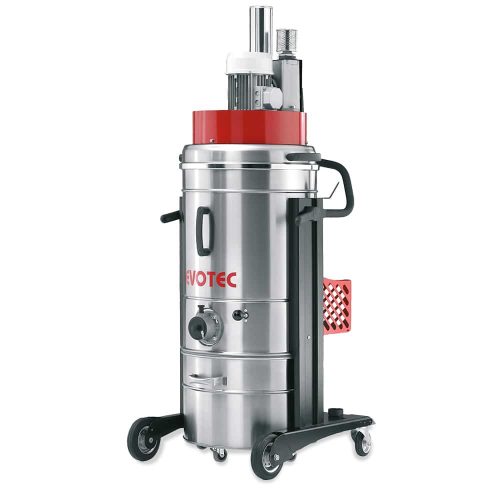
EP 2130 ECO
High-performance industrial vacuum cleaner with a modular design for flexible filter configurations, optionally available with explosion-proof protection for use in ATEX Zone 22.
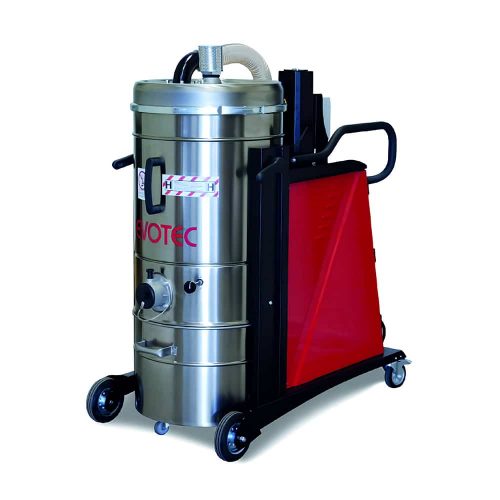
EP 2130/ EP 2140 ECO / EP 2155 ECO
Robust high-performance industrial vacuum cleaners with modular device configuration for variable filter, disposal and control options, also as EX version.
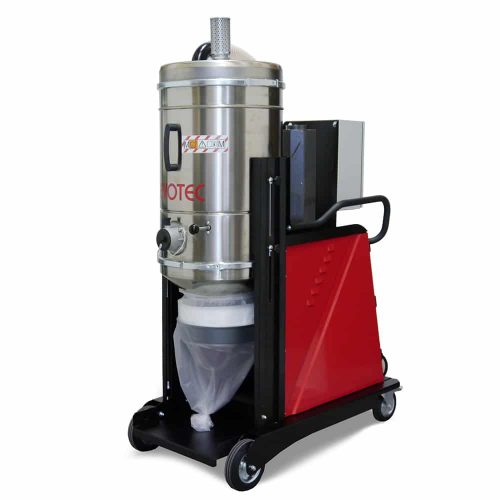
EP 2155/ EP 2175 ECO
Robust high-performance industrial vacuum cleaners with modular device configuration for variable filter, disposal and control options, also as EX version.
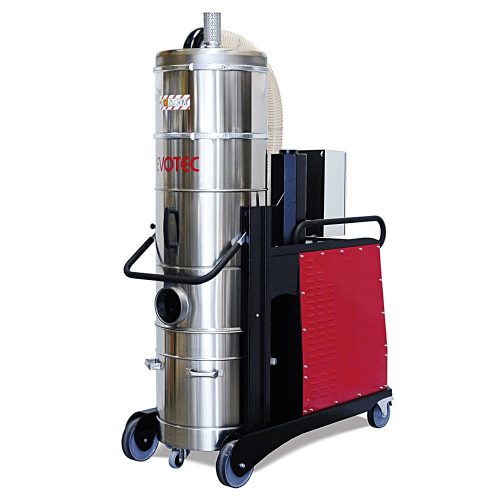
EP 2175 / EP 21130
Robust high-performance industrial vacuum cleaners with modular device configuration for variable filter, disposal and control options, also as EX version.
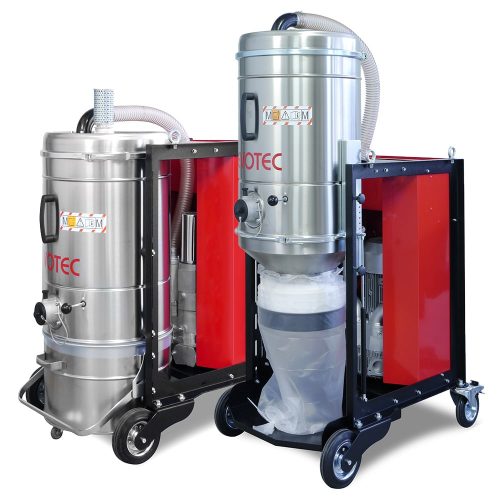
Robusto
Rugged, high-performance industrial vacuum cleaners with a modular design for flexible filter, waste disposal, and control options, also available in TRGS 519-certified asbestos or EX versions.
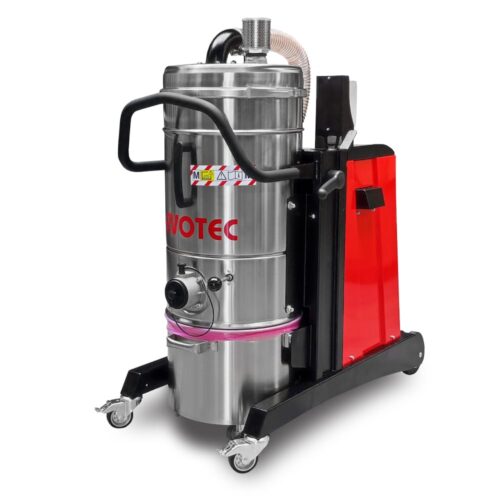
EPS SuperSilent
Sound-insulated high-performance industrial vacuum cleaner for quiet continuous operation with modular device configuration for variable filter, disposal and control options, also available as EX version.
Stationary extraction systems for abrasive process dusts
Stationary solutions are designed on a project-by-project basis for fixed processing and transfer points. The built-in vacuum unit shown here serves as a starting point for compact process integration; whether it is suitable for a specific abrasive material depends on the material load, pre-separation, piping network, wear protection, filter, and discharge system.
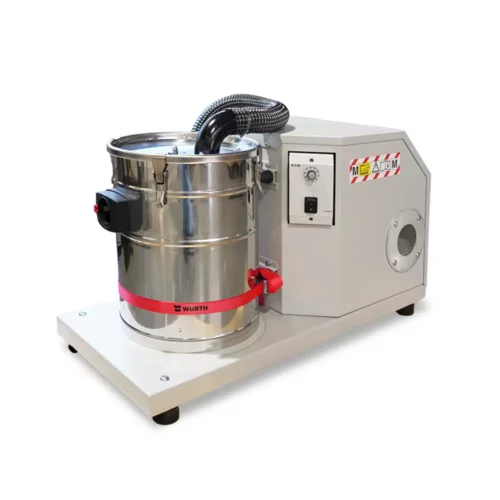
EBG built-in vacuum cleaner
- EC motor for continuous operation (24/7) and EX protection
- Process-adaptable extraction unit with high negative pressure for the extraction of all dry dusts
- Simple under-sink appliance with intelligent features
- Stainless steel version on request
Frequently Asked Questions About the Extraction of Abrasive Dust (FAQ)
Which types of dust are considered abrasive?
Typical abrasive materials include quartz, sand, corundum, glass, ceramics, slag, cement and rock dust, as well as certain metal and blasting agent residues. Their actual wear behavior, in conjunction with particle shape, size, quantity, and conveying speed, is a decisive factor.
What factors influence wear and tear in an extraction system?
Wear is influenced by material hardness, angular shape, grain size, particle concentration, velocity, angle of impact, and operating time. Nozzles, hoses, tight bends, transitions, impact surfaces, and unsuitable separators are subject to particularly high stress.
When is a mobile solution appropriate, and when is a stationary solution appropriate?
Mobile vacuum cleaners are suitable for occasional cleaning, maintenance, and spot cleanup. Stationary systems are recommended when abrasive dust is regularly generated at fixed machines, enclosures, or transfer points, and the collection system, ductwork, and discharge can be permanently coordinated.
Does abrasiveness determine the required dust class?
No. The dust classification is based on the health hazard posed by the specific dust, not on its abrasive effect. Quartz, metal, coating, and other hazardous substances, as well as occupational exposure limits, must therefore be assessed separately.
When are fire or explosion protection measures required?
If the substance is flammable or contains flammable fine particles and an explosive atmosphere could form, explosion protection must be evaluated. This applies, for example, to certain metal dusts or mixed dusts. Abrasiveness alone does not trigger any ATEX requirements.
Ihr Partner für industrielle Absauglösungen
EVOTEC develops mobile industrial vacuum cleaners and stationary extraction systems for demanding industrial material flows. For abrasive dusts, the collection system, conveying path, pre-separation, filters, wear-prone components, and discharge are designed as an integrated system.
Commissioning
Maintenance
Which extraction solution is right for your abrasive material?
Please provide us with information on the material, particle size, hardness or abrasiveness, proportion of fine particles, quantity, moisture content, temperature, conveying distance, operating time, and any potential health, fire, or explosion hazards. EVOTEC will assist you in selecting a mobile or stationary solution.

Robin Buschbaum
Sales D/A/CH
Specialist for extraction technology
vertrieb@evo-products.de
02642 9373-53

Lars Blankenburg
Sales
lars.blankenburg@evo-products.de
02642 9373-10

Asim Zaman-Pahlke
Export Sales
export@evo-products.de
02642/9373-15