


Extraction Technology for Recycling and Environmental Technology – Effectively Controlling Emissions
Home page » Recycling
Extraction Technology for Recycling Plants – Tailored to Material Flow, Process, and Operating Mode
In recycling and processing plants, material composition, moisture content, particle size, and the proportion of contaminants frequently vary. During crushing, screening, sorting, conveying, transferring, and compaction, Fine Dust, coarse particles, fibers, abrasion particles, and bioaerosols—as well as, depending on the material stream, fume, vapors, or odors—can be released.
EVOTEC tailors the collection, airflow capacity, pre-separation, filter stages, discharge, and system integration to your actual process—from individual transfer points to continuously operated sorting and processing lines.
Your benefits in recycling and environmental technology:
Measuring Emissions Directly at the Source
Dust, fibers, and abrasives are captured at crushers, screens, conveyors, and transfer points before they spread throughout the work area.
Ensuring Equipment Availability and Cleanliness
Fewer deposits on sensors, drives, and conveyor systems help ensure stable processes, predictable cleaning, and safe maintenance.
Clearly Separate Stationary and Mobile Tasks
Permanent emission sources are monitored using stationary equipment; mobile solutions support routine cleaning, maintenance, and changing work locations.
What material streams do you process—and at which process steps are emissions released? Tell us the material, throughput, moisture content, particle characteristics, transfer points, and operating mode. We’ll work with you to evaluate the collection system, filtration technology, discharge system, and fire and explosion protection measures.
What emissions are generated at recycling and processing facilities?
Recycling involves a wide variety of material streams—such as paper and cardboard, plastics, metals, mineral fractions, waste electrical and electronic equipment, and mixed waste. Therefore, it is not the industry classification but the specific combination of material, processing method, and source of release that is decisive.
Dust, fibers, and abrasion
Crushing, classifying, sorting, and conveying can release fine to coarse particles, fibrous components, and abrasion debris. The tendency for dust to form increases with dry fractions; with moist or organic components, odors and biological contamination may also be a concern.
Unknown proportions and varying mixtures
Misfires, residual deposits, and varying batches affect combustibility, particle size distribution, moisture content, and filter loading. In the case of metals, battery residues, plastics, or organic fractions, potential ignition sources, problematic constituents, and hybrid mixtures must be taken into account in the risk assessment.
The design process begins with representative material data and actual operating conditions. Material samples, safety data, throughput, moisture content, and expected contaminants provide a more reliable basis than general assumptions about “recycling dust.”
Where does effective data collection begin?
Dust-generating units and conveyor routes are enclosed as much as possible; dust is extracted near the feed, discharge, and material transfer points. Short free-fall heights, appropriately designed capture elements, and controlled airflow reduce carryover air. Room ventilation supplements source capture but does not replace it.
Crushers, Screens, and Sorting Units
Dynamic particle flows are generated by shredders, crushers, screens, air classifiers, and sorting stations. Partial or full enclosures with defined extraction points keep the capture area small while also protecting against disruptive airflows.
Conveyors, Transfer Points, and Discharge
Feeding, discharge, conveyor transfers, hoppers, balers, and bagging are common sources of material release. Capture hoods, enclosed transfer points, and short drop heights are designed to ensure that material transport and maintenance access are maintained.
How are recycling dusts safely collected and removed?
Filtration and discharge technology depends on particle size, fibrousness, abrasiveness, moisture content, stickiness, bulk density, and potential flammability. There is no single, universal filtration stage that works for all varying material streams.
Pre-filtration and robust filter stages
Coarse or heavy particles can be separated before the main filter. Fine dust requires suitable filter surfaces and cleaning methods; fibrous or compressible fabrics require sufficient free discharge and a flow path that minimizes clogging.
Discharge without uncontrolled dust release
Containers, big bags, airlocks, or compaction solutions are tailored to the amount of dust and the material’s behavior. Key factors include low-dust changes, safe emptying, and a discharge process that prevents bridging or backflow.
Filter Monitoring and Differential Pressure
Differential pressure and airflow indicate whether filter loading, cleaning, and capture are operating within the intended range. For variable airflow rates, demand-based control ensures stable airflow and transparent maintenance intervals.
Fire and Explosion Protection as a System-Wide Challenge
Flammable dusts, foreign objects, hot particles, and battery debris can pose ignition hazards. Material properties, ignition sources, and potential explosive atmospheres are assessed on a site- and process-specific basis; this leads to the implementation of design, technical, and organizational protective measures.
Important: An “ATEX filter” alone does not replace a risk assessment. The specific material flow and the actual facility serve as the basis. TRGS 720 and DGUV Rule 114-602 on waste treatment provide guidance.
Stationary or mobile extraction—which is best suited for which task?
Stationary Process Exhaust System
Suitable for continuously operating shredders, screens, sorting lines, conveyors, and fixed transfer points. The collection system, piping network, filters, discharge system, and control system form a permanently coordinated system.
Mobile Cleaning and Maintenance Services
Suitable for floors, areas around machinery, hard-to-reach areas, troubleshooting, and inspection work. This mobile solution is tailored to the dust class, material volume, fiber content, proportion of coarse particles, and potential hazards.
Centralized Solution for Multiple Data Collection Points
This approach is useful for spatially contiguous plant areas with predictable simultaneous operations. The piping network, pressure losses, reserve capacity, cleaning, and discharge are designed for real-world load cases rather than just theoretical maximum values.
Decentralized Modules for Variable Lines
This is advantageous for separate plant areas, varying material flows, or phased plant construction. Individual process modules can be customized, maintained, and expanded as needed to accommodate changing tasks.
Rule of thumb: Mobile vacuum cleaners handle cleaning and maintenance tasks. A transfer or processing machine that generates dust on a continuous basis generally requires a stationary extraction system designed to be integrated into the process.
What information is needed for the design?
A robust solution is derived from process and material data. Representative load cases are particularly important—ranging from normal operation to batch changes, startup and shutdown procedures, malfunctions, and cleaning.
Material Flow and Emissions
Material types and impurities, particle sizes, fiber content, moisture content, bulk density, temperature, flammability, potential pollutants, throughput, and fluctuations over time.
Installation and Operation
Release points, enclosures, available connections, cyclic and shift operations, concurrent operations, installation location, explosion and fire protection plan, waste disposal route, and maintenance access.
For new lines, the exhaust system should be integrated early on into the layout, machine control, and fire protection planning. For existing facilities, measurements and an assessment of actual operating conditions help prevent unnecessary airflow and dead zones.
Are you planning or optimizing a recycling facility?
Please provide us with the process flow diagram, material flow, throughput, facility layout, and known hazards. We will identify relevant collection points and develop a well-defined extraction plan.
Explosion and Fire Protection: Material Flow Is Key
Whether an explosive atmosphere can form depends, among other things, on flammability, particle size, concentration, moisture content, and ignition sources. The IFA expressly points out that even waste dust generated during the processing or handling of combustible solids can be explosive. Protective measures are therefore not applied across the board but are derived from the documented risk assessment. Learn more about dust explosion protection at the IFA.
PROCESS SOLUTIONS
Typical Process Solutions in Recycling and Environmental Technology
Depending on the material stream, several tasks may occur simultaneously. The following application pages categorize the requirements by emission type and material type—there you will find suitable mobile and stationary solutions.

Fine dust extraction
For fine particles generated during crushing, classification, screening, and transfer—with the appropriate filtration stage and safe dust removal.
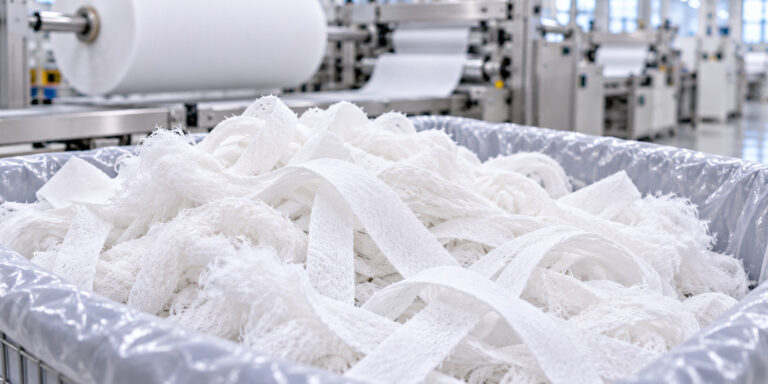
Compressible fabrics
For paper fibers, film scraps, and light, bulky materials where filter loading, compaction, and low-clogging discharge are important.
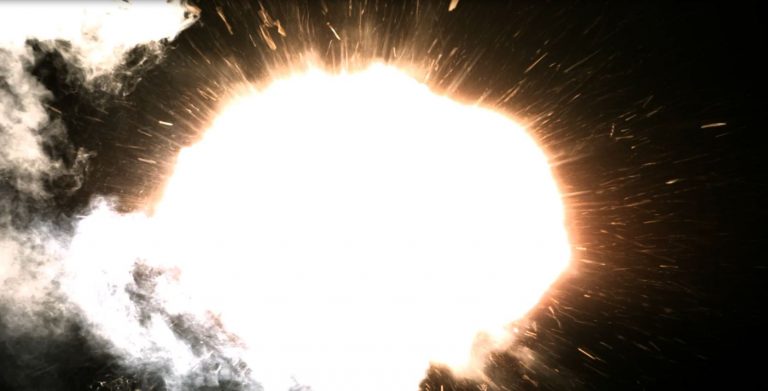
Explosion Protection for Flammable Dusts
For processes involving potentially explosive dust-air atmospheres—based on material properties, zone classification, and protection strategy.
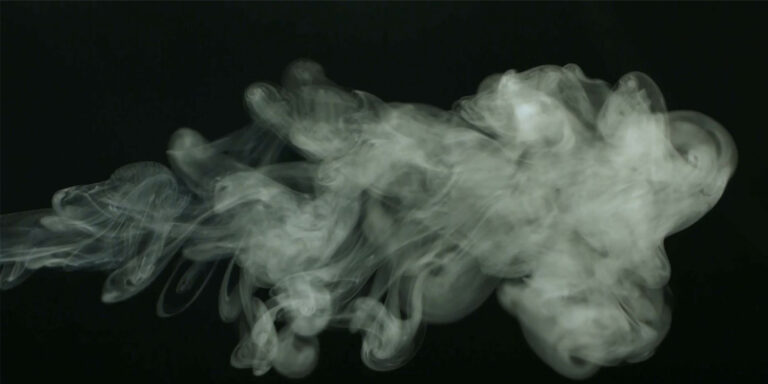
Fumes, Odors, and Smoke
For thermal treatment, accidents, or gaseous emissions resulting from material flows—with separate assessment of the particulate and gaseous phases.
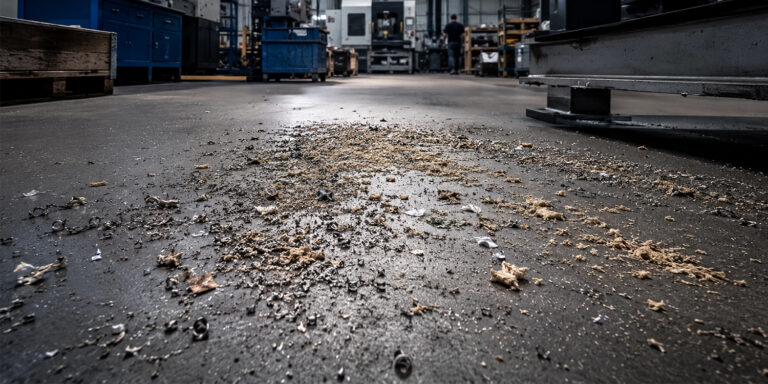
Coarse dirt and heavy dust
For coarse, heavy debris on facilities, traffic routes, and collection points—with high collection capacity and robust material transport.
Is your recycling process not listed?
Please describe the material flow, process step, and emissions to us. We will assess the task from a technical perspective and determine which data collection and filtering solution is appropriate.
Frequently Asked Questions About Exhaust Systems in Recycling and Environmental Technology (FAQ)
What emissions are produced in recycling facilities?
Depending on the feedstock and process, Fine Dust, coarse particles, fibers, abrasion residue, bioaerosols, fume, vapors, or odors are generated. Their composition and quantity can vary significantly from batch to batch; therefore, actual material flows and operating conditions must be evaluated.
When is a stationary extraction system a good idea?
Stationary systems are appropriate when shredders, screens, conveyors, sorting units, or transfer points are operated continuously. The feed system, piping network, filters, discharge system, and control system can then be designed as an integrated system tailored to the actual throughput.
When is a mobile extraction solution used?
Mobile solutions support routine cleaning, maintenance, inspections, and operations at various locations. Their suitability depends on the dust class, material volume, fiber content, proportion of coarse particles, and potential fire or explosion hazards. They are not a substitute for permanent process exhaust systems.
Is explosion protection always required in recycling facilities?
No. Explosion protection is required if the risk assessment shows that flammable dusts or hybrid mixtures can create a hazardous explosive atmosphere. The necessary measures are determined by the substance’s properties, concentration, humidity, ignition sources, and operating conditions.
Can an extraction system handle all varying material flows?
This is not a one-size-fits-all rule. If there are significant changes in material type, moisture content, fines content, throughput, or contaminants, the measurement, filter loading, discharge, and safety concept must be reevaluated. Modular systems can accommodate various configurations but require clearly defined operating limits.
Ihr Partner für industrielle Absauglösungen
EVOTEC develops stationary extraction systems and mobile solutions for demanding recycling and processing operations. From individual transfer points to networked production lines, airflow capacity, filtration technology, discharge, monitoring, and interfaces are tailored to actual operating conditions.
The key is to clearly distinguish between continuous process extraction and flexible cleaning—tailored to the material flow, emissions, throughput, and safety concept.
Commissioning
Maintenance
Which extraction solution is right for your recycling process?
Please provide us with information on material flows, process steps, throughput, moisture content, safety data, release points, shift operations, and potential fire or explosion hazards. EVOTEC will assist you in designing a suitable solution.

Robin Buschbaum
Sales D/A/CH
Specialist for extraction technology
vertrieb@evo-products.de
02642 9373-53

Lars Blankenburg
Sales
lars.blankenburg@evo-products.de
02642 9373-10

Asim Zaman-Pahlke
Export Sales
export@evo-products.de
02642/9373-15