


Extraction Technology for Construction, Stone, and Earth – Safely Controlling Mineral Dusts
Home page » Construction, Stones, Earths
Extraction technology for the extraction, preparation, and processing of mineral raw materials—tailored to the material, process, and type of dust
The building materials industry involves a wide variety of processes: rock, sand, gravel, clay, lime, gypsum, cement, and mineral aggregates are extracted, crushed, screened, conveyed, metered, mixed, bagged, and further processed. This results in a wide range of contaminants, from heavy coarse materials to Fine Dust that can penetrate the alveoli and dust containing quartz.
EVOTEC tailors dust collection, airflow capacity, pre-separation, filter technology, and discharge to the particle size, bulk density, abrasiveness, moisture content, and actual material output. Continuous production processes are clearly distinguished from mobile cleaning, construction site applications, and special materials such as asbestos.
Your advantages in the building materials industry:
Capture dust directly at the source and transfer points
Emissions are captured at the crusher, screen, conveyor belt, mixer, filling station, tool, or enclosure before they disperse.
Adjust the filter and discharge to accommodate mineral substances
Fine Dust, heavy coarse material, abrasive particles, and moist or sticky materials are handled using different technical methods.
Separate stationary production from mobile cleaning
Continuous-flow systems are connected to fixed installations; mobile dust collectors and industrial vacuum cleaners support tool extraction, maintenance, and cleaning.
Which of your building material processes generates dust or coarse particles? Please provide us with the material, quartz content, particle size, bulk density, moisture content, emission point, operating time, and desired discharge rate. We will determine which monitoring and filtration technology is technically suitable.
What types of dust are generated during construction, and from stones and soil?
Mineral processing generates a wide range of particles. In addition to visible coarse dust and rock fragments, respirable E-dust fractions, alveolar A-dust fractions, and—depending on the material—fine quartz dust may be generated. The process, degree of comminution, and moisture content influence the release of these particles.
Extraction, Crushing, Screening, and Conveying
Feeding, crushing, grinding, classifying, screening, belt transfers, silo filling, and loading often generate large amounts of dust and abrasive particles. Open drop chutes and material transfer points require well-enclosed, aerodynamically optimized collection points; heavy, coarse material must not place an unnecessary load on the filter stage.
Mixing, Filling, and Processing
Dosing, mixing, and filling cement, lime, gypsum, dry mortar, or mineral aggregates can release very fine dust. Sawing, cutting, drilling, milling, and grinding concrete, natural stone, or artificial stone also generate high concentrations of dust near the tools.
Where does effective data collection begin?
Dust is captured as close as possible to the point where it is generated or emitted. Enclosures, machine connections, and properly positioned hoods reduce by-pass air. During material transfer, the direction of fall, conveying speed, and entrained air must be taken into account.
Crushers, screens, conveyors, and filling stations
Collection points are located at the feed point, discharge point, transfer points, screen housings, silos, and filling spouts. Enclosed material pathways, short drop heights, and targeted collection reduce fugitive emissions. The airflow rate and hood geometry must control dust escape without unnecessarily extracting product.
Sawing, Drilling, Cutting, and Grinding
In machining operations, dust is captured directly at the tool, at the protective hood, or inside the enclosure. Coordinated systems consisting of the tool, dust collection, and a dust collector are more effective than room ventilation alone. Where possible, wet or damp processes can further reduce dust emissions.
How can mineral dust and coarse particles be safely separated?
Collection, conveyance, pre-separation, filtration, and discharge form an integrated system. Particle size distribution, bulk density, abrasiveness, moisture content, stickiness, and material volume determine which stages are required and how wear-resistant the system can be designed to operate.
Conveyor Speed and Wear
The airflow must reliably transport particles without generating unnecessarily high speeds or causing excessive wear. Special attention is given to bends, piping routes, and exposed components when handling abrasive minerals.
Pre-separation and Coarse Material
Heavy stones, debris, and larger particles should be separated out before the main filter or collected separately whenever possible. This protects the filter elements, reduces clogging, and facilitates discharge that is appropriate for the volume of material.
Fine Dust Filters and Cleaning
The filter area and cleaning process are designed to accommodate the amount of fine dust, operating time, and dust characteristics. Differential pressure monitoring and an appropriate dust discharge system help ensure stable operation; visible dust alone says little about the fraction small enough to reach the alveoli.
Moist and sticky materials
Moist, clayey, or sticky dusts can affect filters, piping, and containers differently than dry mineral dusts. The material condition and cleaning strategy must therefore be determined before the system is designed; wet and dry material streams are not combined without prior testing.
Important: Quartz content, dust fraction, and hazardous substances must be evaluated on a substance-by-substance basis. A high-performance vacuum cleaner is no substitute for a risk assessment or for selecting a dust collector suitable for the substance and application.
Stationary extraction system, construction dust collector, or mobile industrial vacuum cleaner?
Stationary Process Exhaust System
Stationary systems are suitable for continuously operated crushers, screens, mixers, filling lines, grinding lines, and multiple fixed collection points. Air flow, filter condition, discharge, and machine interfaces can be continuously monitored and adjusted to suit the process.
Construction Dust Collectors and Portable Tool Exhaust Systems
Portable dust collectors are used directly with cut-off saws, routers, drills, or grinders. The BG BAU recommends construction dust collectors with a dust class of at least M for mineral dust on construction sites. The tool and the dust collector must function as a coordinated system.
Mobile Cleaning and Maintenance
Mobile industrial vacuum cleaners assist with equipment cleaning, maintenance, troubleshooting, and the removal of accumulated dust or coarse debris. Dry sweeping and blowing dust back into the air should be replaced with low-dust cleaning methods.
Centralized or decentralized
Centralized systems can serve multiple production areas; decentralized solutions keep material flows separate and shorten pipeline routes. Concurrency, system availability, material changeovers, disposal routes, and maintenance access determine the most cost-effective solution.
Production extraction, tool extraction, and cleaning are planned together but are functionally separate. This ensures that extraction, filtration, and operating procedures remain tailored to their respective tasks and types of dust.
What does the interpretation depend on?
A reliable design requires information on the material and quartz content, particle size distribution, bulk density, moisture content, abrasiveness, dust volume, emission point, ducting path, and operating duration. Equally important are the desired discharge rate, air recirculation, maintenance access, and existing machine interfaces.
Material and Dust Data
Sand, cement, lime, gypsum, clay, natural stone, concrete dust, and recycled materials all behave differently. Safety data, dust analyses, and actual material samples help ensure that the pre-separation system, filters, and discharge system are correctly sized.
Process, Load Cases, and Disposal
Normal operation, startup, cleaning, and malfunctions can generate widely varying amounts of dust. Peak loads, simultaneous operations, container changes, and the safe handling of collected material are taken into account from the very beginning.
The design is not based solely on the nominal air flow rate. The key factor is the interplay between capture geometry, transport, wear protection, separation, discharge, and practical maintenance.
Which extraction technology is right for your building materials process?
Please provide us with the material, quartz content, particle size, bulk density, moisture content, dust volume, emission point, operating time, and desired discharge rate. EVOTEC will use this information to develop a suitable stationary or mobile extraction system.
Correctly Classifying Fine Quartz Dust, Dust Classes, and Hazardous Substances
Mixed mineral dust may contain quartz-containing particles. The risk depends, among other factors, on the composition of the substance, particle size, and the level and duration of exposure. TRGS 559 requires that exposure be minimized for activities involving quartz-containing dust; technical measures and source capture are of great importance in this regard.
Dust classes describe a dust collector’s suitability for specific dust hazards, but they do not replace a substance-specific assessment. Asbestos, old mineral wool, lead-containing dusts, or other hazardous substances must not be treated like ordinary mineral dust. Special procedures and equipment designs apply in these cases.
PROCESS SOLUTIONS
Relevant Exhaust Applications in Construction, Stone, and Earthworks
The following process pages provide detailed information on typical types of dust and applications, and direct you to the appropriate equipment for each. Select the application that best matches your process.

Fine dust extraction
For fine mineral dust generated during mixing, dosing, filling, grinding, and other processing or treatment operations.
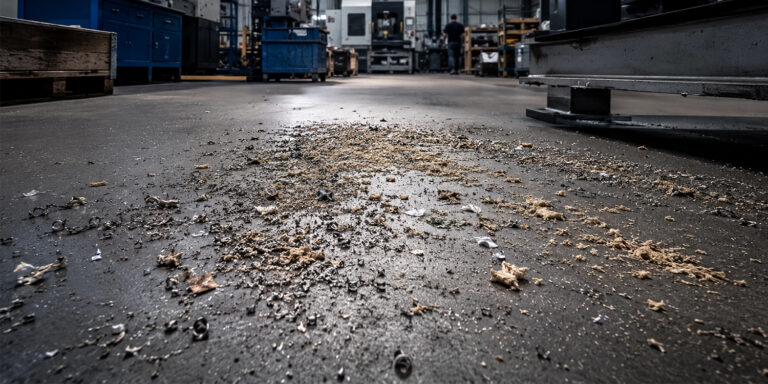
Coarse dirt and heavy dust
For rock debris, fragments, granules, and heavy mineral residues where large volumes of material are generated and robust discharge capabilities are required.
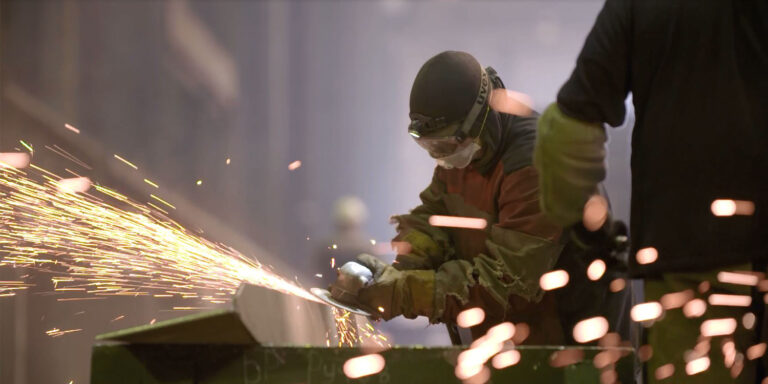
Extraction of grinding dust
For grinding, cutting, milling, drilling, and surface finishing on concrete, natural stone, artificial stone, and mineral-based building materials.
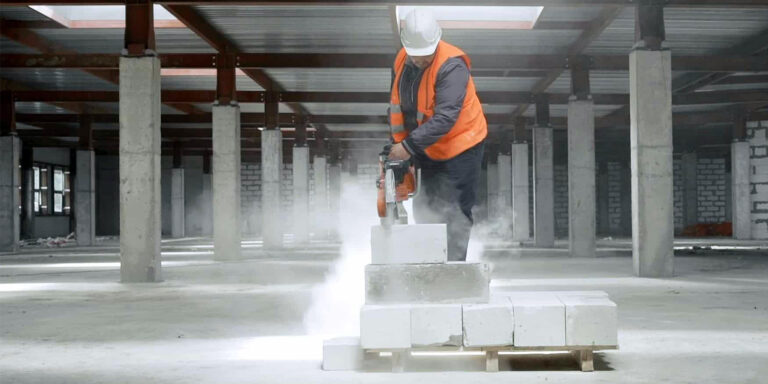
Construction Sites and Renovations
For tool extraction, mobile dust collection, post-construction cleanup, and use at various job sites during new construction, remodeling, and renovation.
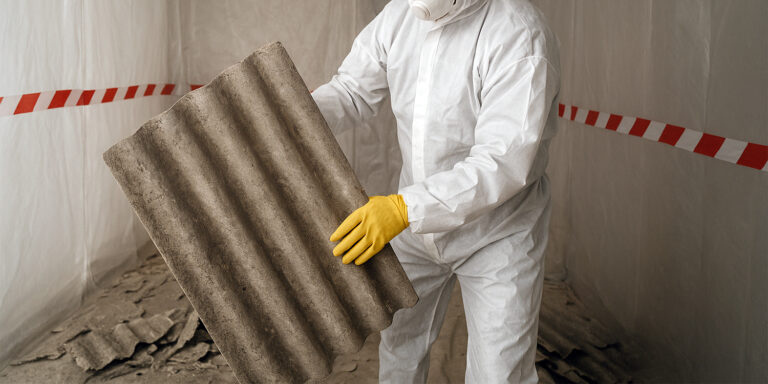
Safe Extraction of Asbestos Dust
For clearly defined asbestos removal projects using specialized methods, appropriate equipment, and controlled disposal—not as part of routine mineral dust cleanup.
Is your building materials process not listed?
Please describe the raw material, process step, type of dust, particle size, material quantity, and plant environment. We will determine which process solution is appropriate and whether stationary collection, tool extraction, or mobile cleaning is required.
Frequently Asked Questions About Dust Extraction in the Construction, Stone, and Earthworks Industries (FAQ)
What types of dust are generated during construction, and from stones and soil?
Depending on the raw material and process, coarse particles, respirable and alveolar mineral dust, and possibly fine quartz dust are produced. Mixing, filling, and mechanical processing can release particularly fine particles.
Why is fine quartz dust of particular concern?
Fine quartz dust can be generated during the processing of quartz-containing materials and can penetrate deep into the respiratory tract. For this reason, material composition, exposure, and technical protective measures are assessed in accordance with TRGS 559, and the release of dust is minimized as much as possible.
When is a stationary solution appropriate, and when is a mobile solution appropriate?
Stationary systems are designed for continuous production processes and fixed collection points. Mobile dust collectors and industrial vacuum cleaners are suitable for tool extraction, maintenance, cleaning, and changing work locations; however, they do not replace the necessary stationary process extraction systems.
How are heavy and abrasive materials extracted?
Heavy particles are separated or collected separately, if possible, before the main filter. The piping layout, velocity, pre-separators, containers, and wear-prone components are designed to accommodate the particle size, bulk density, and abrasiveness of the material.
Can mineral dust be swept up or blown away while dry?
No. Dry sweeping and blowing stir up settled dust again. BG BAU recommends low-dust cleaning methods, such as suitable dust collectors or industrial vacuum cleaners, and—where appropriate—wet cleaning methods.
Ihr Partner für industrielle Absauglösungen
EVOTEC develops stationary extraction systems and mobile solutions for demanding industrial manufacturing processes. From individual extraction points to networked treatment or production lines, airflow capacity, filter technology, pre-separation, discharge, and interfaces are tailored to actual operating conditions.
For the construction, stone, and earth industries, we combine an understanding of materials and processes with a clear distinction between Fine Dust, coarse material, tool extraction, mobile cleaning, and special substances relevant to safety.
Commissioning
Maintenance
Which extraction solution is right for your building materials process?
Please provide us with information on the material, quartz content, particle size, bulk density, moisture content, dust volume, emission point, operating time, and desired discharge rate. EVOTEC will assist you with proper classification and design.

Robin Buschbaum
Sales D/A/CH
Specialist for extraction technology
vertrieb@evo-products.de
02642 9373-53

Lars Blankenburg
Sales
lars.blankenburg@evo-products.de
02642 9373-10

Asim Zaman-Pahlke
Export Sales
export@evo-products.de
02642/9373-15