


Exhaust Systems for Foundries – Safely Capturing Quartz Dust, Metal Fumes, and Blasting Dust
Home page » Foundry
Extraction technology for the molding shop, melting shop, post-casting treatment, and sand processing—tailored to the material and process
Foundries generate a wide variety of emissions throughout the process chain: during core and mold making, mold sand preparation, melting and pouring, cooling and demolding, as well as during blasting, grinding, and cleaning of castings. Dusts containing quartz from molding sand, metal fumes, graphite and carbon particles, abrasive blasting media, and heavy casting residues must therefore not be treated as a single, uniform dust stream.
EVOTEC develops stationary extraction and centralized cleaning systems, as well as mobile industrial vacuum cleaners, for these applications. Collection, pre-separation, filtration, wear protection, collection capacity, discharge, and, where necessary, explosion protection are tailored to the material, process, and actual operating conditions.
Your benefits at the foundry:
Measure emissions as close to the process as possible
Material preparation, demolding, blasting, grinding, and transfer operations are equipped with appropriate enclosures, hoods, or machine connections.
Managing Abrasive and Fine Material Flows
Pre-separation, filters, and wear-prone components are designed to handle sand, metal abrasion, fine particles, and peak loads.
Separate stationary data collection and mobile cleaning
Continuous processes are permanently integrated; mobile vacuum cleaners assist with cleaning, maintenance, mold changes, and hard-to-reach areas.
Which of your foundry processes generate dust, fume, sand, or metal residues? Nennen Sie uns Werkstoff, Legierung, Formstoff, Prozessschritt, Temperaturzustand, Korngröße, Materialmenge, Betriebsdauer und vorhandene Gefährdungsbeurteilung.
What kinds of emissions are produced in foundries?
The emission profile depends on the casting material, molding process, binders, and the melting and post-treatment processes. In addition to respirable and alveolar dust, substances such as quartz, metals, and metal compounds, as well as organic decomposition products, may be relevant depending on the material. The hazard is therefore assessed separately for each area and material stream.
Molding Materials, Quartz Dust, and Sand Processing
Fine particles containing quartz may be released during the mixing and transport of molding and core sands, during molding and demolding, as well as during sand reclamation and refractory work. Sand, binders, recycled material, and additives influence dust generation, filtration requirements, abrasiveness, and potential chemical contamination.
Metal Fumes, Post-Casting Treatment, and Blasting Shop
Metal fumes and other process-related emissions can be generated in the melting and casting areas. Blasting, grinding, cutting, and cleaning generate metal-containing dusts, blasting media, scale, and abrasive mixtures. Depending on the alloy and coating, compounds such as nickel, chromium, cobalt, lead, copper, or zinc may need to be assessed separately.
DGUV Rule 109-608, “Foundries Industry,” describes the sources of dust and hazardous substances typical of the industry. For areas containing quartz, DGUV Information 209-095 specifies protective measures in accordance with TRGS 559—including effective source extraction and low-dust cleaning methods.
Where does effective data collection begin?
Dust and fumes should be captured at their point of emission or generation whenever possible. Enclosures, exhaust hoods, underfloor or backdraft collection systems, and dedicated machine connections limit the required air volume. The capture geometry and airflow must support the process without unduly affecting the molding material, shielding gas, casting stream, or operating procedures.
Molding Material Preparation, Molding Shop, Demolding, and Sand Regeneration
Fixed collection points are located at mixers, screens, transfer points, molding and core-making machines, discharge grates, and sand return and regeneration systems. For open areas or those subject to intermittent loading, the degree of enclosure, dwell time, and peak flow rate are critical factors. Deposits are removed using appropriate suction methods rather than dry sweeping or blowing.
Melting, Casting, Cooling, Blasting, and Polishing
In the melting and casting area, extraction is tailored to the furnace, ladle, treatment, casting, and material. After cooling, blasting, grinding, cutting, and cleaning generate highly directed streams of dust and particles, which should be captured within an enclosure or directly at the tool whenever possible. Hot parts, sparks, and ignition sources must be taken into account separately during plant design.
How can foundry dust, sand, and metal residues be safely separated?
Dust collection, piping network, pre-separation, filtration, collection hopper, and discharge together form a complete system. Fine particles, bulk density, abrasiveness, temperature, moisture content, chemical composition, and potential flammability determine the system’s design and materials. Molding material, metal dust, and hot residues must not be processed through the same system without exception.
Intake and Airflow
Effective collection relies on directed airflow, enclosures, and the shortest possible paths. For impact and jet systems, pulsed dust emissions must be taken into account. Pipe cross-sections and conveying speeds are selected to prevent deposits and limit abrasive wear.
Pre-screening for sand, scale, and coarse material
Cyclones, spark or coarse separators, and collection stages can reduce high loads of sand, scale, and coarse particles before the fine dust filter stage. This protects the filter and downstream components. The discharge system and container must be suitable for the weight, temperature, bulk density, and disposal method.
Fine Dust Filters and Cleaning
Quartz, metal, graphite, and binder dusts require a material-specific filtration concept. The filter area, filter medium, cleaning method, and differential pressure monitoring are selected based on the type of dust, concentration, temperature, and exposure requirements. For CMR substances, additional requirements regarding leak tightness, discharge, and, if applicable, air recirculation must be evaluated.
Hot particles, sparks, and separate material streams
Hot or glowing particles must not enter filters or collection containers in an uncontrolled manner. Spark pre-separation, adequate cooling, temperature monitoring, or special materials may be required. Flammable light-metal dusts and iron-containing dusts are only conveyed together in accordance with an approved protection plan.
Important: Quartz-containing molding material, metal-containing foundry dust, hot residues, and flammable light-metal dusts pose different hazards. A system is always designed based on the most critical actual material and operating conditions.
Stationary foundry exhaust system or mobile cleaning?
Stationary Process Exhaust System
Stationary systems are suitable for continuous or intermittent emissions from molding machines, discharge grates, blasting and cleaning machines, transfer points, and fixed workstations. The collection system, piping network, filters, discharge system, and control system are integrated with the production process.
Central Facility Cleaning
A fixed vacuum pipe network with distributed connection points facilitates the regular cleaning of large halls, stages, areas around machinery, and sand pits. Simultaneous operations, hose lengths, heavy abrasive materials, differences in elevation, and waste disposal logistics determine the system design.
Mobile industrial vacuum cleaners
Mobile vacuum cleaners are useful for changeovers, maintenance, cleaning, hard-to-reach areas, and spot cleaning. The unit, filter, pre-separator, hose, and accessories must be compatible with the material being cleaned. Compressed air and dry sweeping are not low-dust cleaning methods.
Separate systems for different hazards
Dusts containing quartz, metal dusts containing CMR substances, and combustible light-metal dusts may require separate systems or strictly defined material flows. Explosion protection is required only where the risk assessment indicates the presence of a hazardous explosive atmosphere.
Production exhaust systems, centralized shop floor cleaning, and mobile maintenance equipment are planned together but remain functionally separate. This ensures that collection, filtration, discharge, and operation are tailored to each specific task.
What does the interpretation depend on?
A robust design requires information on the casting material and alloy, mold and core materials, binders, process steps, particle size, bulk density, abrasiveness, temperature, moisture content, material quantity, and operating time. Equally important are the capture geometry, pipe run length, simultaneous operation, cleaning procedures, disposal, and existing risk assessments.
Substance, Temperature, and Hazard
Quartz sand, chromite or olivine sand, graphite, blasting media, metal oxides, scale, and grinding dust all behave differently. Safety data, analyses, and material samples help determine the dust class, filter, wear protection, material, and discharge method.
Process, Load Cases, and Maintenance
Continuous emissions, batch operations, peak loads, changes in configuration, cleaning intervals, and downtime all affect airflow capacity and reserve capacity. Filter changes, container emptying, wear inspections, and safe access are also taken into account during the planning phase.
The design is not based solely on the nominal air flow rate. The key factor is the interplay between collection, material transport, pre-separation, filtration, temperature and spark management, discharge, and safe maintenance.
Which extraction technology is right for your foundry process?
Please provide us with the casting material, molding material, process step, emissions, temperature conditions, material quantity, operating duration, and health, fire, and explosion safety requirements. EVOTEC will use this information to develop a well-defined concept for stationary collection, centralized cleaning, or mobile collection.
Assess Quartz, Metal, and Explosion Hazards Differently
Molding materials containing quartz can release respirable crystalline silica dust; dusts containing metals may contain specific hazardous substances depending on the alloy. Flammable aluminum, magnesium, or other metal fine dusts can also pose fire and explosion risks. TRGS 559 requires that quartz-containing dusts be captured as close to the source as possible. Dust class, explosion-proof design, separate material streams, and measures against ignition sources must be determined based on the specific risk assessment—not solely on the designation “foundry.”
PROCESS SOLUTIONS
Relevant Exhaust Applications in Foundries
The following process pages provide detailed information on typical emissions and link to the appropriate equipment. Select the application that best matches your material and process.

Fine dust extraction
For fine molding sand, quartz, graphite, and metal oxide dusts from the molding shop, demolding, sand processing, and finishing shop.
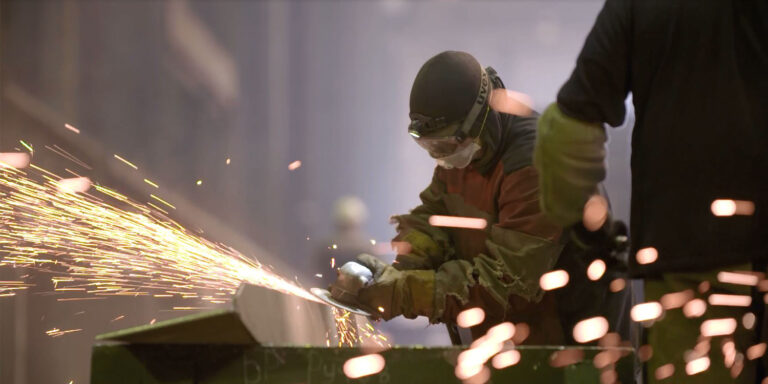
Dust from grinding and polishing
For grinding, cutting, deburring, and cleaning castings with appropriate clamping on the tool or workstation.
Fumes, Odors, and Smoke
For applicable emissions from smelting, metal treatment, casting, core making, and thermal processes—subject to material testing.
Abrasive Dusts and Blasting Media
For sand, abrasive media, scale, and mineral or metallic mixtures with a high potential for wear.
Explosion Protection for Flammable Metal Dusts
For light metal and mixed dusts, if the risk assessment indicates the presence of an explosive atmosphere.
Is your pharmaceutical, chemical, or medical technology process not listed?
Please provide us with details regarding the material, molding compound, process step, emissions, temperature, material quantity, and plant environment. We will determine which process solution is appropriate and whether stationary monitoring, centralized cleaning, or mobile collection is required.
Frequently Asked Questions About Exhaust Systems in Foundries (FAQ)
What types of dust are typically generated in foundries?
Depending on the process, quartz-containing molding sand dust, graphite and carbon particles, metal oxides, metal-containing core sand dust, blasting media, scale, sand, and coarse casting residues are generated. The composition and hazards depend on the material, alloy, molding process, and binders.
Where should foundry dust be captured whenever possible?
Dust and fumes are captured as directly as possible at the mixer, transfer point, discharge grate, blasting system, grinding tool, or casting process. Enclosures and process-specific hoods prevent emissions from entering the workshop air and adjacent areas.
When is a stationary solution appropriate, and when is a mobile solution appropriate?
Stationary systems are suitable for continuous-operation machines, production lines, and fixed collection points. Mobile industrial vacuum cleaners support cleaning, maintenance, changeovers, and changing work locations. Large facilities can also be served by a central vacuum duct network.
Does every foundry need an explosion-proof extraction system?
No. Explosion protection is required if the risk assessment identifies a hazardous explosive atmosphere—for example, due to certain light-metal or mixed dusts. Sand containing quartz poses a health risk, but that alone does not make it explosive.
Why do some material streams need to be separated?
Quartz-containing molding materials, metal dusts containing CMR substances, flammable light-metal dusts, and hot residues have different filtration, fire, explosion, and disposal requirements. Conveying them together can create hazardous mixtures or make safe separation more difficult.
Ihr Partner für industrielle Absauglösungen
EVOTEC develops stationary extraction systems, centralized cleaning networks, and mobile solutions for demanding foundry processes. From sand preparation through demolding and cleaning to shop floor cleaning, material flow, hazards, wear, filtration, discharge, and maintenance are all considered together.
Commissioning
Maintenance
Which extraction solution is right for your foundry process?
Please provide us with information on the casting material, alloy, molding material, process step, emissions, temperature conditions, material quantity, operating time, and health, fire, and explosion safety requirements. EVOTEC will assist you with classification and design.

Robin Buschbaum
Sales D/A/CH
Specialist for extraction technology
vertrieb@evo-products.de
02642 9373-53

Lars Blankenburg
Sales
lars.blankenburg@evo-products.de
02642 9373-10

Asim Zaman-Pahlke
Export Sales
export@evo-products.de
02642/9373-15